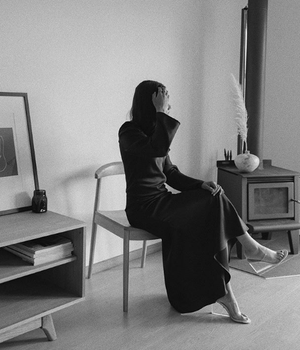
Editor Zeenat Wilkinson’s culinary passage to India
A whirlwind of ten days with Good Food Journey — from dining with royals, shopping for gemstones to excess baggage
India is one of those places that shifts something deep within you. The colours feel brighter, the stories richer, and the experiences somehow more vivid than anywhere else. But what stays with you most is the people. The warmth and generosity of Indian hospitality is extraordinary, offered just as readily in a grand palace as it is beside a roadside food cart.
So when New Zealand based restaurateur, and the host of this Diwali tour, Chand Sahrawat, invited me to join a culinary tour through India with Good Food Journey, it felt like an invitation I couldn’t possibly refuse. Over ten unforgettable days we travelled through some of India’s most fascinating cities in search of remarkable meals, generous hosts, and stories behind the food. What follows is my diary from those ten days — a journey that proved, once again, that some of the best ways to understand a place is simply to sit down and eat.
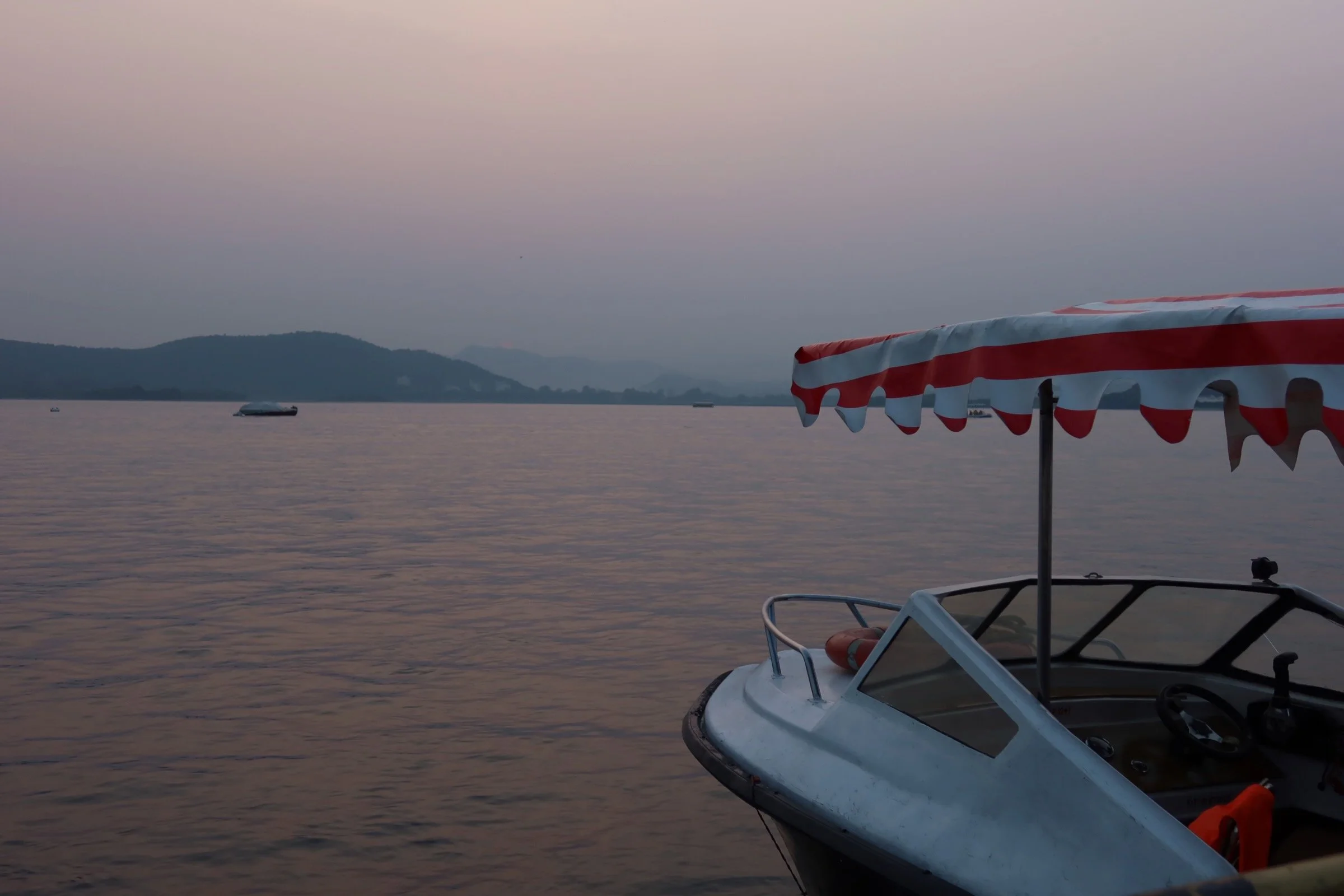
SUNSET OVER LAKE PICHOLA, UDAIPUR
Day 1 & 2: The Diwali Rush in Delhi
After spending two weeks horizontal in my bed in New Zealand with a herniated disc, followed by a blur of physio and osteo appointments, I braced myself, both physically and metaphorically, for a ten-day journey through India with Good Food Journey.
I arrived in Delhi from Auckland, New Zealand after a short pitstop in Mumbai. Within minutes of leaving the airport, I’m overwhelmed by the traffic. Honking cars, weaving rickshaws and motorbikes carrying entire families surge through the old narrow streets in what feels like a beautifully chaotic ballet. It quickly becomes clear that the Diwali shopping rush in Delhi is an Olympic sport.
Later that evening I’m reunited at dinner with the wonderful Chand Sahrawat, our host for the journey and, as it turns out, my guardian angel for the trip. Chand hosts these culinary tours regularly and navigates Delhi’s frenetic energy with impressive calm.
Our group gathers for the first time at Dum Pukht, located inside the grand ITC Maurya.
The restaurant is legendary in India for reviving the slow-cooking techniques of Awadhi royal kitchens. Dishes are traditionally sealed in heavy pots and cooked gently for hours, allowing the spices and aromas to intensify, a method once used in the courts of the Nawabs. The interiors feel suitably regal: low lighting, Mughal arches and plush furnishings that transport you into another era.
If Dum Pukht sets the culinary tone for the journey, the hotel itself offers a glimpse into Delhi’s political heart.
On our second day of the tour, after breakfast, we set off to explore some of Delhi’s most historic landmarks. First stop: Humayun’s Tomb, a UNESCO World Heritage site often described as the architectural precursor to the Taj Mahal. Its symmetrical Mughal gardens and red sandstone arches feel both grand and serene. We continue to the towering Qutub Minar, a 12th-century minaret that remains one of the tallest brick towers in the world.
But travel plans, especially in India, are rarely rigid. Somewhere between monuments we decide to detour into a few local boutiques and pick up outfits for the days ahead. When travelling through India during Diwali, having something festive to wear suddenly feels essential.
Lunch and dinner eventually blur into one glorious meal at Chor Bizarre, a restaurant famous for introducing Kashmiri cuisine to a wider audience in Delhi. Guided by Chand and the chef, we experience a traditional Wazwan. A ceremonial Kashmiri feast that can include more than a dozen dishes. And just like that, the journey has begun.
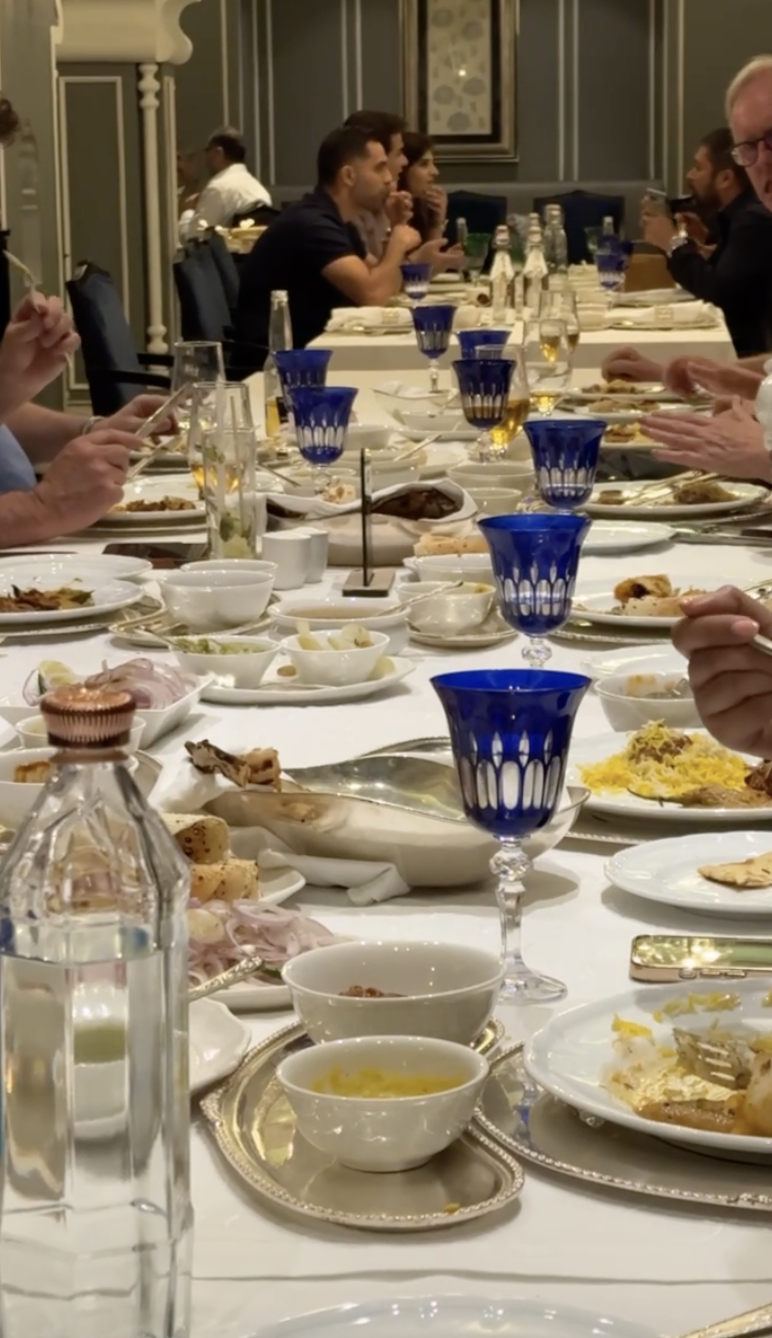
DINNER AT DUM PUKHT
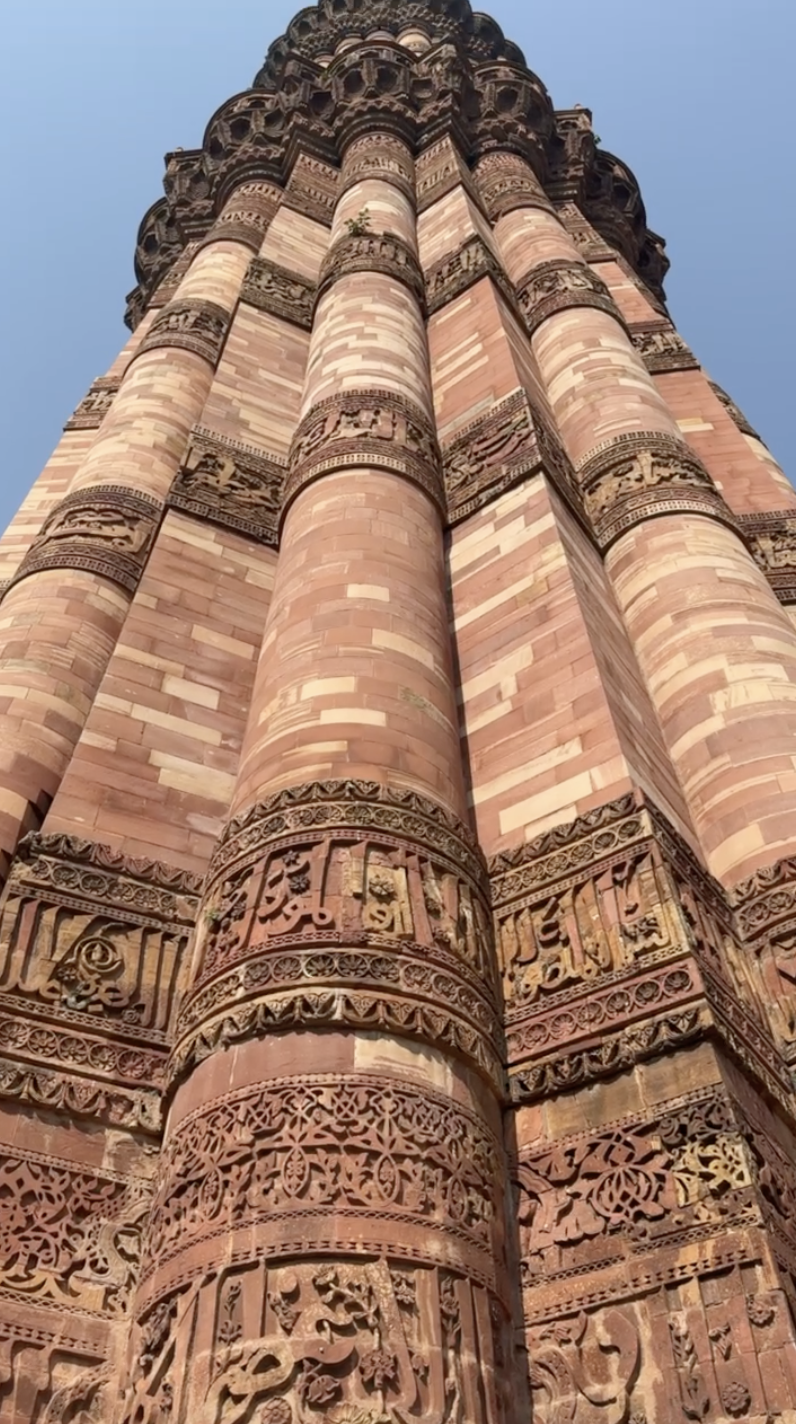
QUTUB MINAR
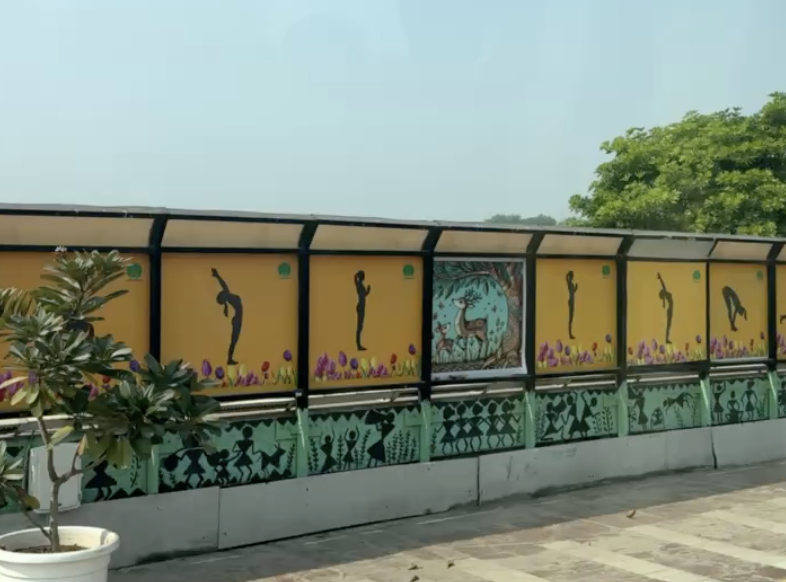
YOGA POSES ON THE STREETS OF DELHI
Day 3 & 4 : Agra With A Side Of Traffic Jams
It’s three days before Diwali, which means the roads are even more jam-packed than usual. Our four-hour drive from Delhi to Agra slowly morphs into a six-hour odyssey involving traffic jams, enthusiastic honking and the occasional philosophical acceptance that time works differently in India.
Somewhere along the way, the group collectively stops checking Google Maps and simply surrenders to the journey.
A memorable stop en route is lunch at Sheroes Hangout Cafe, a café run by survivors of acid attacks. What began as a social initiative has become one of the city’s most inspiring spaces (part café, part community hub) where visitors are welcomed warmly.
Eventually, slightly stiff from hours on the bus and overly optimistic about how much traffic we had left to conquer, we arrived in Agra. My back survived this journey with a couple of pain killers.
To shake off the journey we visit Agra Fort, a vast 16th-century Mughal fortress built by Emperor Akbar. Its towering red sandstone walls enclose a series of palaces, courtyards and halls that once served as the seat of the Mughal empire. Wandering through its archways, it’s easy to imagine the scale of imperial life that once unfolded here.
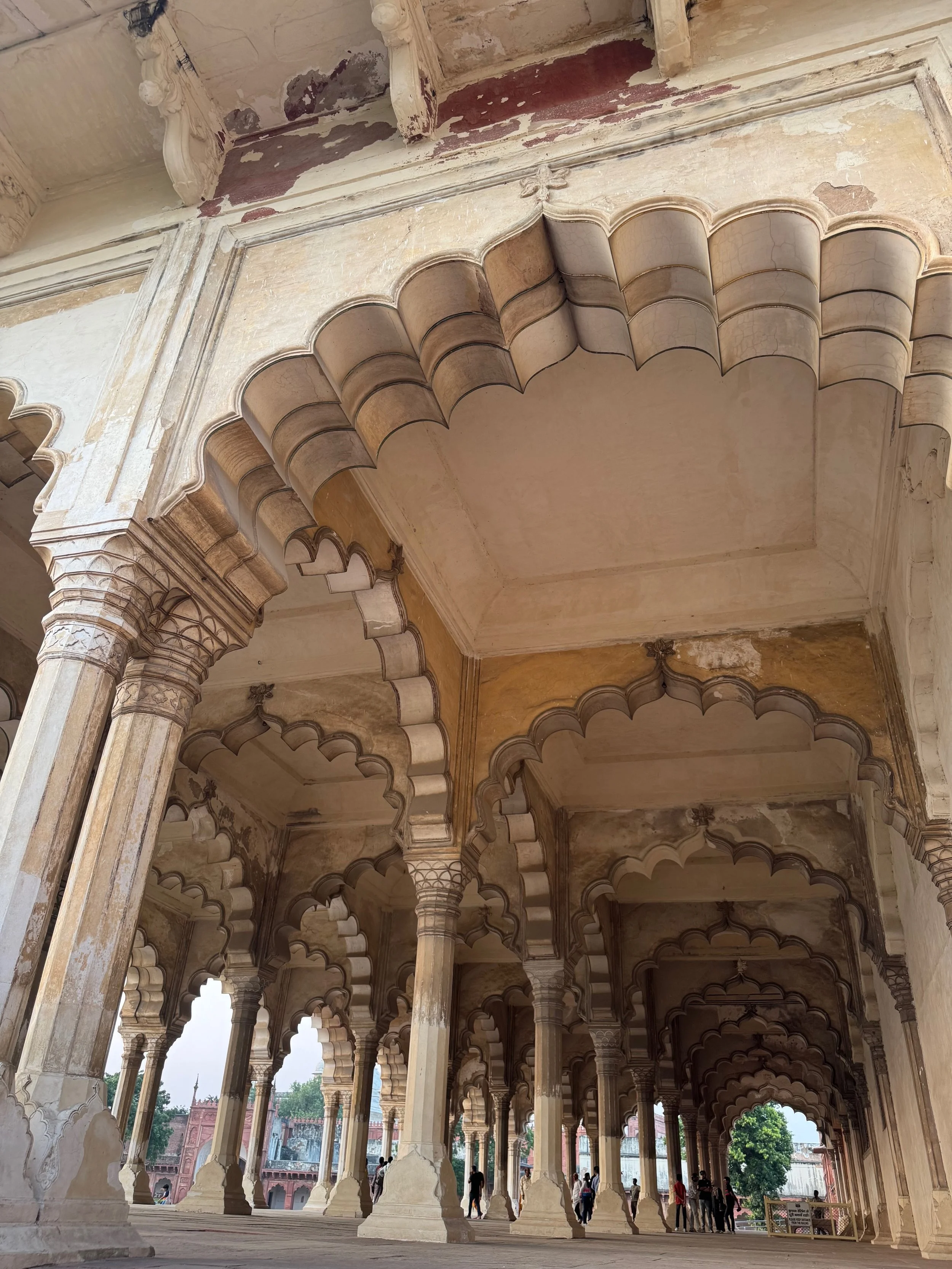
AGRA FORT
No journey through India is complete without understanding the legacy of the Mughal Empire, [16th to the 19th century] whose influence still shapes the country’s design language. Blending Persian elegance with Indian craftsmanship, their rule introduced a style defined by symmetry, intricate detailing, and grand scale, from formal gardens to domed palaces and delicate stone inlay. Icons like the Taj Mahal reflect this vision, where beauty was paired with precision and balance. Today, that influence endures in India’s unique architecture, interiors and design — timeless, considered, and unmistakably Indian.
Once we arrive in the main city of Agra, Dinner was served on the rooftop of a five-star hotel overlooking the luminous silhouette of the Taj Mahal. As the sun begins to set, chilled beers appear alongside the most beautiful plate of traditional thaali.
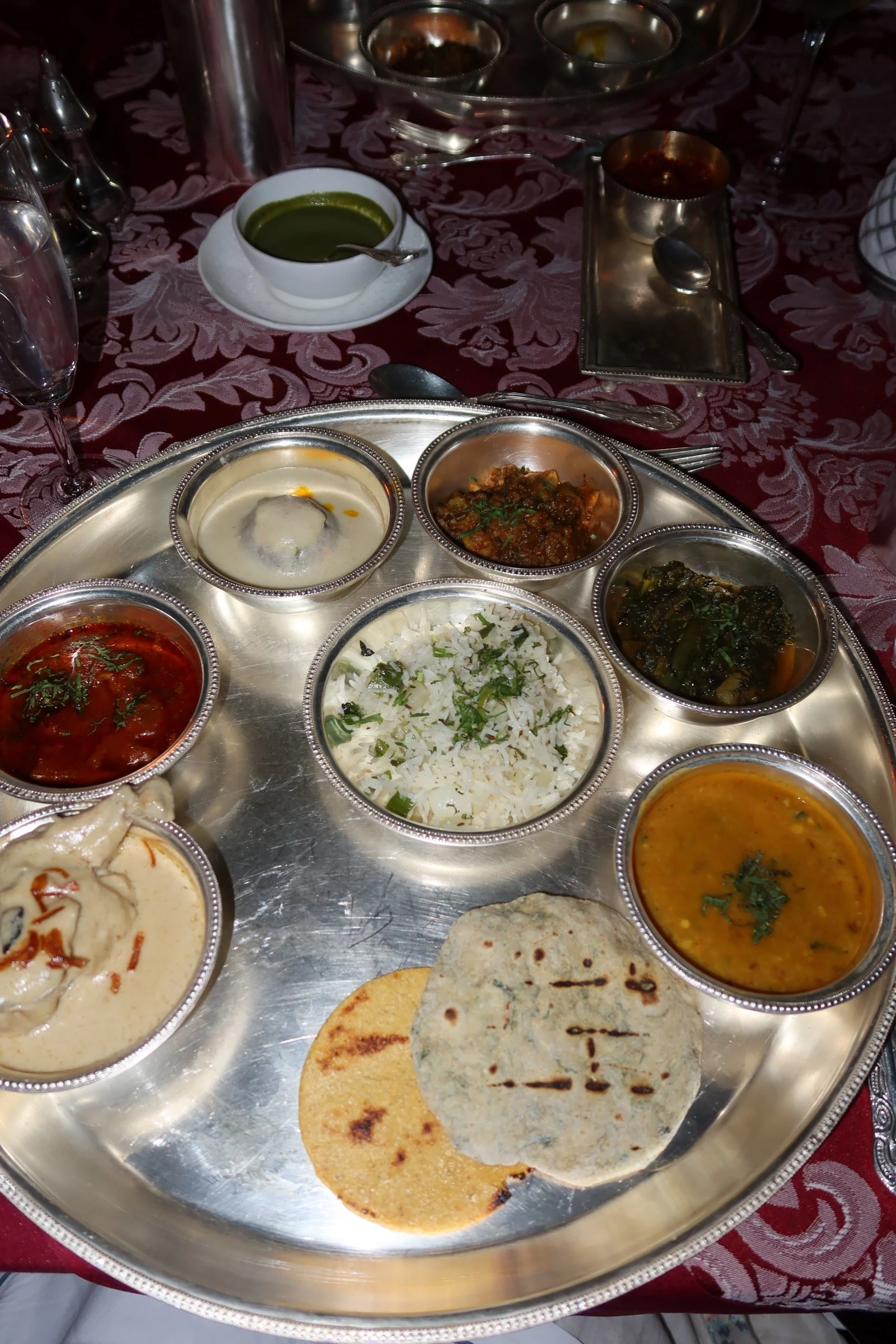
THAALI, TRADITIONAL INDIAN PLATE OF FOOD
India, it seems, always knows how to deliver a dramatic finale. By now, my fellow travellers, many visiting India for the first time, were beginning to grasp just how different this journey is. India demands patience, flexibility, and a sense of humour but for those willing to embrace it.
Today, we woke up at 5am to see the Taj Mahal at sunrise.
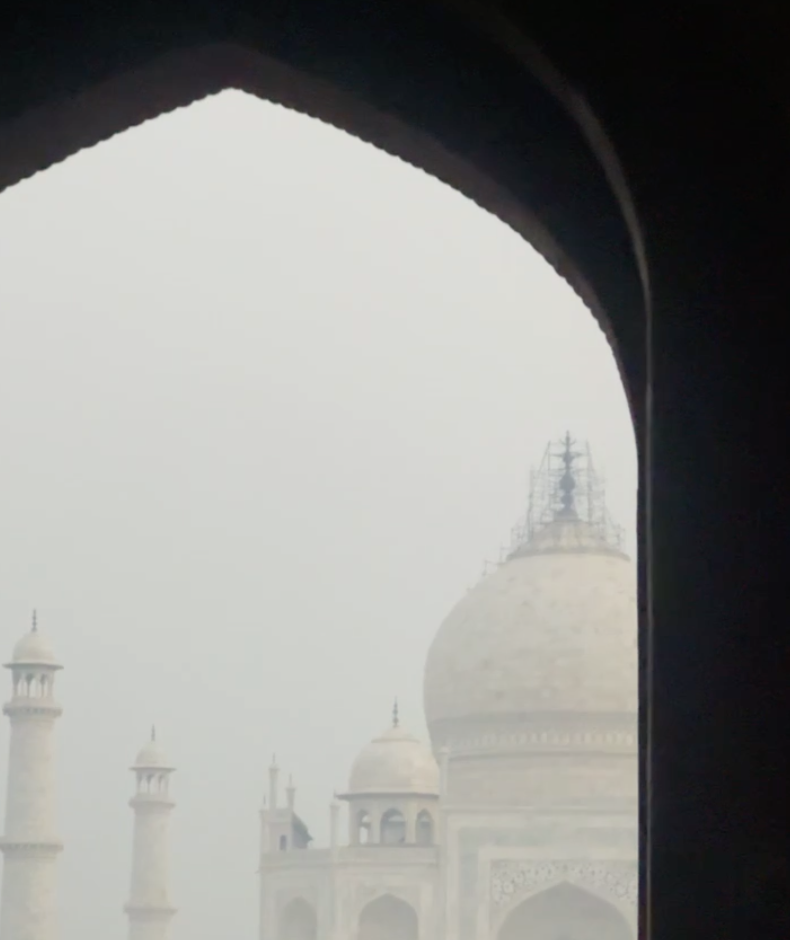
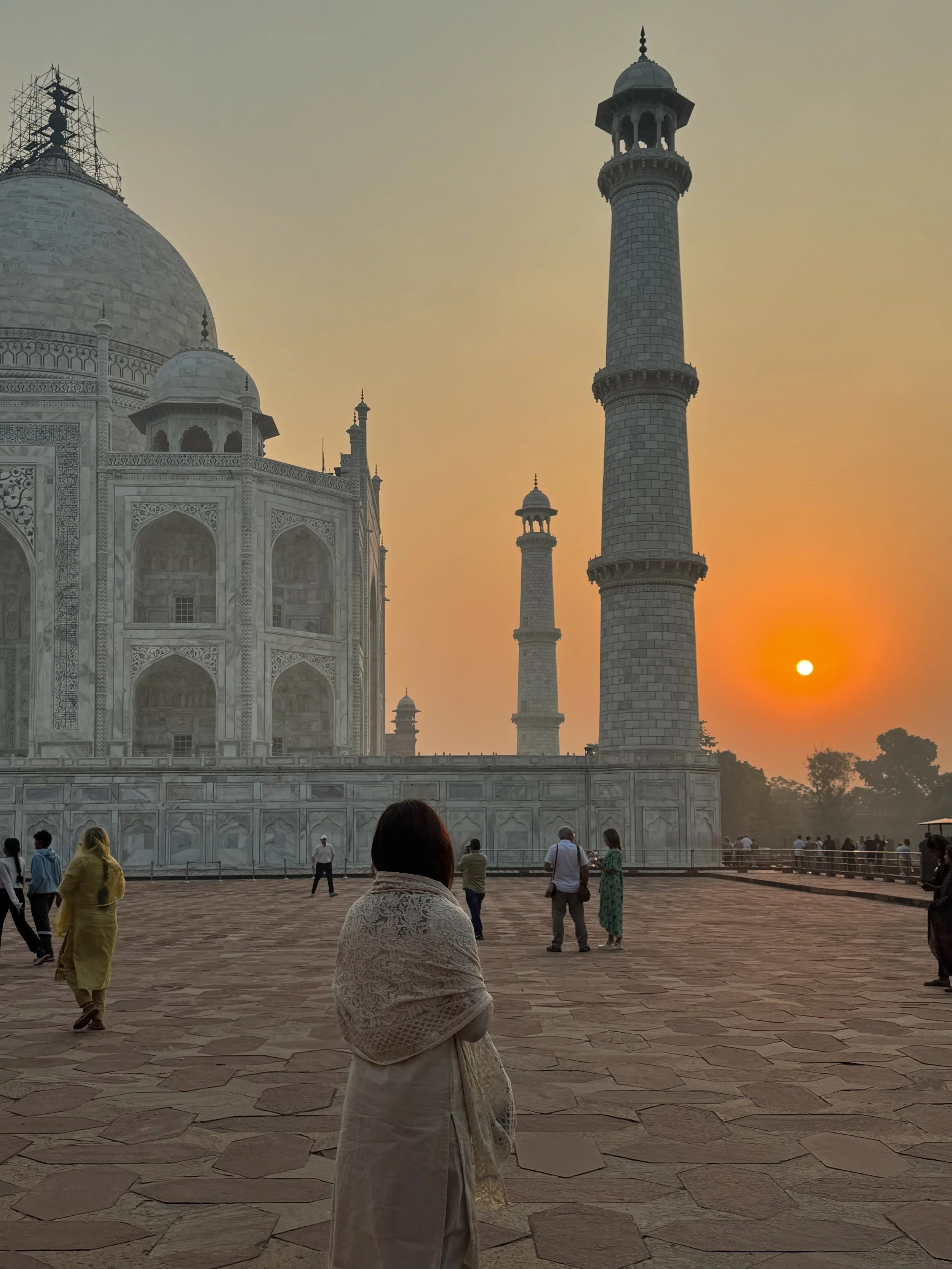
TAJ MAHAL MAUSOLEUM AT DAWN
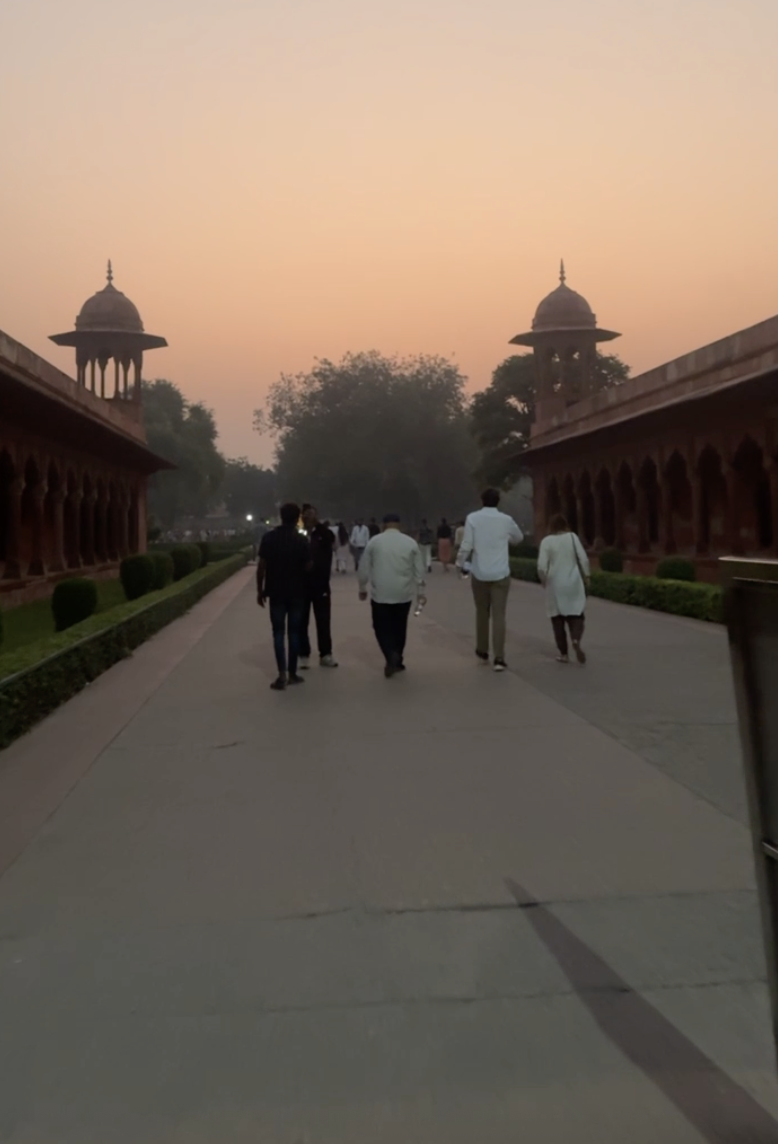
ENTRANCE TO TAJ MAHAL
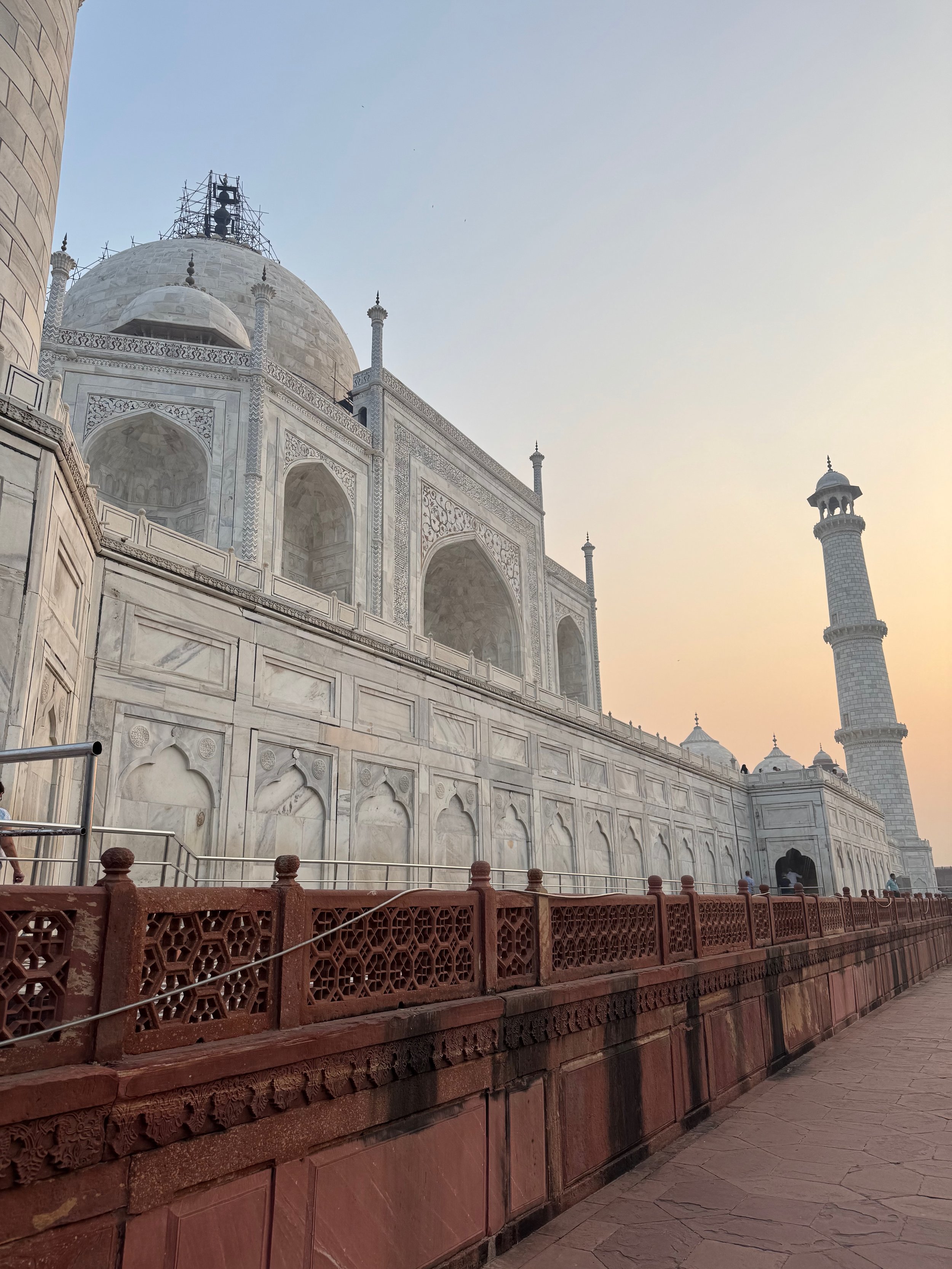
Words fail me, so I’ll let the colours do the talking. Sun-kissed at dawn, the monument shifted slowly from glowing orange to delicate pink, then to pale yellow, and finally the perfect shade of milky white. Inside the gates, it was remarkably quiet — the marble courtyards almost meditative, the only sounds were the soft whispers of awe-struck visitors and the echo of our own footsteps.
Amid all the contrast, the story of the Taj Mahal comes to life. Built by Emperor Shah Jahan in memory of his beloved wife Mumtaz Mahal, the monument is more than marble, his love immortalised in stone. Standing there, inside and outside, it’s impossible not to feel the paradox that defines India itself.
As we step outside the serenity, India reasserts itself in full force. Vendors swarm with trays of miniature Taj figurines, bangles, keychains and other knick-knacks, trying to tempt visitors at every corner. The gentle calm of the morning transforms to a cheerful chaos. It’s jarring, exhausting, but somehow quintessentially India.
The beauty of Taj Mahal lingers for days to come.
Day 4 & 5 : Jaipur: Spice Markets, Palaces and a Diwali Dinner
We eventually made our way back to the hotel in Agra to refresh and refuel. After a quick breakfast, we checked out and set off for Jaipur — another road journey that reminded us that travel in India requires equal parts patience and curiosity.
On the way we stopped at Fatehpur Sikri, the once-magnificent Mughal capital built by Emperor Akbar in the 16th century. Constructed almost entirely from red sandstone, the abandoned city still feels astonishingly intact — vast courtyards, intricately carved pavilions and towering gateways that hint at the grandeur of the Mughal empire at its peak.
By this point in the journey, however, the group had reached that familiar travel threshold where sensory overload begins to set in. After sunset, most of us quietly admitted we were ready to curl up in a hotel room and call it a night.
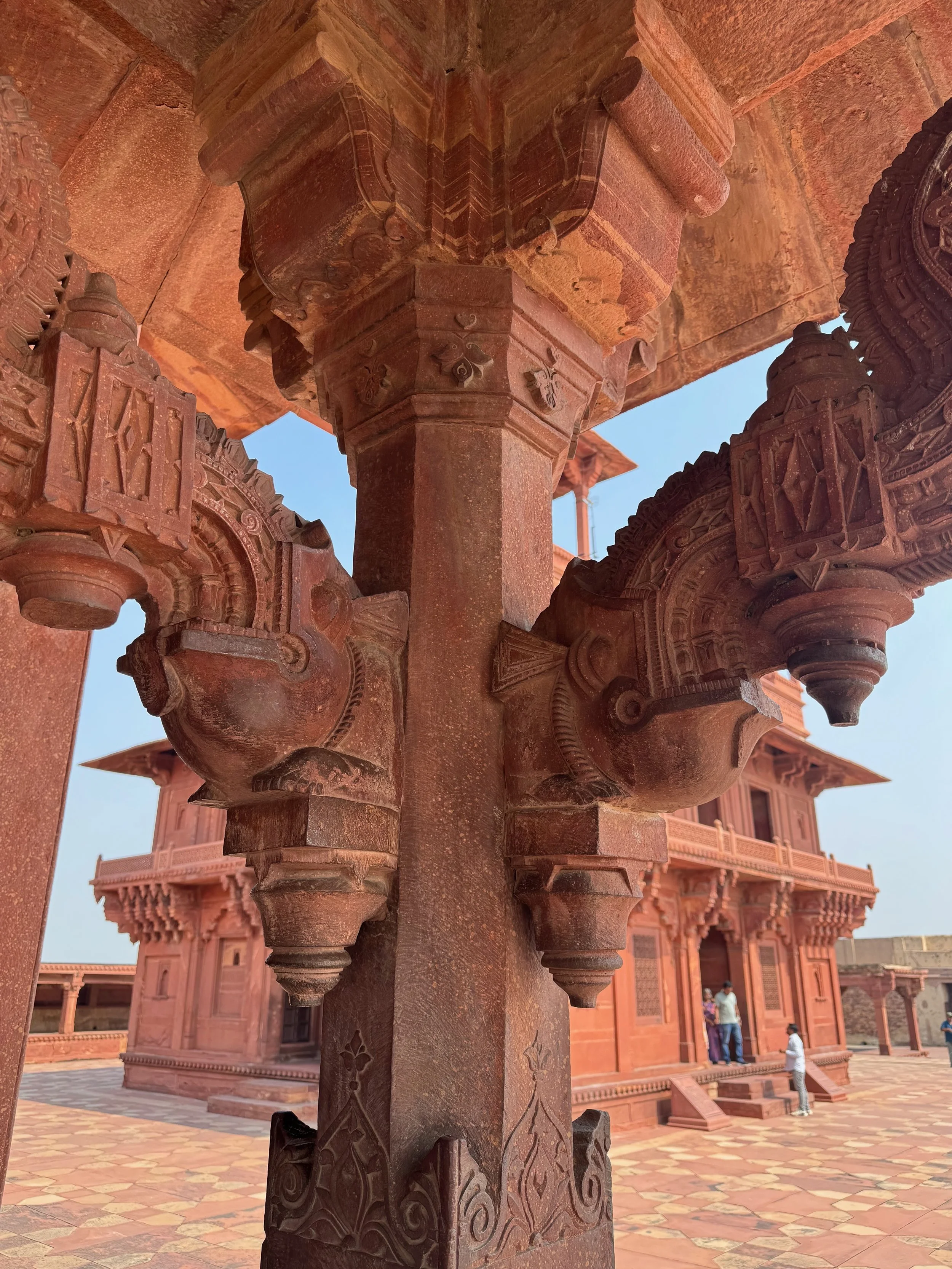
FATEHPUR SIKRI
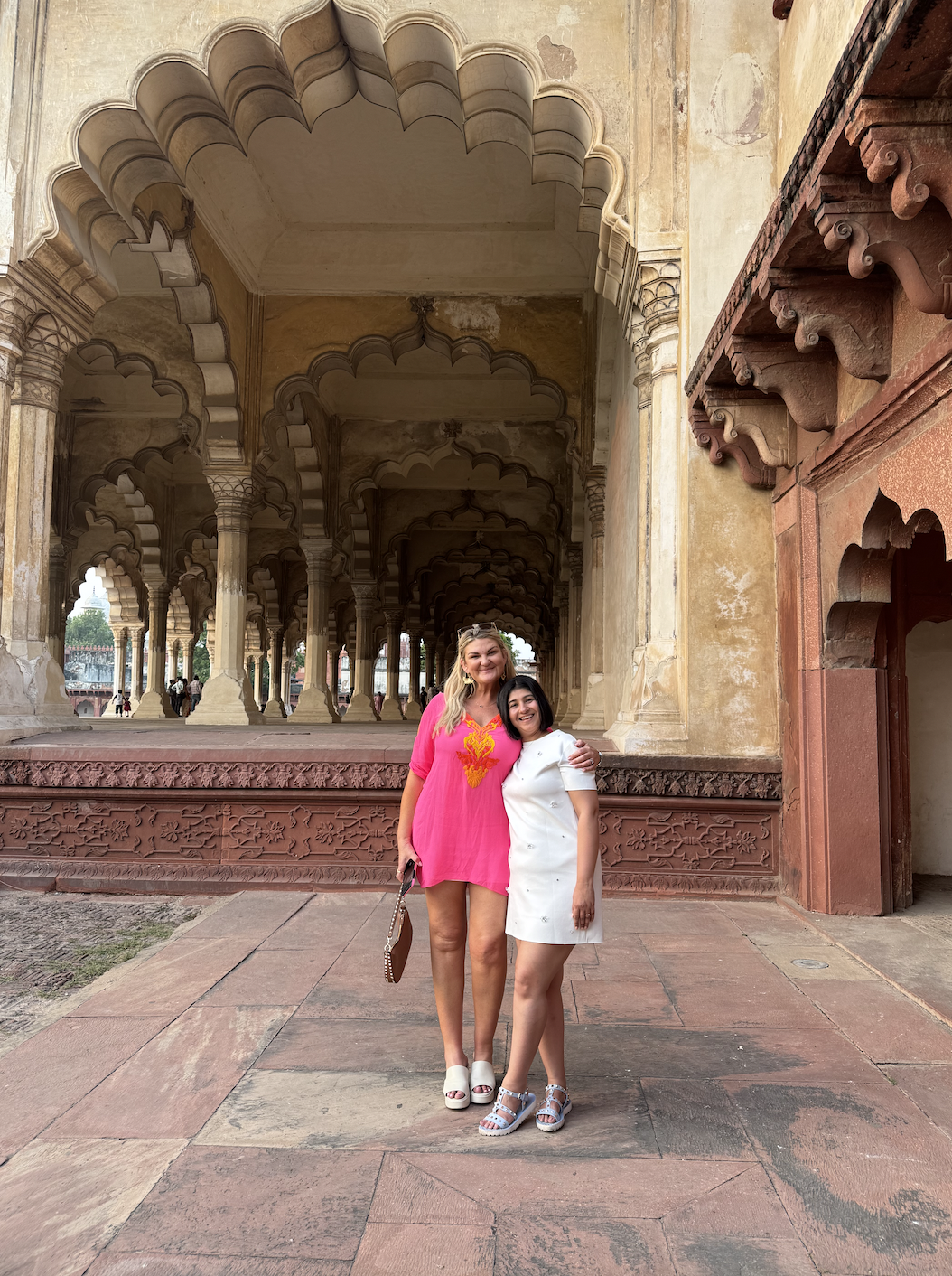
LISA WILLIAMS-MEYRICK & CHAND SHARAWAT
The following morning we set off to explore Jaipur, often called the Pink City. Our day began at the remarkable Jantar Mantar — an 18th-century observatory where science quite literally meets the stars.
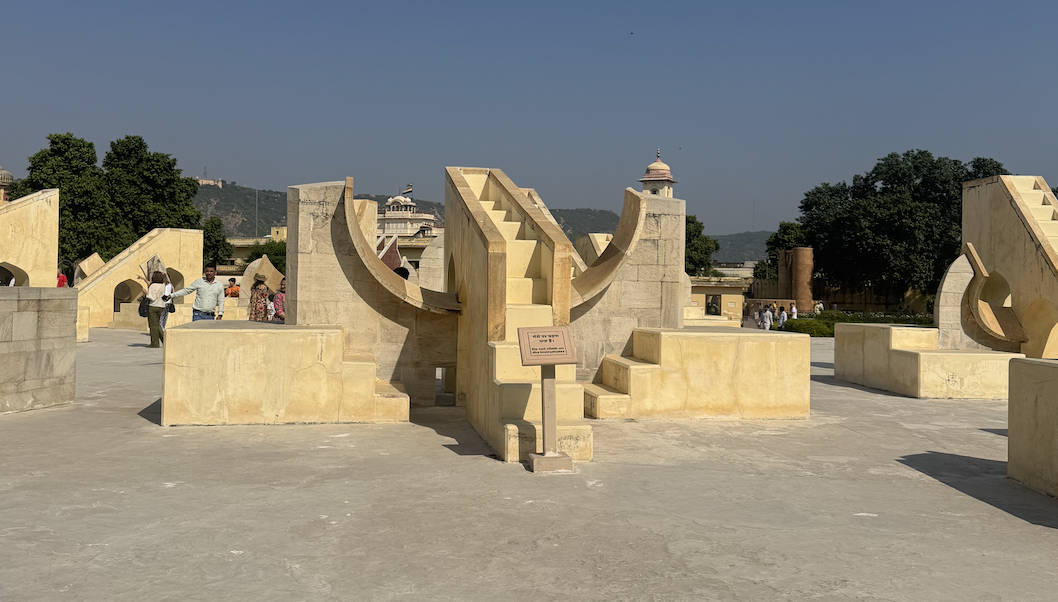
JANTAR MANTAR
Recognised as the largest stone astronomical observatory in the world, Jantar Mantar was built by Maharaja Sawai Jai Singh II, a ruler with an extraordinary fascination for astronomy. The site houses 19 monumental instruments designed to track celestial bodies with the naked eye, including the enormous Samrat Yantra — the world’s largest sundial.
Standing among these giant geometric structures, it’s hard not to marvel at the scientific ambition of the time.
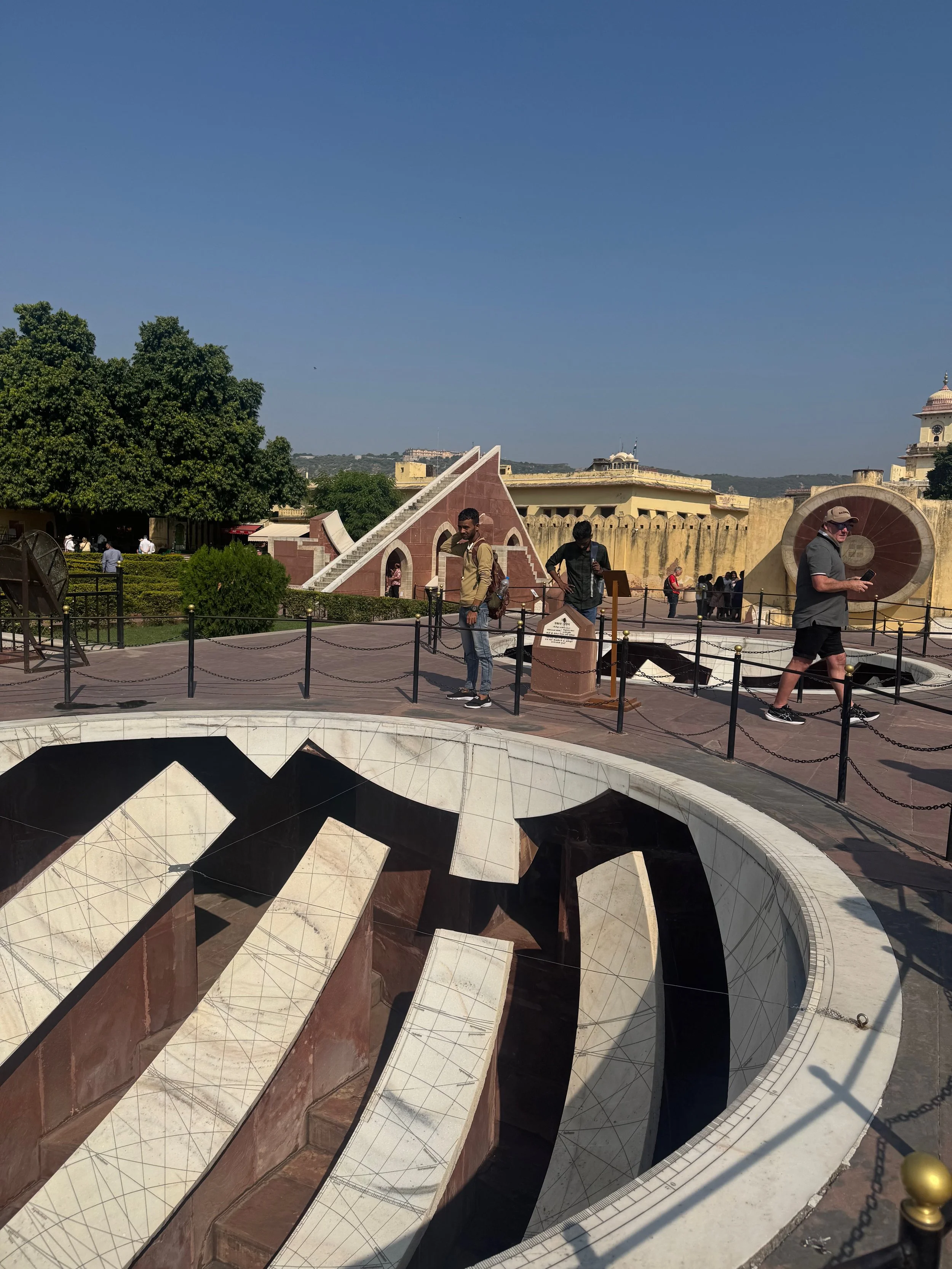
JANTAR MANTAR
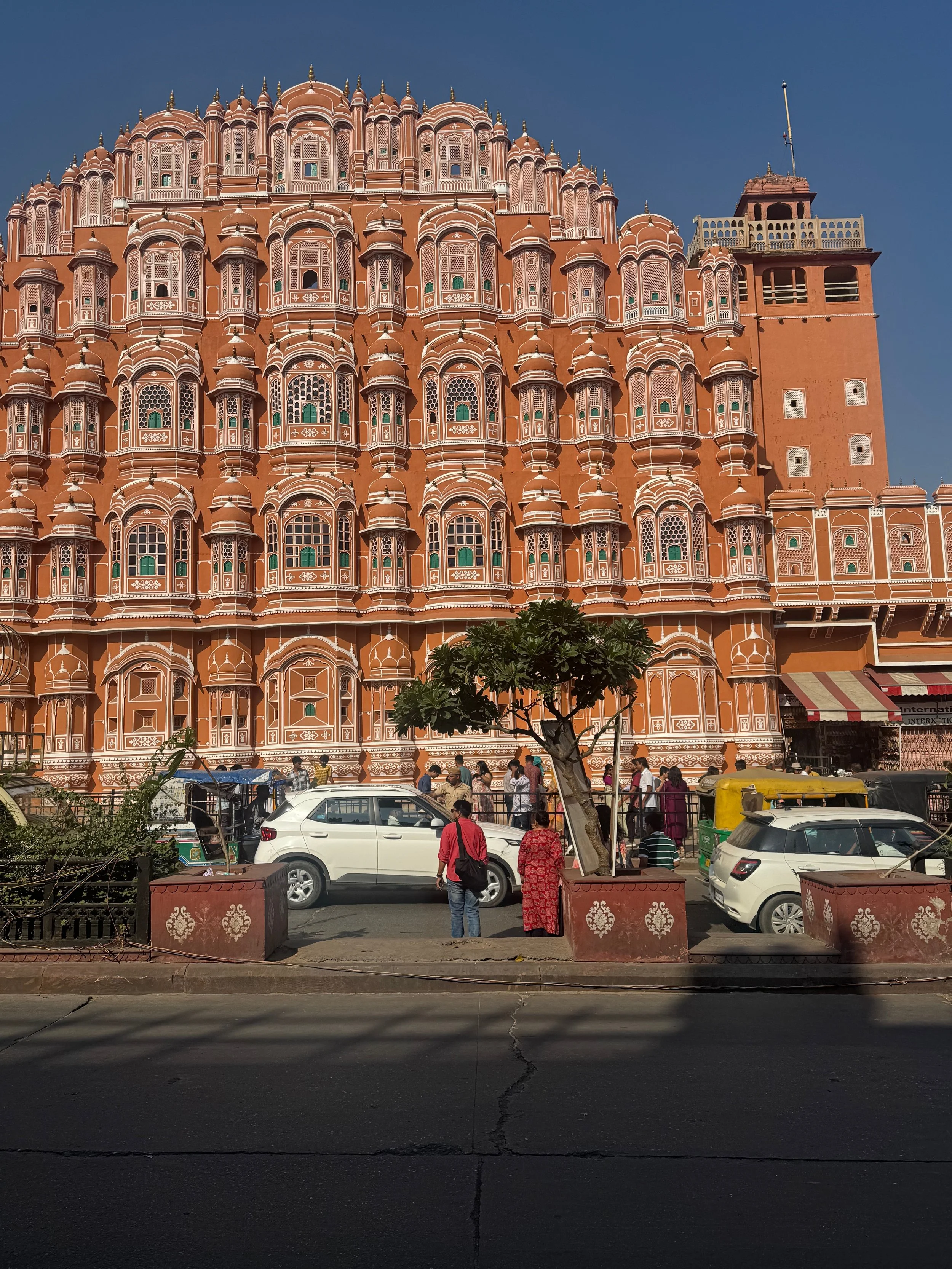
From astronomy we moved to architecture at the iconic Hawa Mahal, the famous “Palace of Winds”. Its honeycomb façade of hundreds of small windows once allowed royal women to observe street life and city festivals while remaining unseen, an elegant solution to royal privacy.
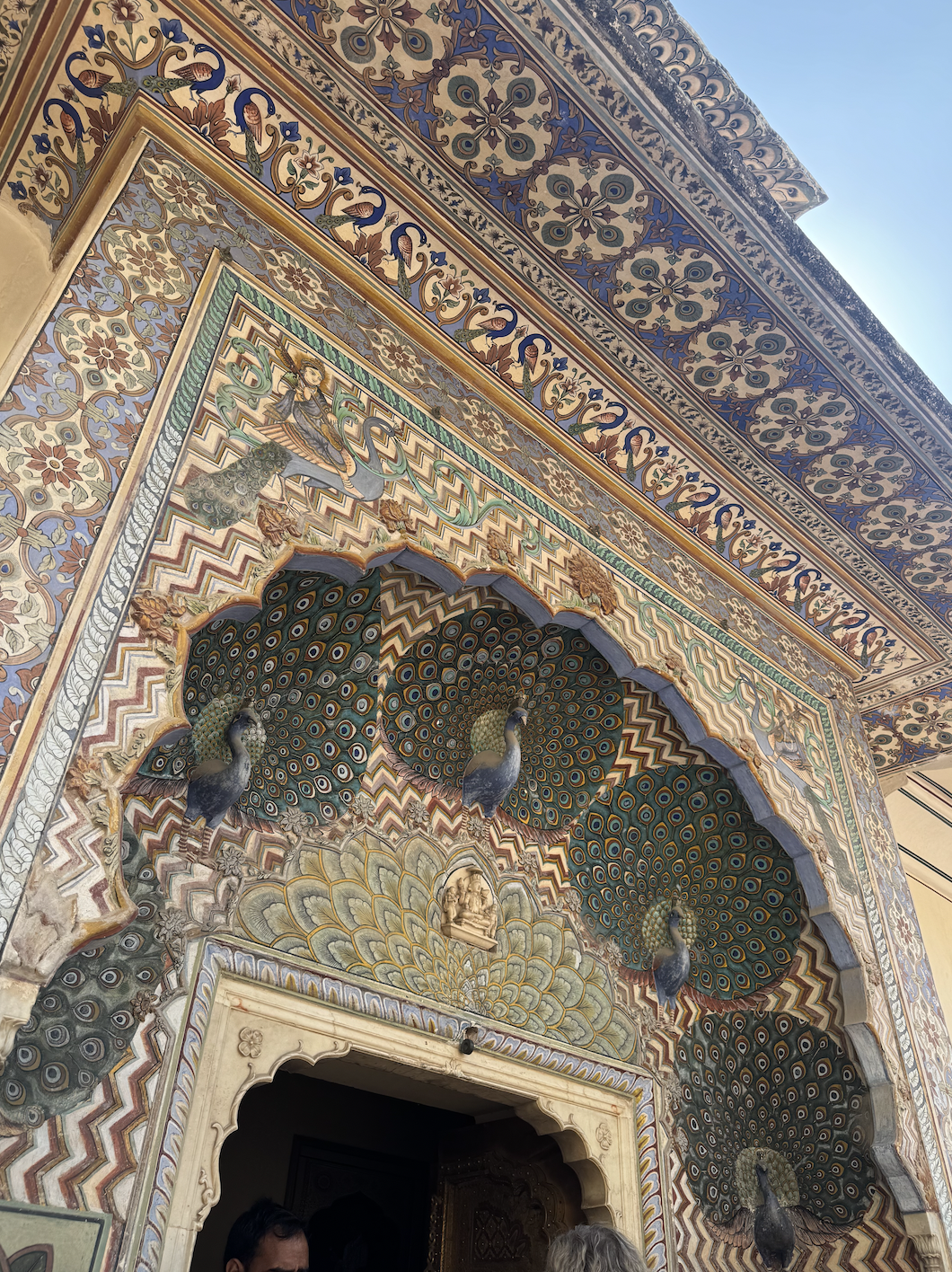
A short walk away lies the magnificent City Palace, where Jaipur’s royal family still resides today. The palace complex blends Rajput and Mughal architecture across a series of courtyards, museums, and ceremonial halls that feel both grand and strangely intimate. The current custodian, Padmanabh Singh, often described as the world’s youngest Maharaja, inherited the title as a teenager and has since become something of a modern royal, dividing his time between palace duties, polo matches, and the occasional fashion campaign.
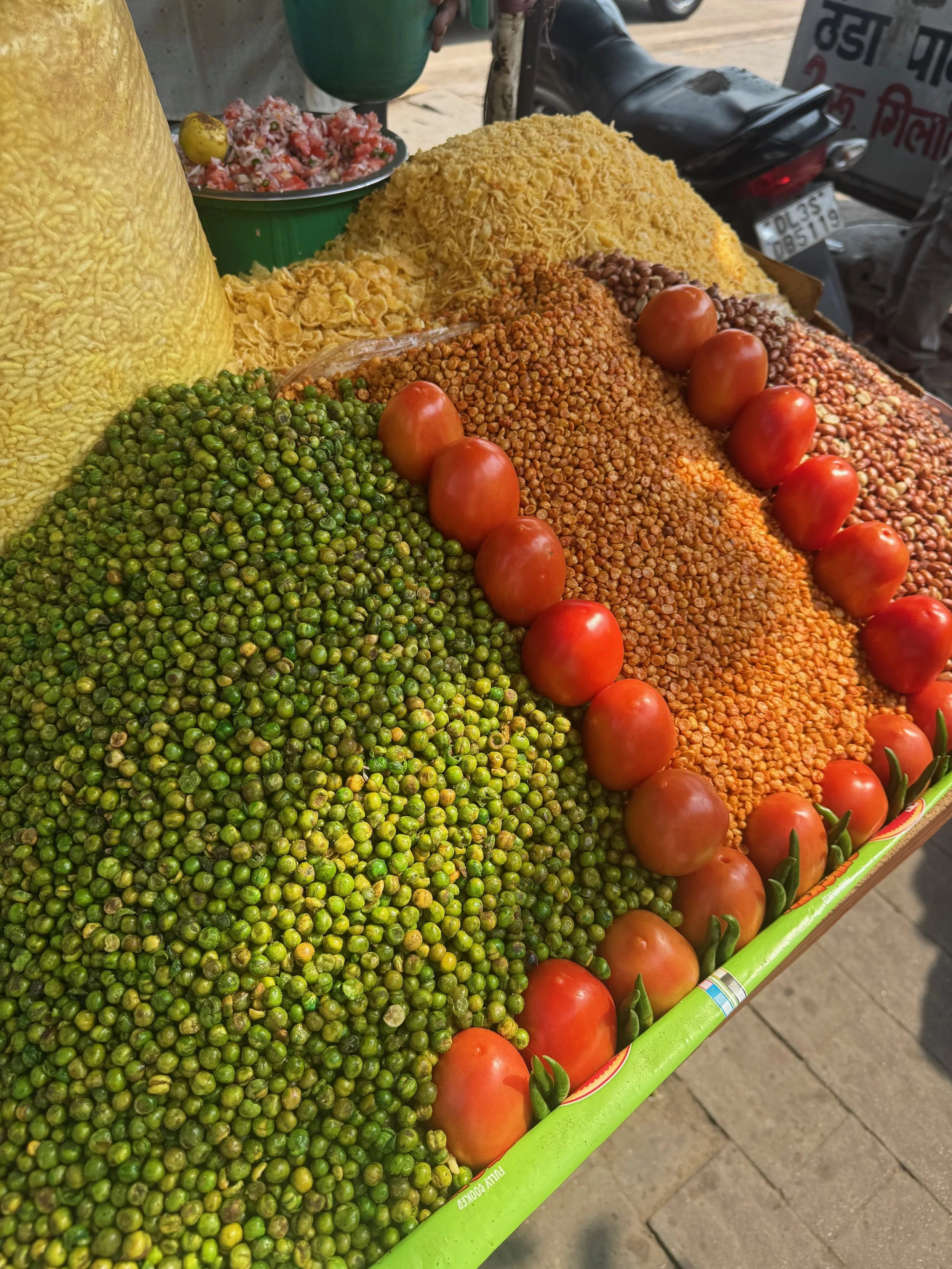
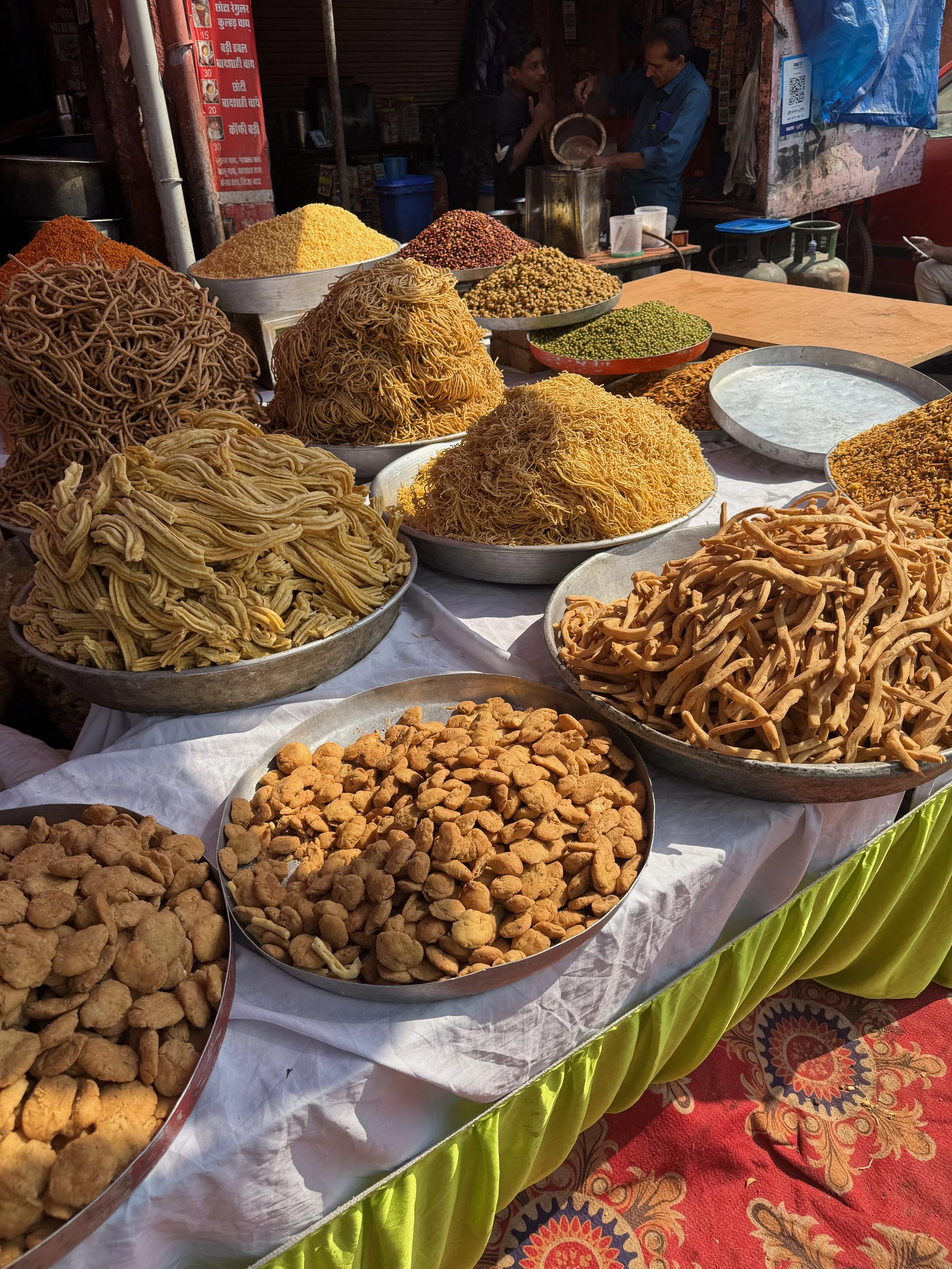
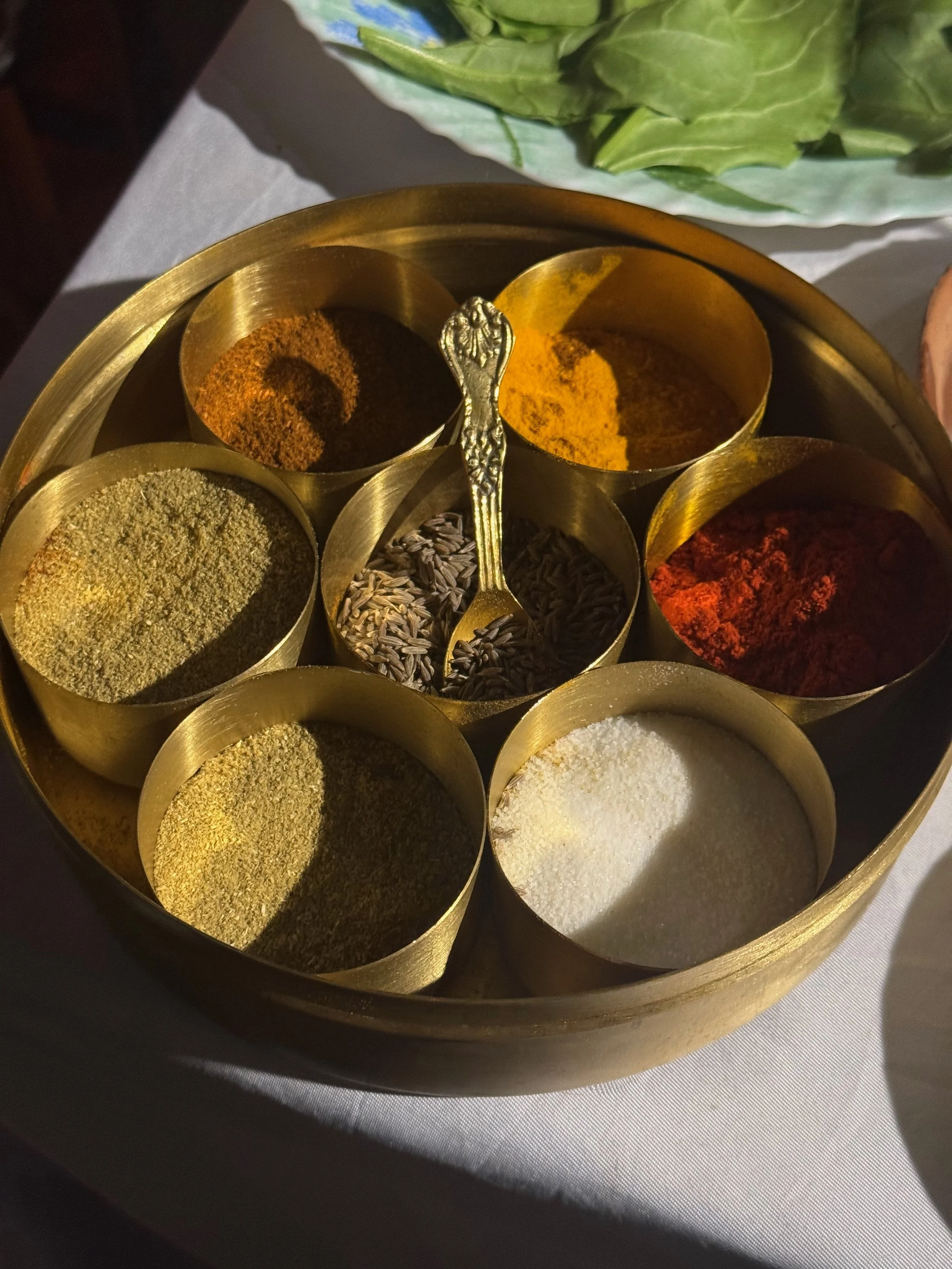
Afterwards we wandered through Jaipur’s bustling spice markets — a sensory explosion of colour and fragrance. Saffron, cardamom, turmeric and every imaginable blend of masala filled the air, while shopkeepers enthusiastically tried to persuade us that we absolutely needed just one more packet.
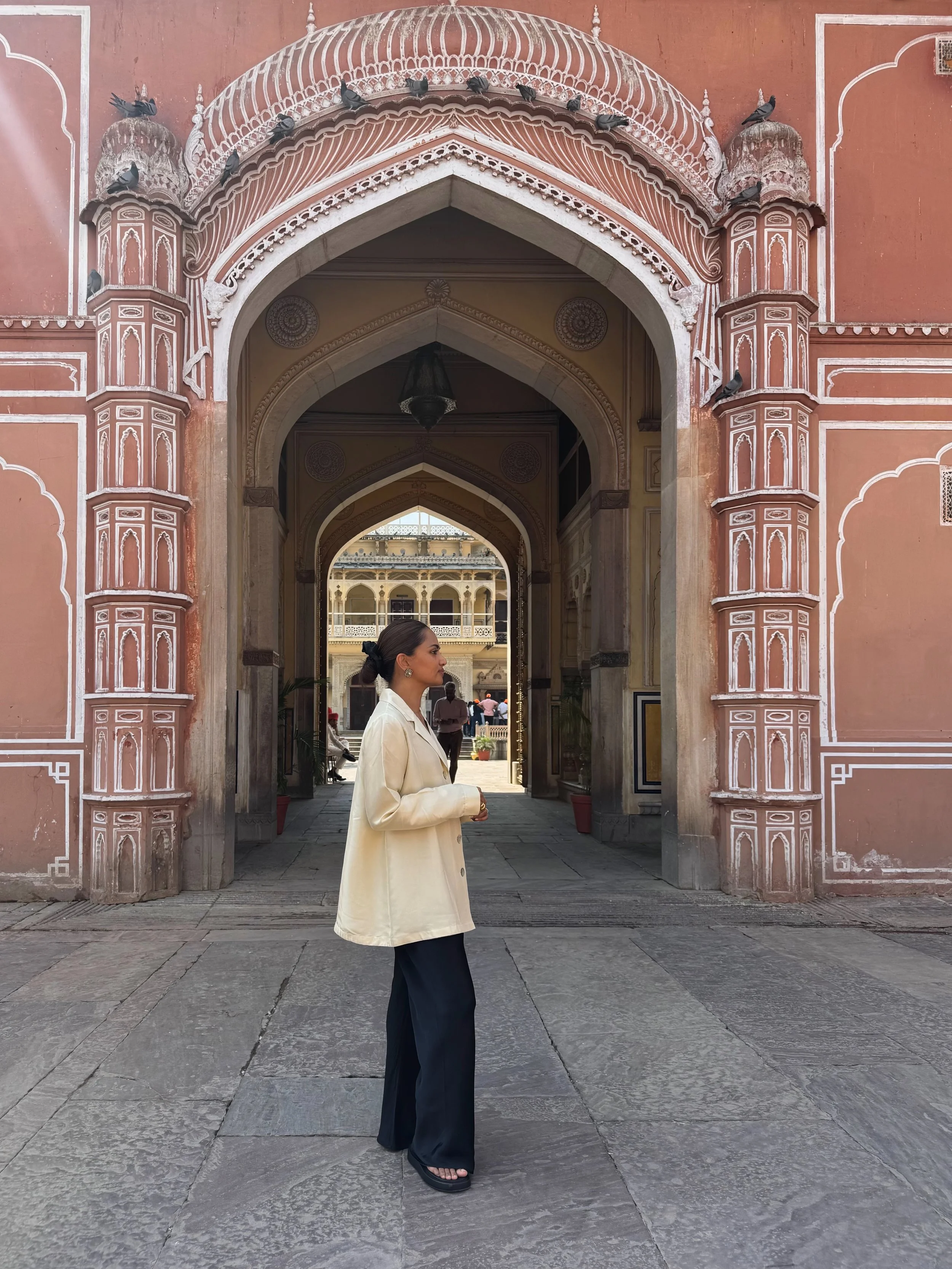
ENTRANCE TO CITY PALACE, JAIPUR
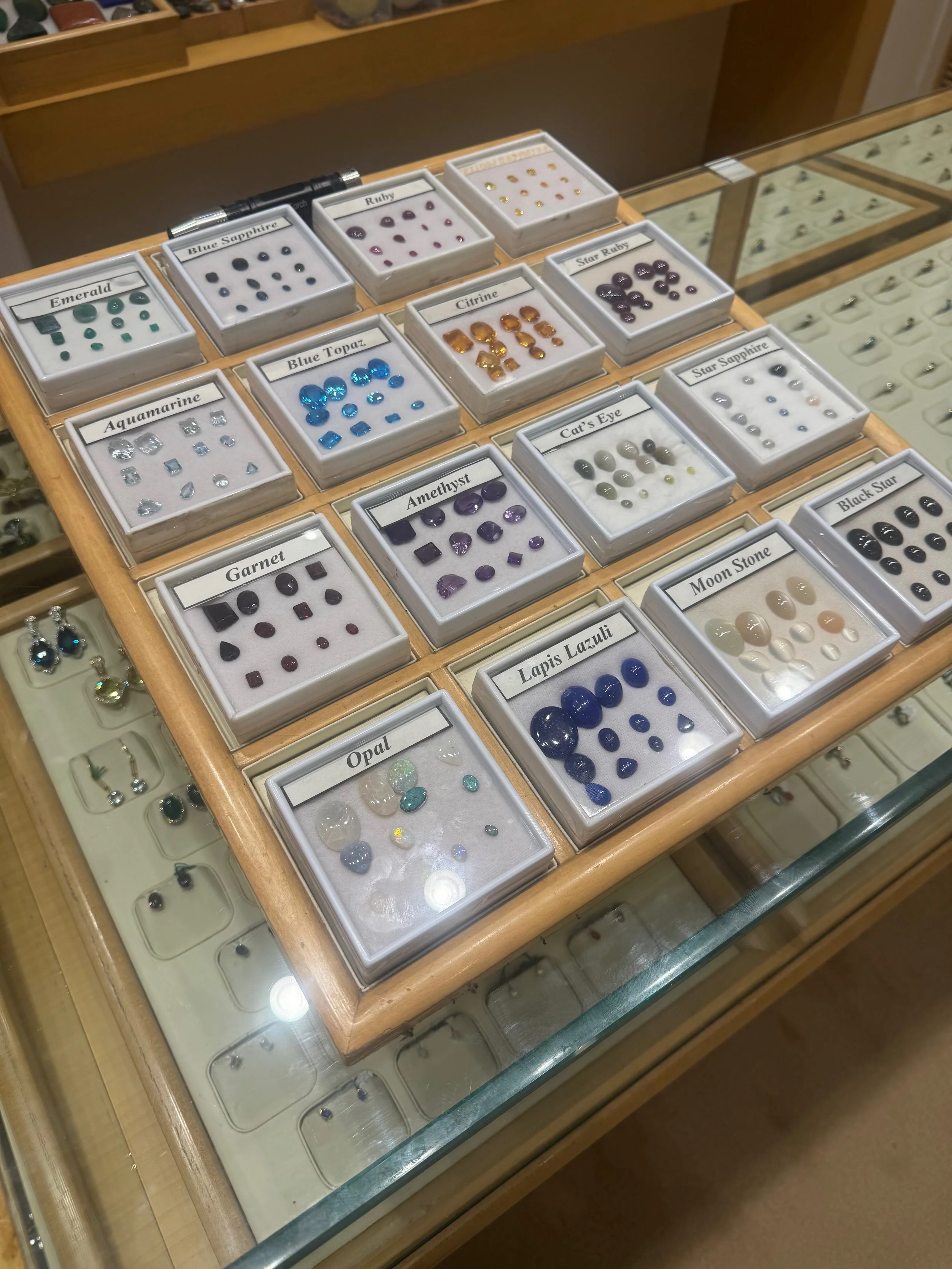
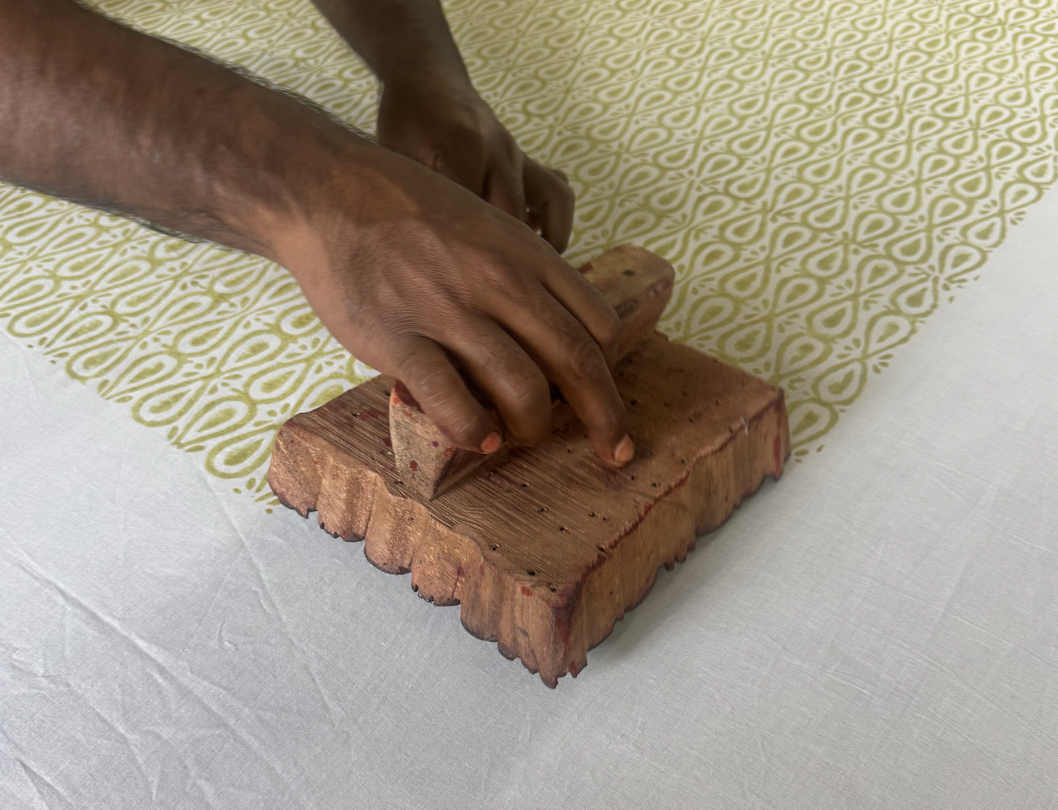
Naturally, no trip to Jaipur would be complete without a little gemstone and textile shopping. Known as one of the world’s great jewellery capitals, Jaipur has been trading precious stones for centuries — and it doesn’t take much persuasion to indulge in a little retail therapy.
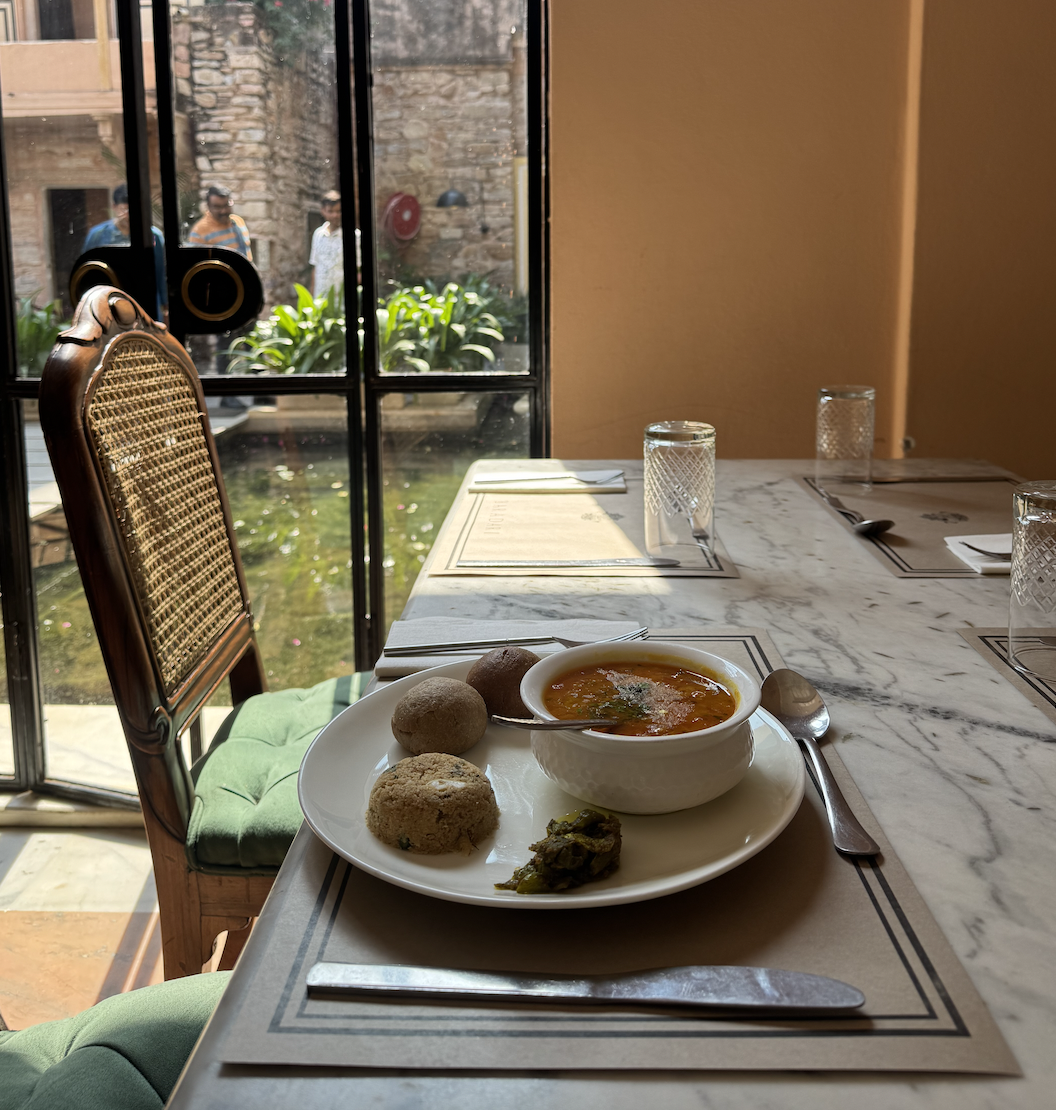
But the highlight of Jaipur was not a palace or monument. It was an evening spent inside a home.
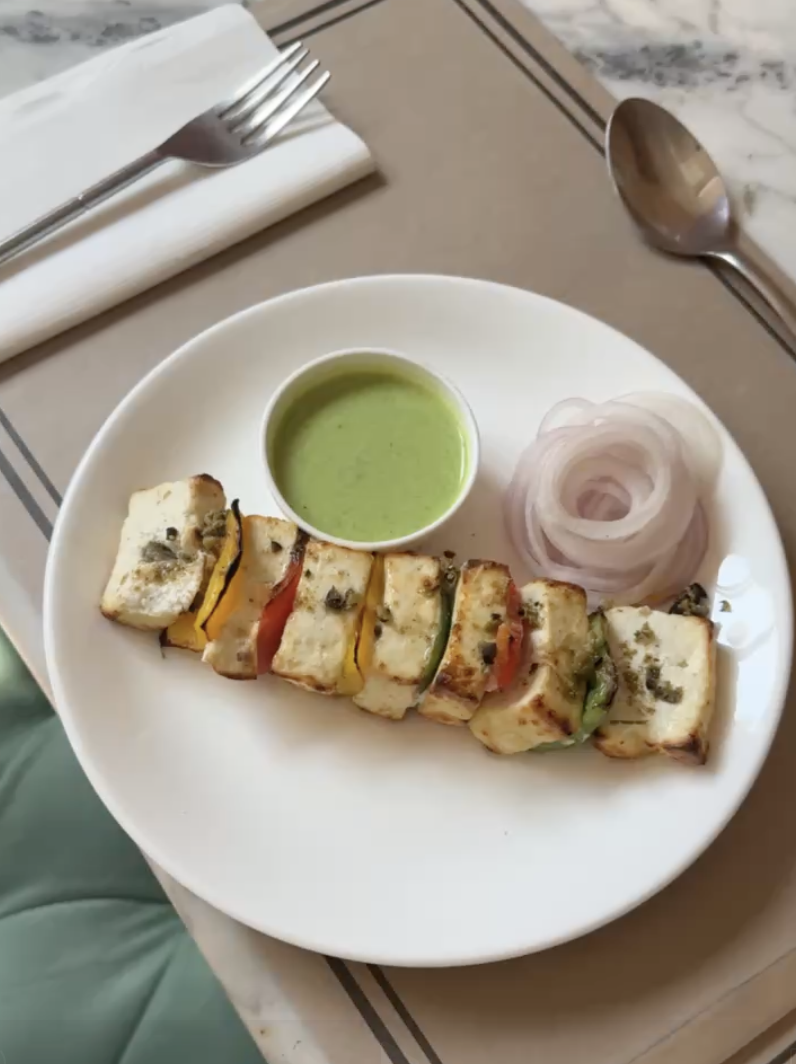
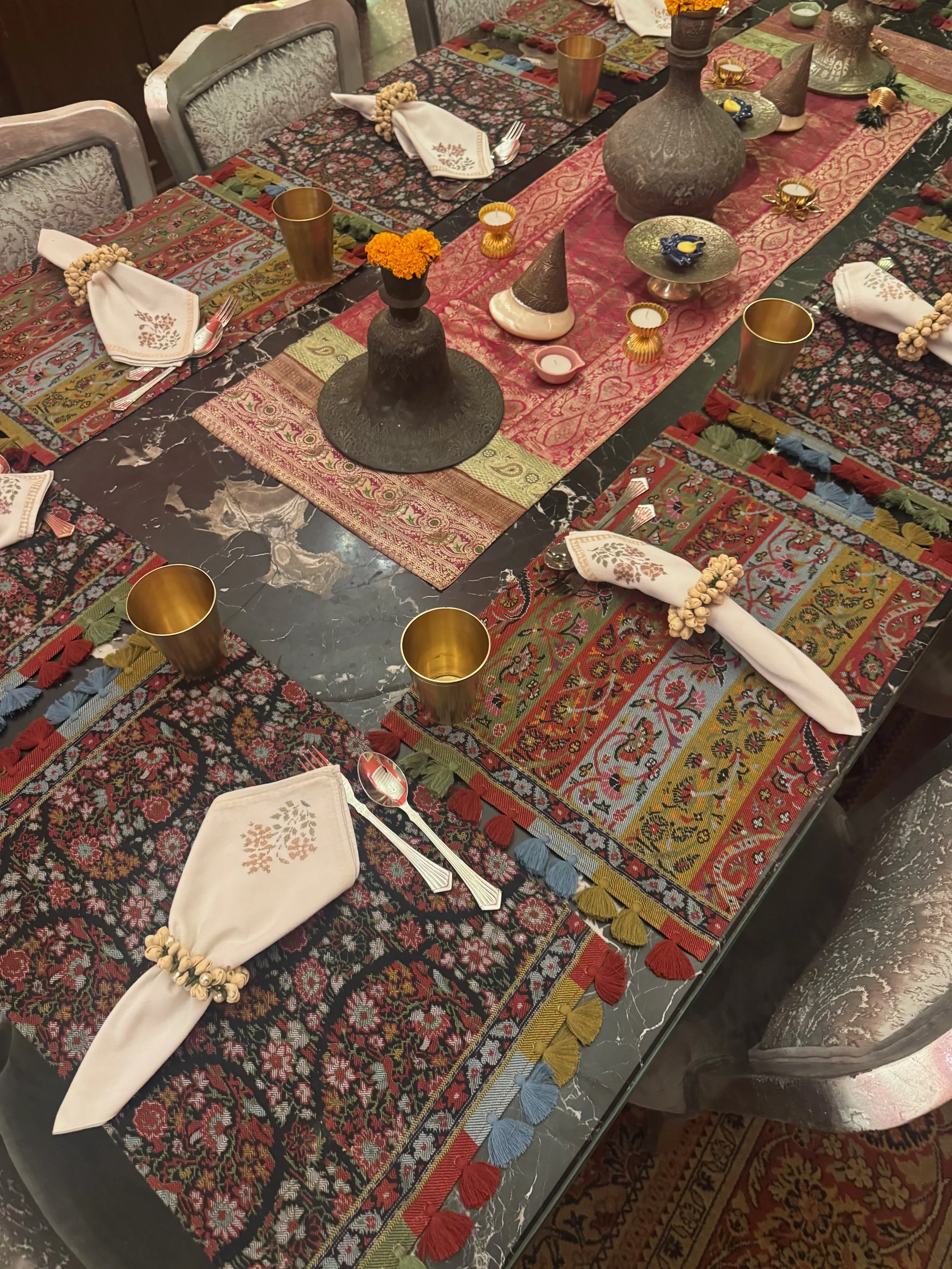
We were fortunate enough to meet the wonderful Devyani Bhatnagar and her husband, interior designer and hotelier Shan Bhatnagar — an exceptionally creative and thoughtful duo who live and work in Jaipur. Devyani welcomed us into their multi-generational family home for a cooking lesson followed by a beautiful sit-down dinner.
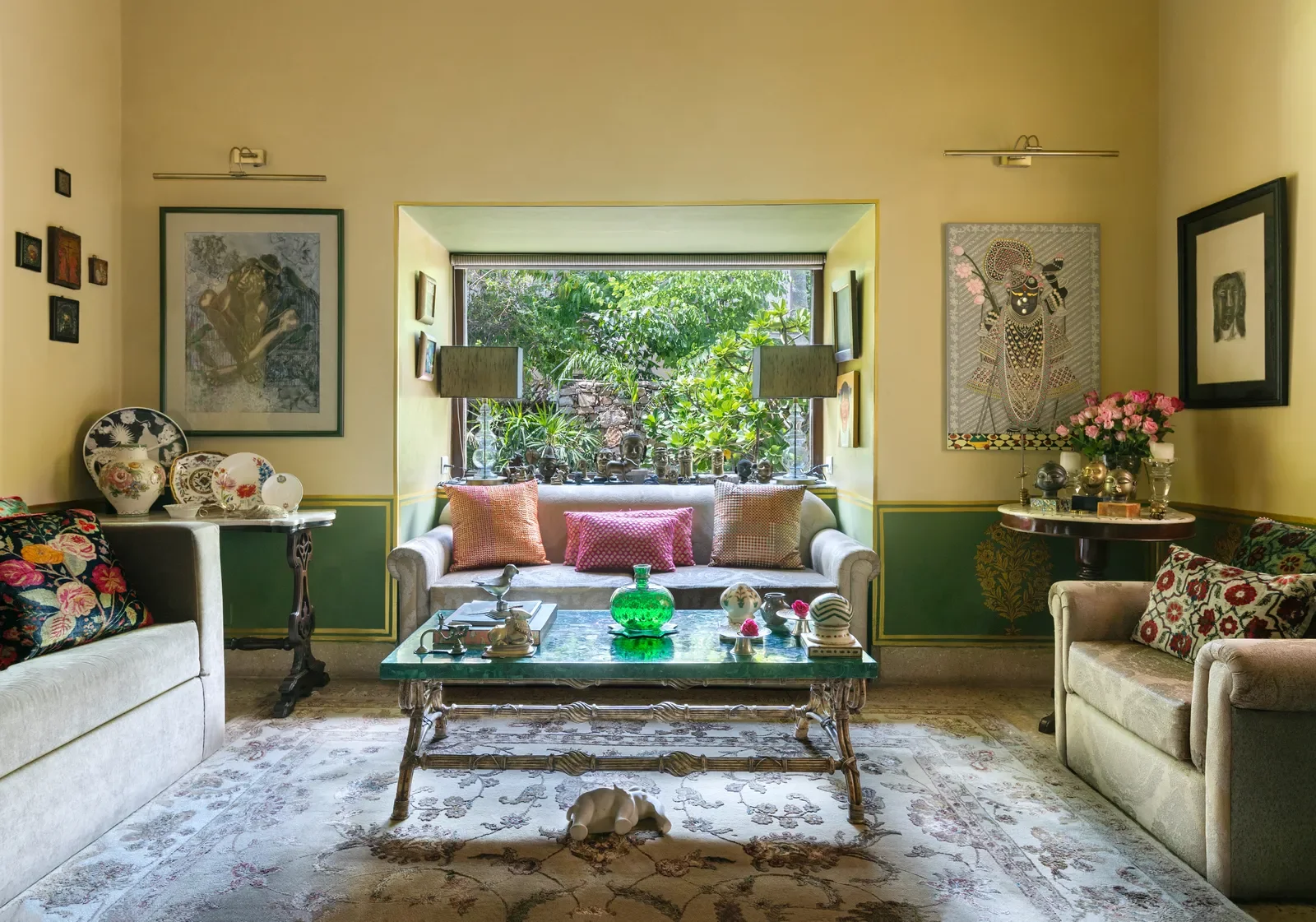
BHATNAGAR HOME BY TAHA AHMED FOR AD
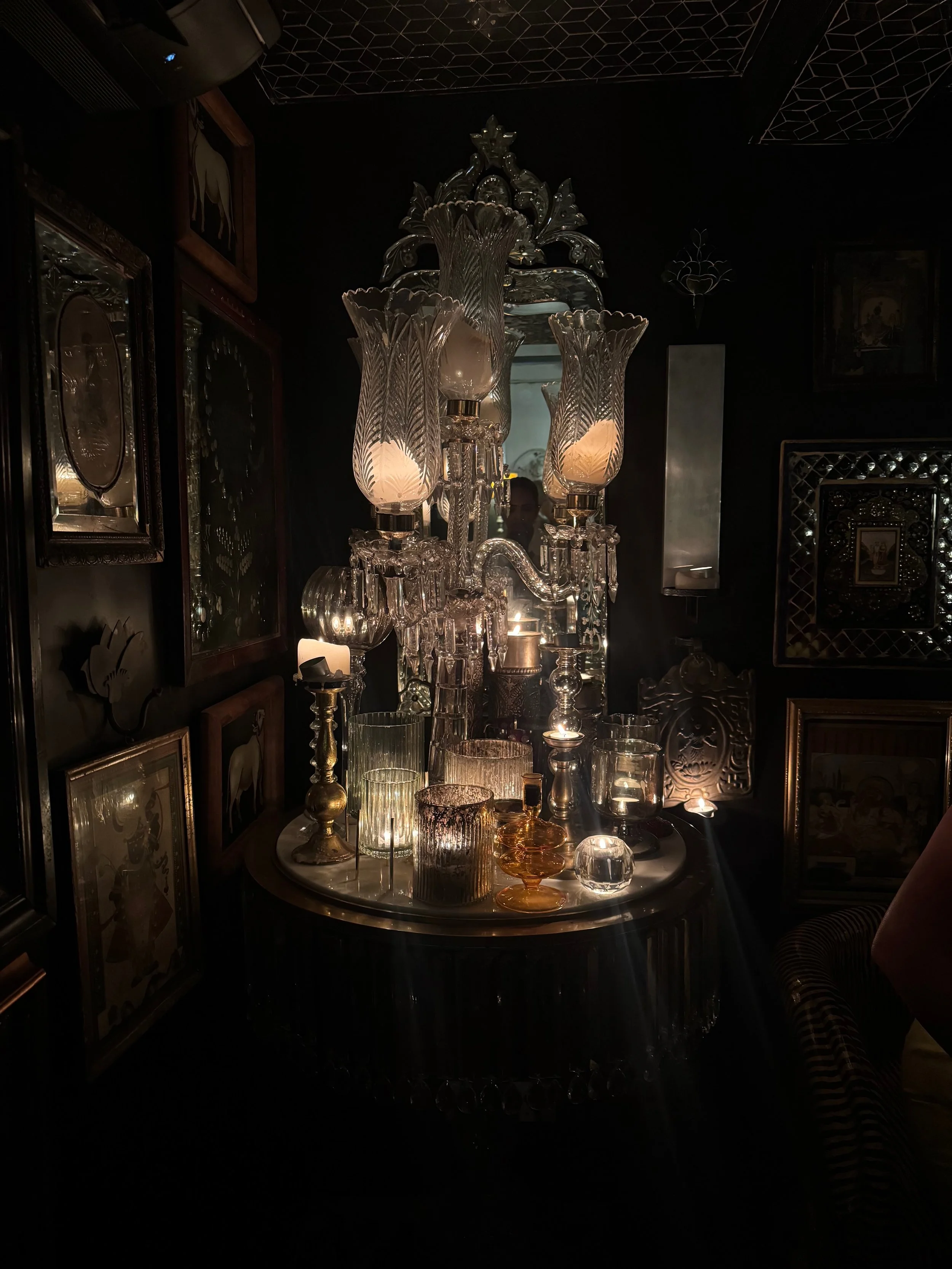
Given my lifelong fascination with design and interiors, their home was one of the highlights of the entire trip. The house unfolds like a series of layered stories: a large drawing room, a traditional courtyard, a lounge and bar area, Shan’s design studio and his mother’s atelier. Every space reflects the spirit of Indian maximalism — colour, texture and history woven together in joyful abundance. Their home reminded me of the pages of 90s Elle Decor magazines.
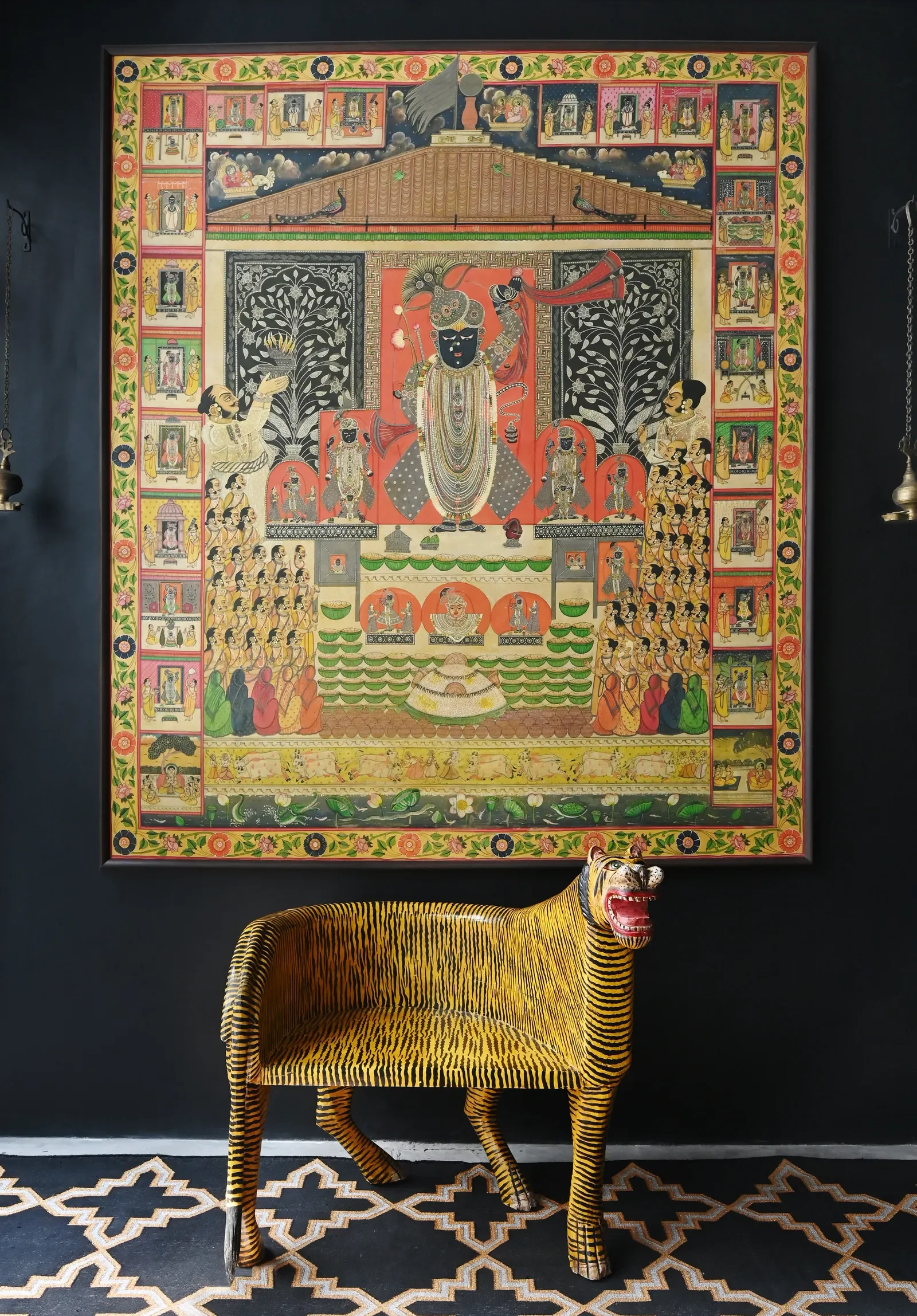
BHATNAGAR HOME BY TAHA AHMED FOR AD
As Shan once told Architectural Digest, “Indian style is all about maximalism. The more, the merrier.” Nowhere does that philosophy come alive quite like in the Bhatnagar home.
That evening we were also lucky enough to celebrate one of the special nights of Diwali with their family. We were welcomed with flowers, laughter and fireworks lighting up the Jaipur sky, the kind of evening that feels both intimate and celebratory at the same time.
One of those moments in travel that quietly stays with you long after the trip is over. I am grateful to share this moment with my friend and travel companion Chand.
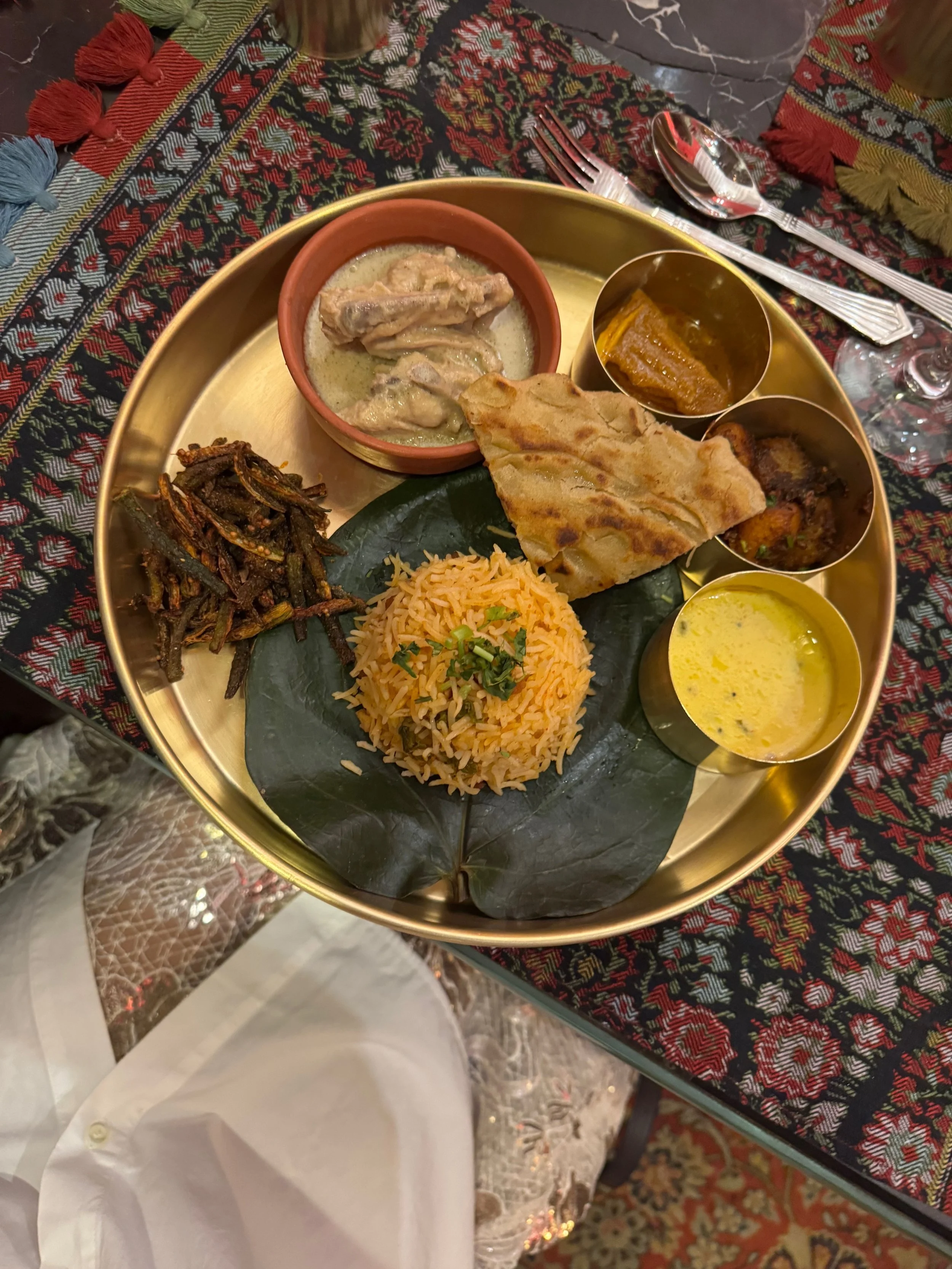
Jaipur easily has enough to fill a multi-day itinerary. On my next visit, I would stay at least four nights to properly explore the city’s palaces, markets and design scene.
The following day was more relaxed. Our group split up: some ventured out to explore the forts surrounding Jaipur, while the rest of us opted for a little more gemstone retail therapy — because when in Jaipur.
Day 6 & 7 : Udaipur: India’s Most Dreamlike City
From Jaipur we travelled to Udaipur, also known as the “City of Lakes”, Udaipur feels worlds away from the frenetic pace of India’s larger metropolises.
We checked into the historic Shiv Niwas Palace, a former royal residence built in the early 20th century as part of the grand City Palace complex, where the royal family to Udaipur resides till date. Today it functions as a heritage hotel where guests can quite literally sleep inside a palace once occupied by the rulers of Mewar. The building itself is extraordinary: marble balconies, arched corridors, courtyards and sweeping views across Lake Pichola.
Our main Diwali night was celebrated with a spectacular poolside Rajasthani feast. Long tables were filled with an elaborate thali — a traditional platter featuring numerous small dishes. Rich curries, fragrant lentils, freshly baked breads, pickles, sweets and spiced vegetables appeared in a steady stream, reflecting the incredible generosity of Rajasthani hospitality.
Soft music drifted through the courtyard while lanterns flickered around the pool.
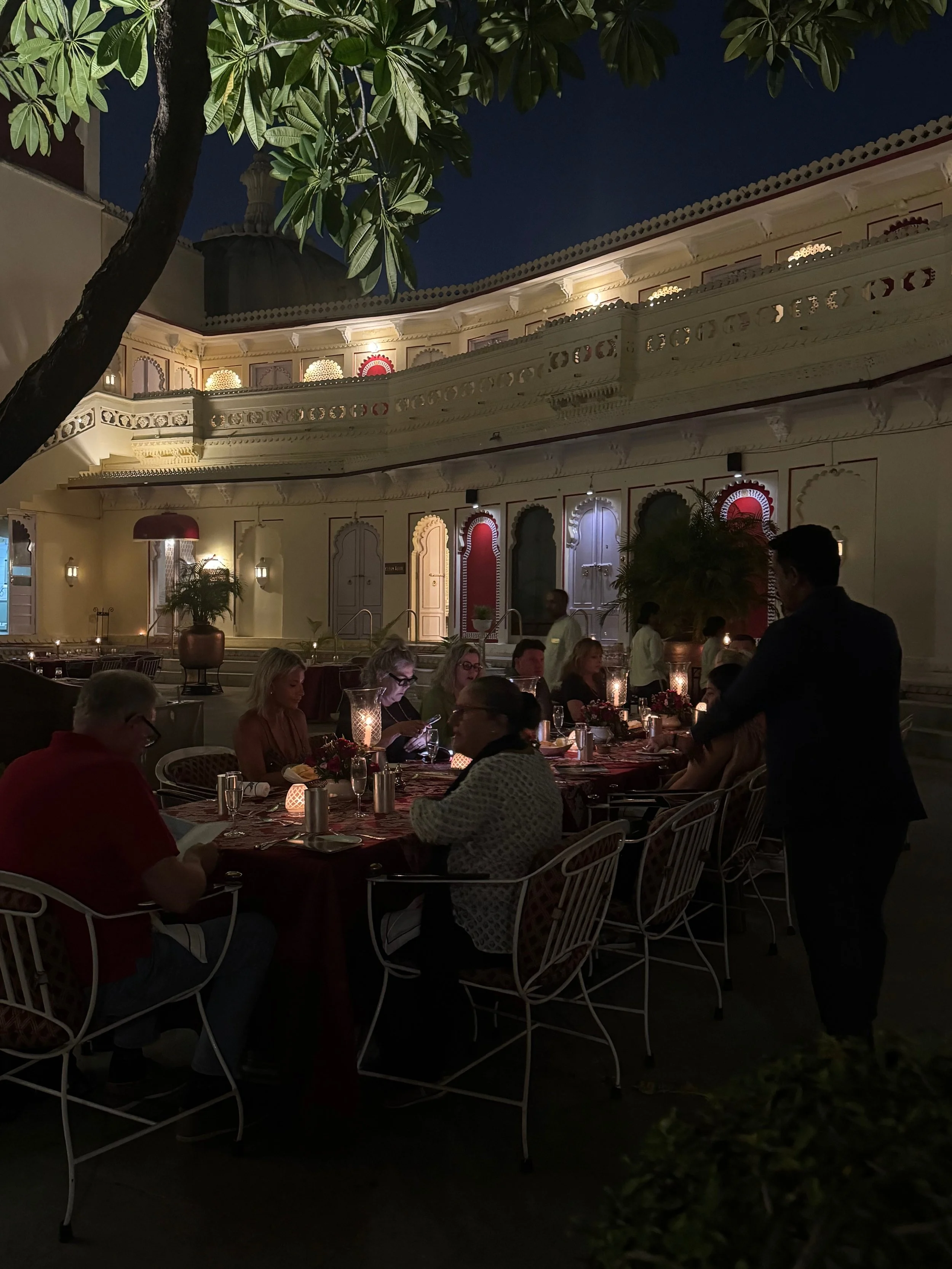
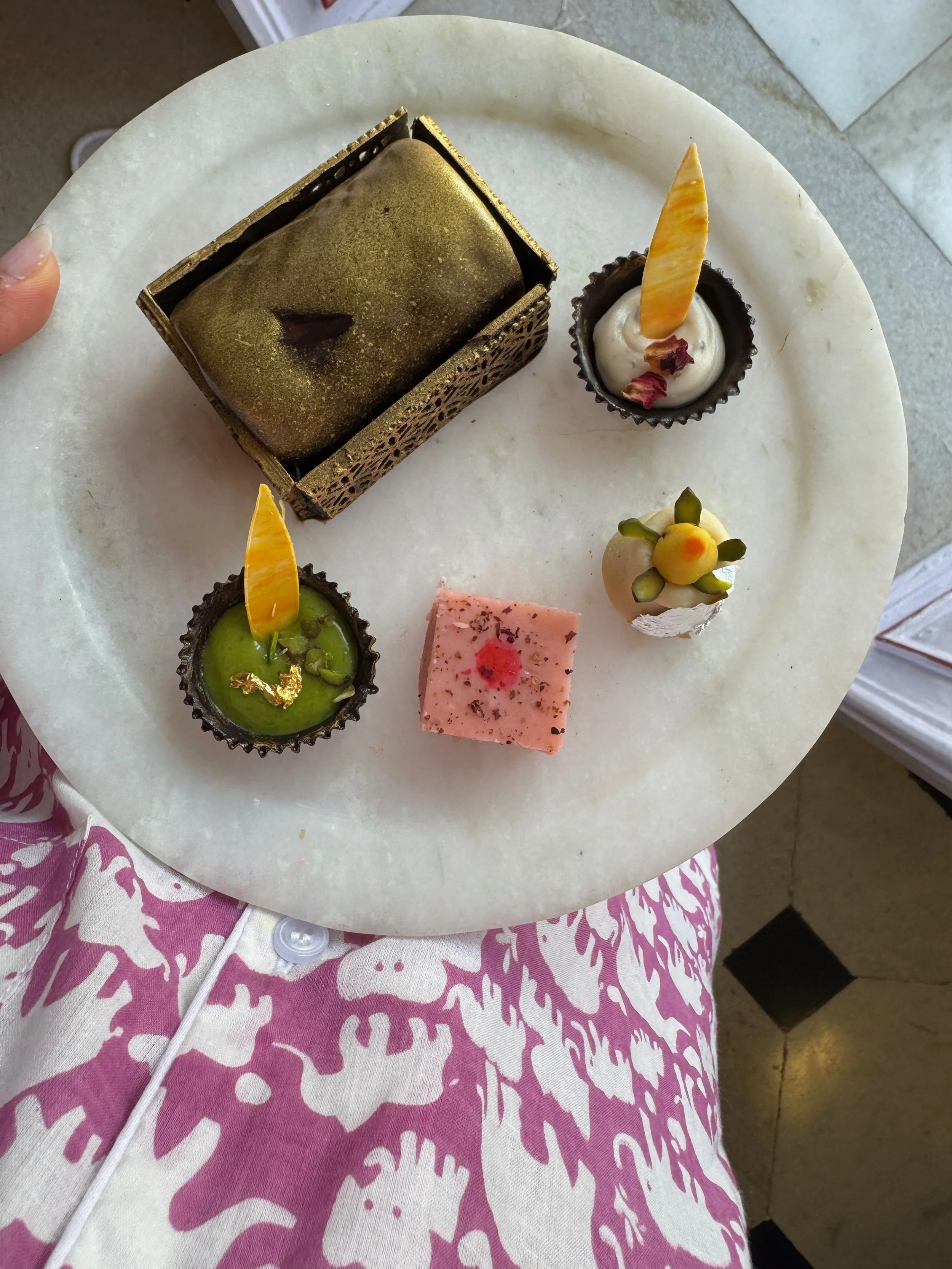
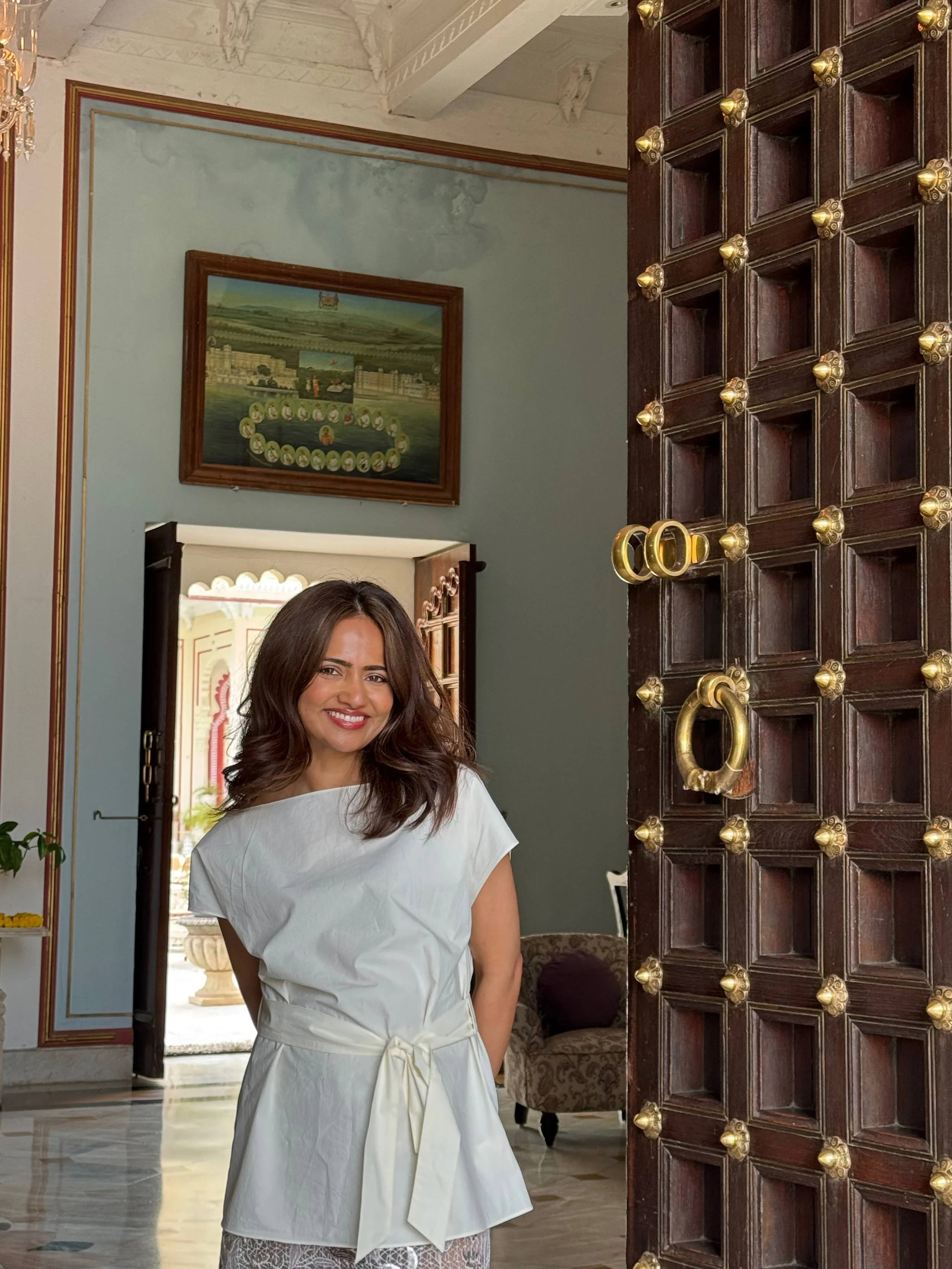
It was one of those rare travel moments where everything feels perfectly in place — the setting, the food, the company.
The following morning began with what might be one of the most beautiful breakfasts I’ve ever experienced. Sitting by the window of the hotel restaurant, overlooking the palace courtyards and lake beyond, we enjoyed dosa and fresh fruit while briefly imagining what life as Rajasthani royalty might feel like.
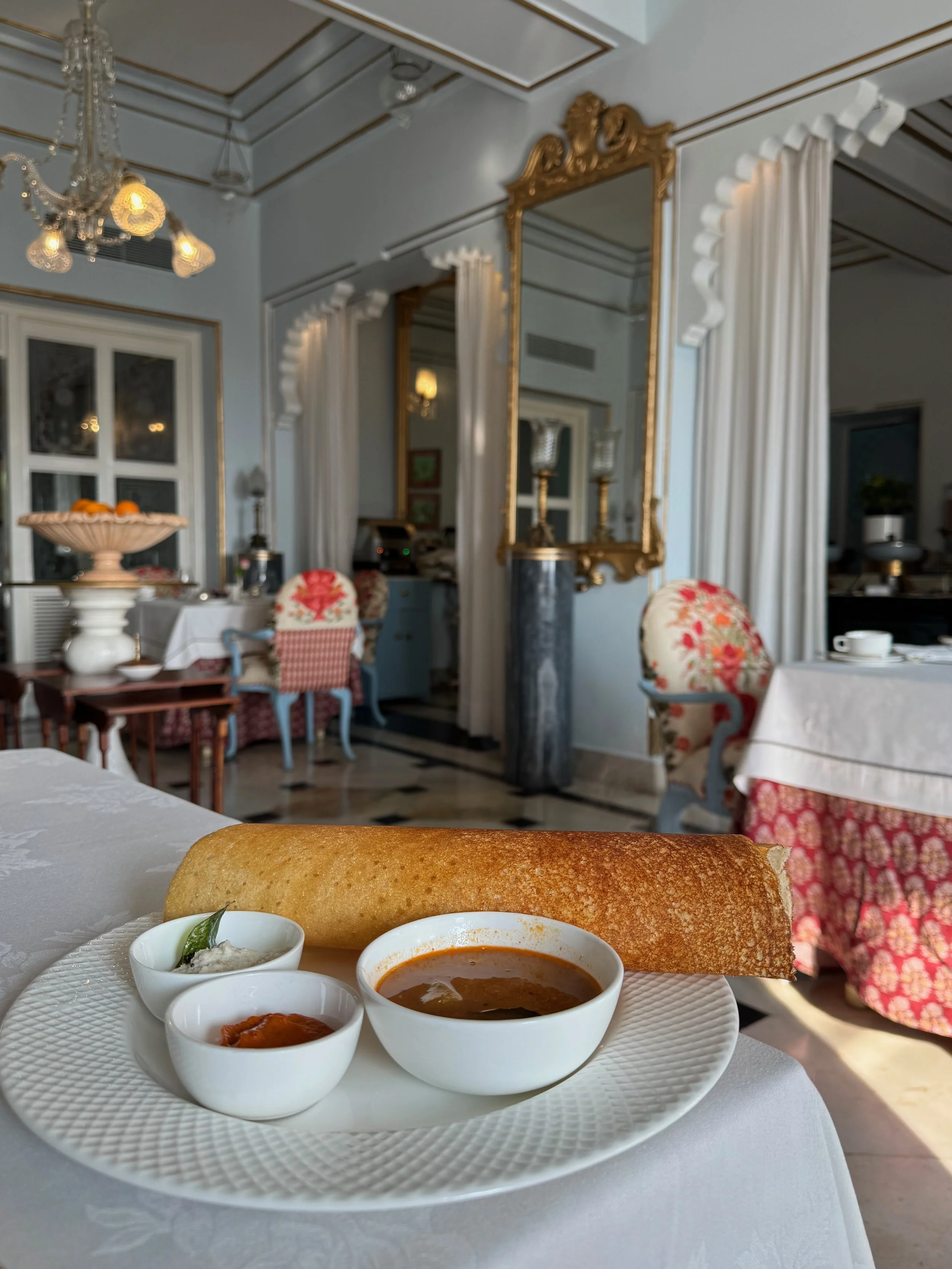
DOSA AT SHIV NIVAS PALACE
After breakfast we set off for a full day exploring Udaipur, beginning with the magnificent City Palace. This vast palace complex — the largest in Rajasthan — rises dramatically above Lake Pichola and is a fascinating blend of Rajput, Mughal and European architectural influences.
Inside, visitors wander through mirrored halls, intricate mosaic rooms, royal balconies and ornate courtyards that once hosted ceremonies and celebrations of the Mewar dynasty.
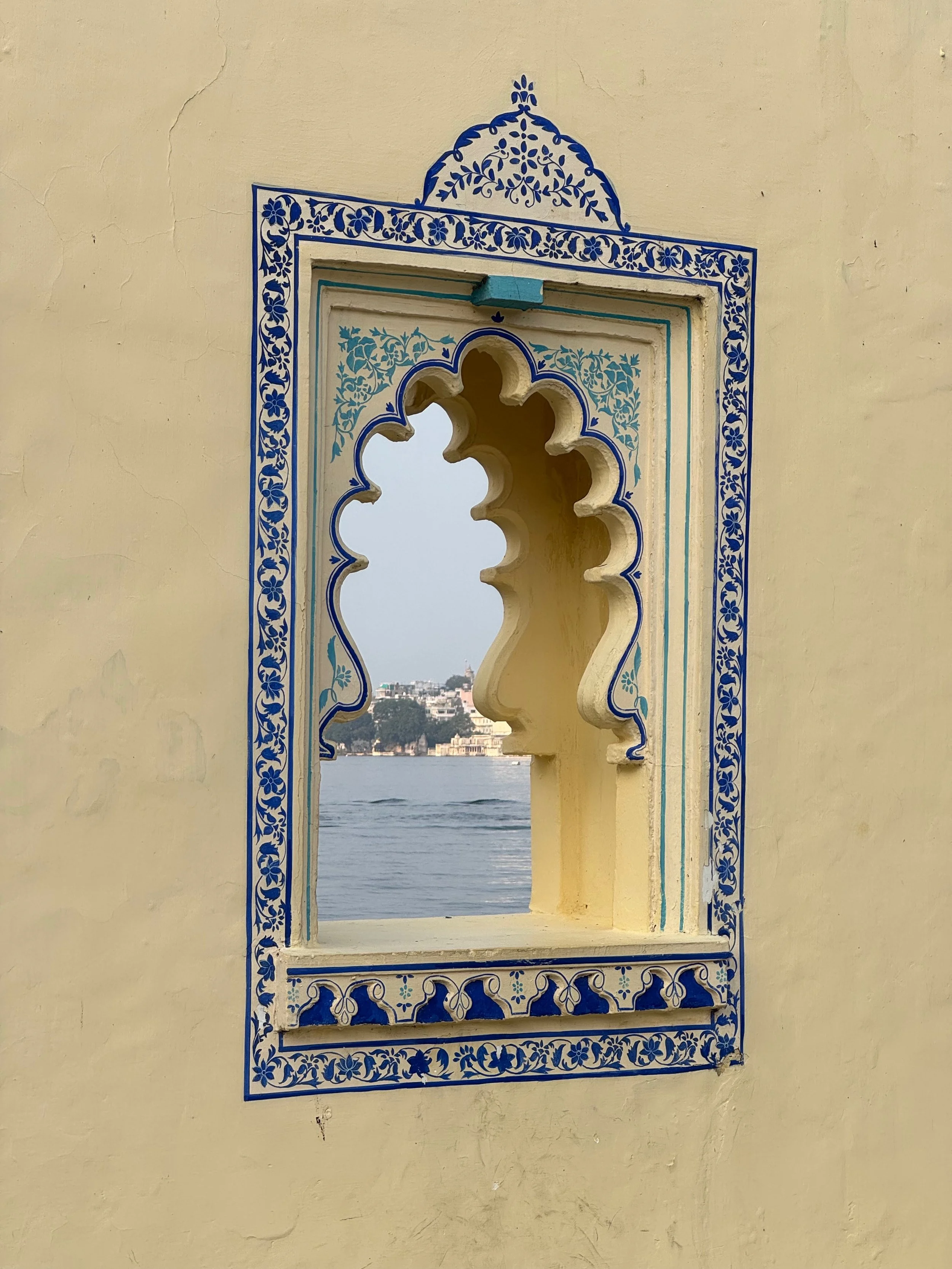
JAGMANDIR, UDAIPUR
As evening approached, we boarded a boat and drifted across the shimmering waters of Lake Pichola. From the lake the city reveals its most cinematic angle: the City Palace rising above the shoreline, the island palaces floating like mirages, and the golden light reflecting across the water.
We stopped for drinks at the iconic Darikhana Bar, a floating bar on Jagmandir, where champagne and cocktails seemed like the only appropriate way to end the day.
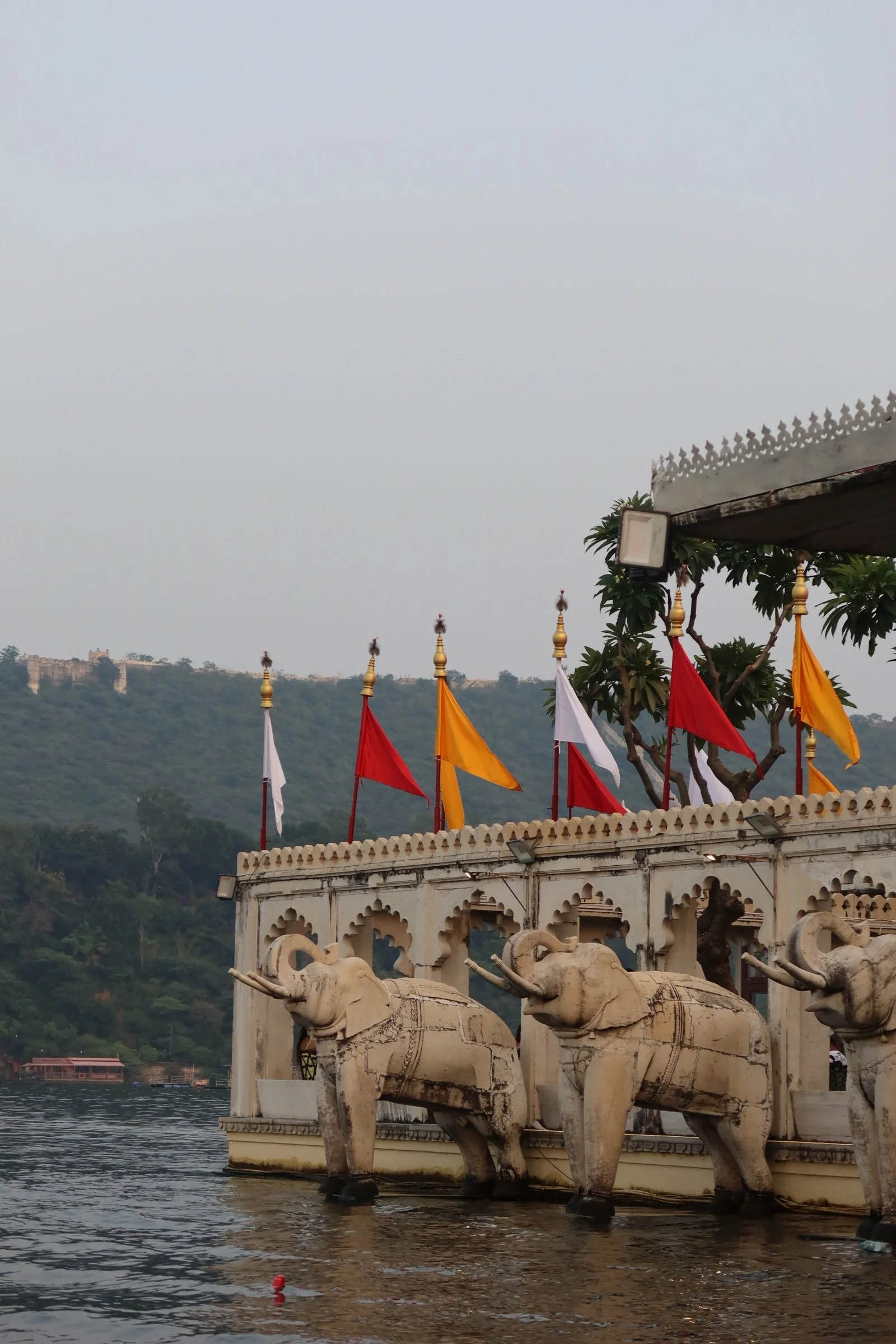
JAGMANDIR, UDAIPUR
By this point in the journey the group was visibly more relaxed. Leaving the big cities behind and settling into the slower rhythm of Rajasthan had worked its magic.
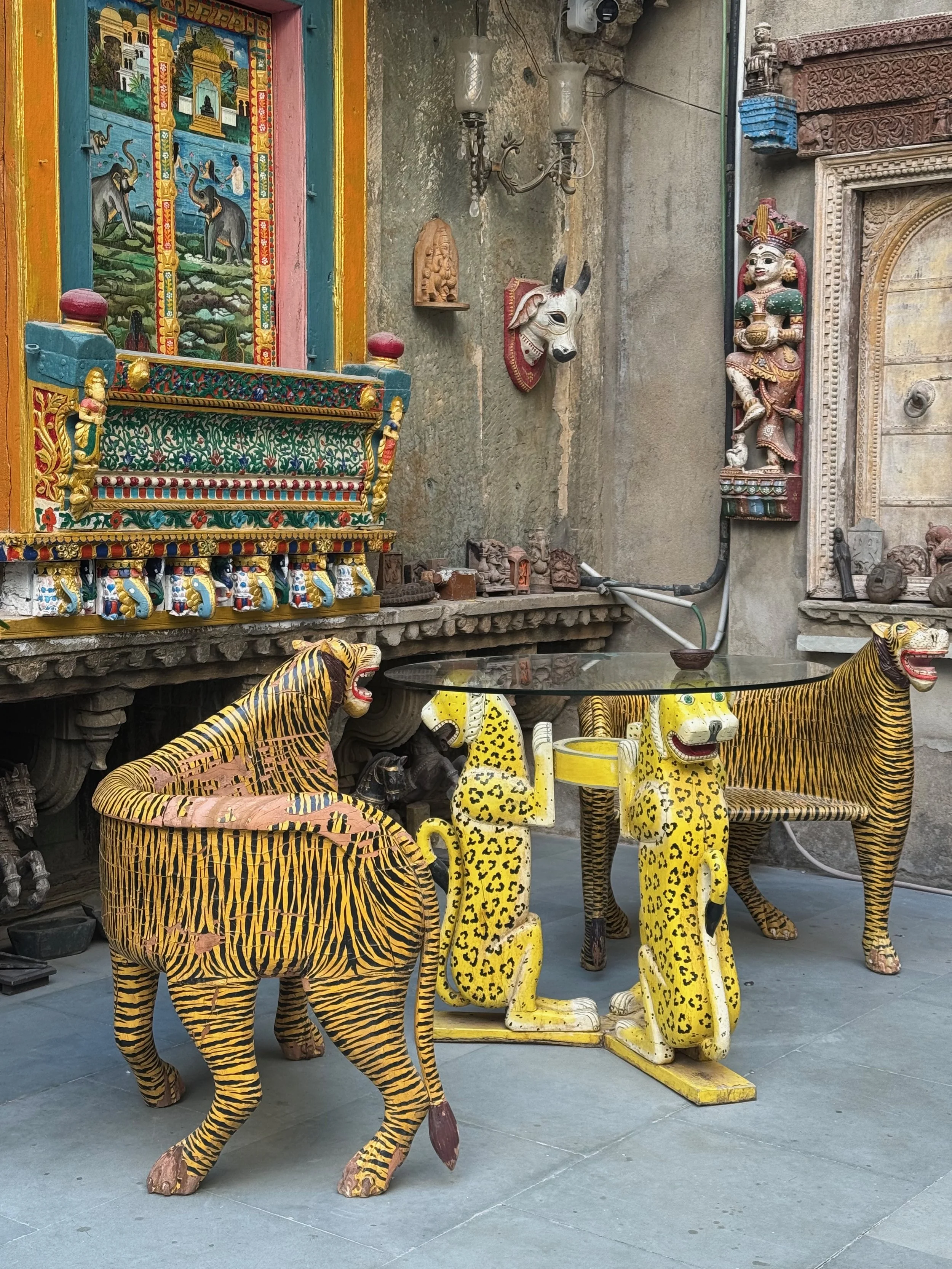
LOCAL VINTAGE SHOP IN UDAIPUR
Dinner that night was hosted by the historic Bedla Family — descendants of the legendary Rajput ruler Prithviraj Chauhan, often remembered as the last Hindu emperor of Delhi and Ajmer. Inside their family residence, known as Bedla House, we watched a cooking demonstration before sitting down together for dinner — a rare opportunity to experience living history and Rajasthani culinary traditions inside a royal family home.
Day 8, 9 and 10 : Mumbai, India’s City of Dreams
Day eight and we had just settled into the rhythm of palace life, marble corridors, lake views and slow Rajasthani mornings, but our itinerary had other plans.
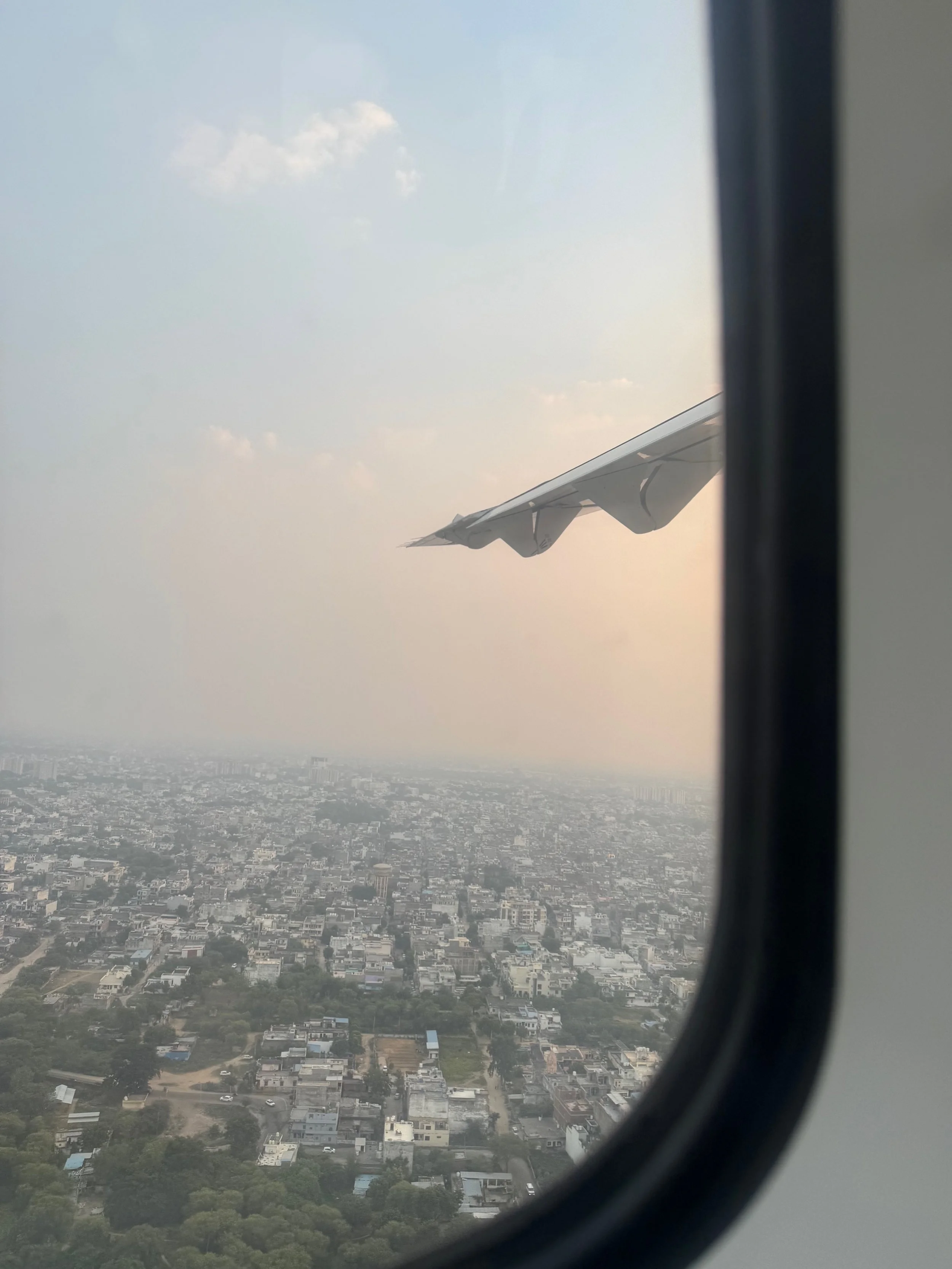
Our bags, now mysteriously double the size after some very successful shopping excursions, were hauled to the airport for our flight to Mumbai. After a brief moment of luggage drama at check-in, we discovered an important travel lesson: many local airlines in India allow only 15 kilos of checked baggage.
Hot tip: if you plan on doing any serious shopping in India, either book flights with extra baggage allowance or set aside a small budget for excess luggage. Alternatively, shipping heavier pieces home via a courier like DHL can save a lot of airport stress.
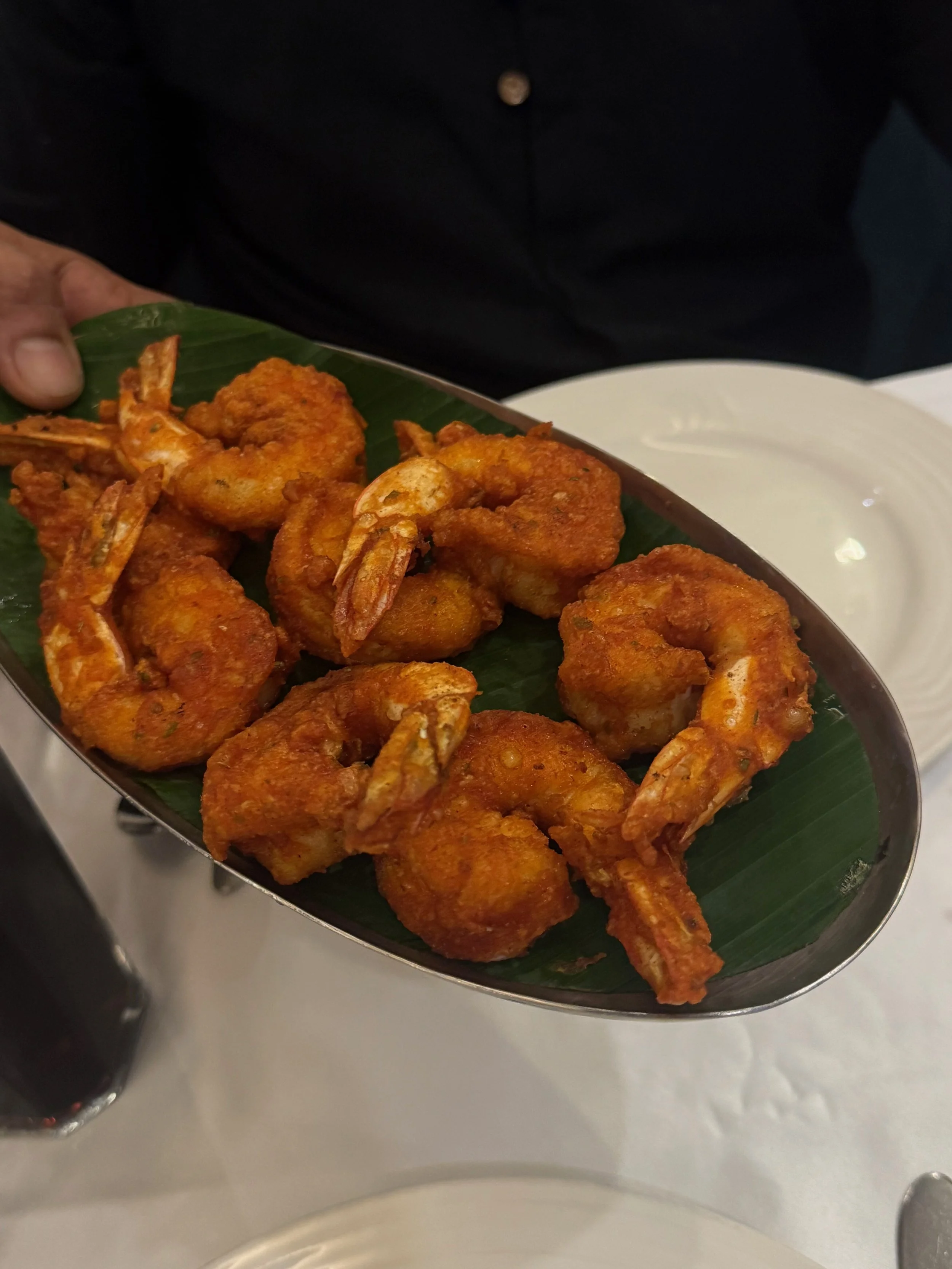
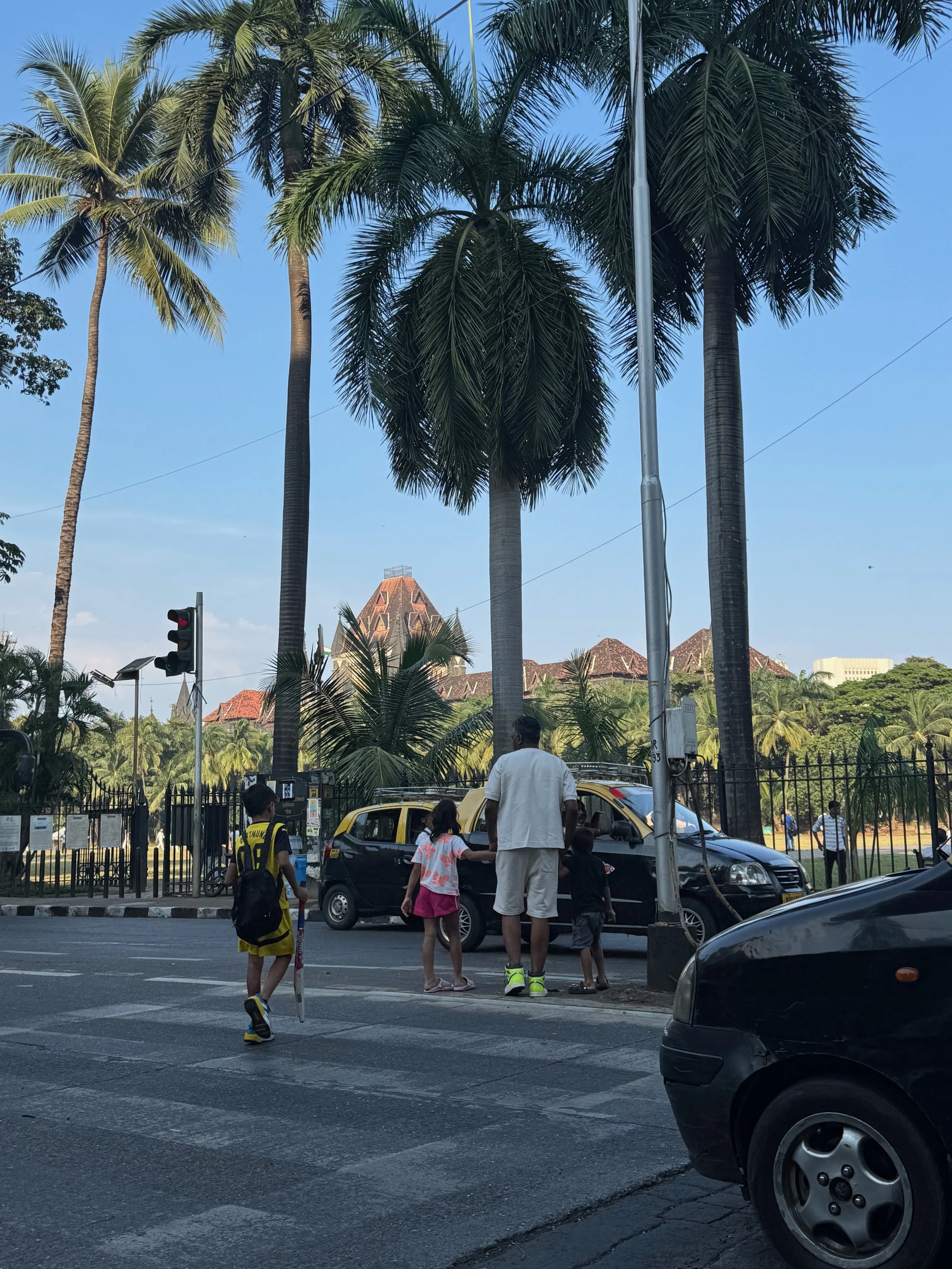
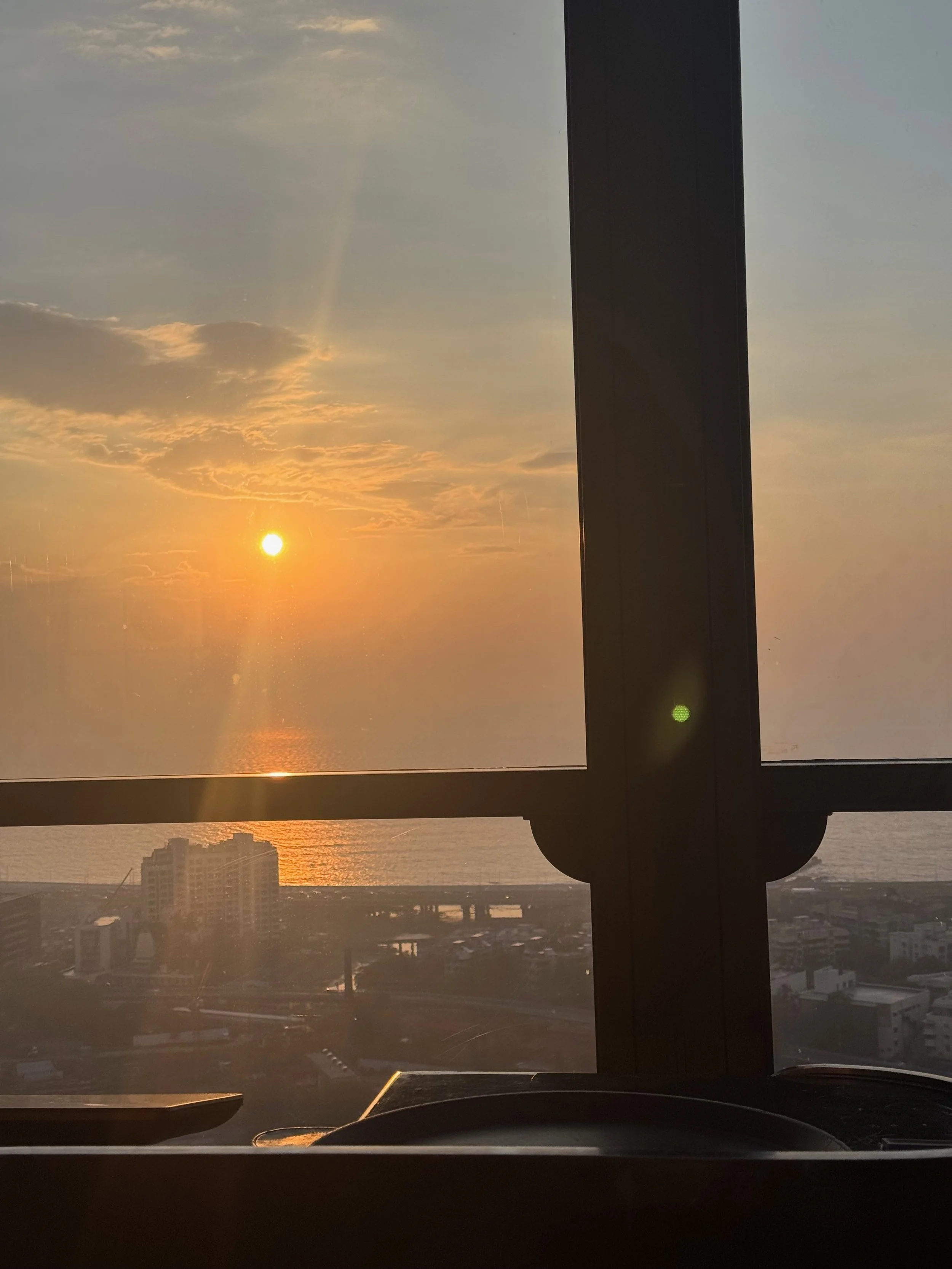
Eventually, we arrived in Mumbai — India’s kinetic financial capital and the city that never seems to pause. As Vogue once described it, Mumbai is “a place where colonial architecture, Bollywood glamour and relentless energy collide in the most intoxicating way.”
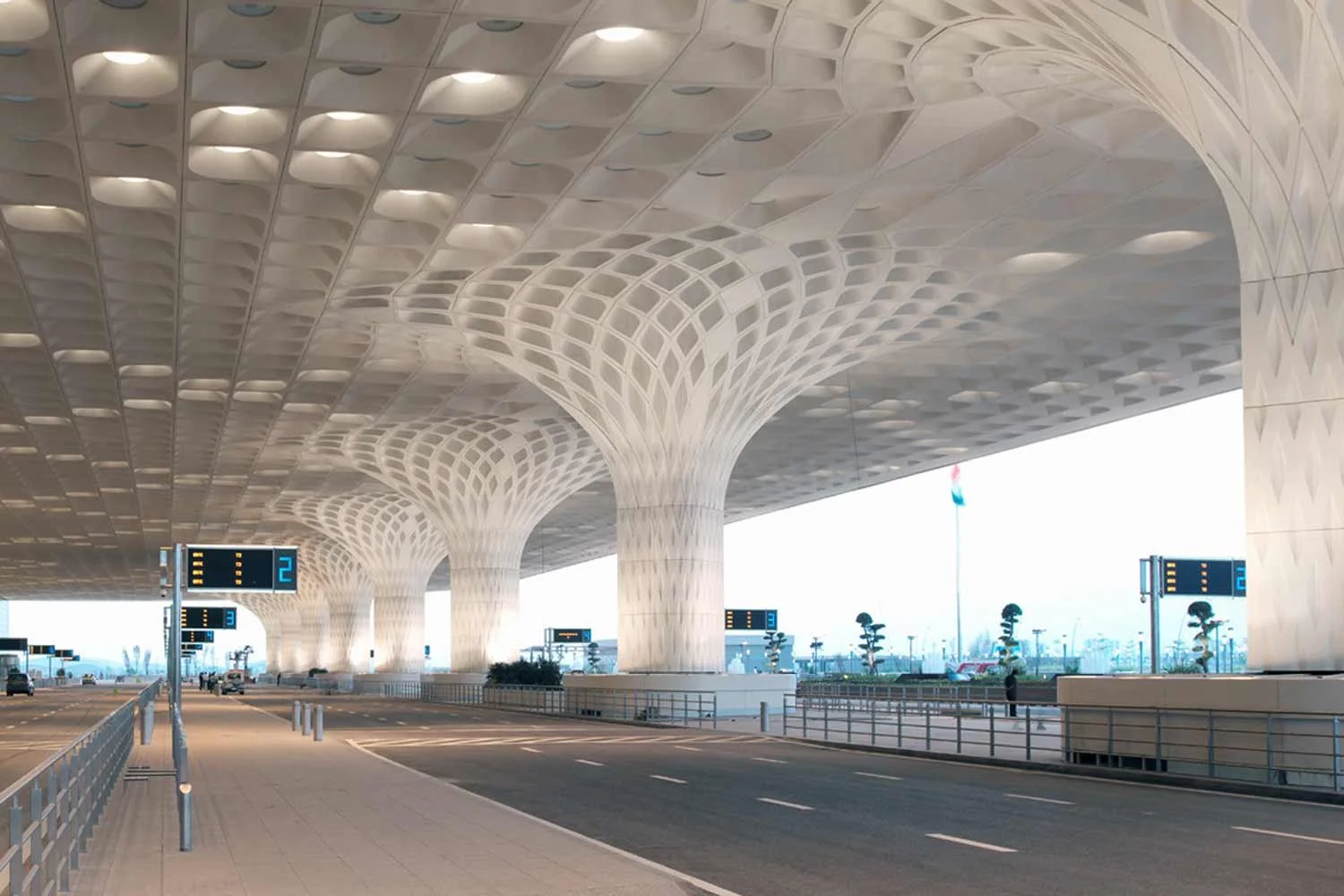
MUMBAI AIRPORT
After checking into our hotel, we set the afternoon aside to rest before regrouping for dinner at the iconic The Bombay Canteen.
Food has been a central theme throughout this culinary tour, and this dinner quickly became one of the highlights of our time in Mumbai. The Bombay Canteen is widely regarded as one of the city’s most influential modern Indian restaurants, known for reimagining traditional regional dishes with contemporary flair.
Mumbai’s culinary identity is shaped by many cultures and Restaurants like The Bombay Canteen celebrate this layered history by drawing inspiration from regional Indian kitchens and presenting them with creativity and humour. The result is food that feels both nostalgic and surprising — exactly the kind of dining experience that makes Mumbai such an exciting culinary destination.
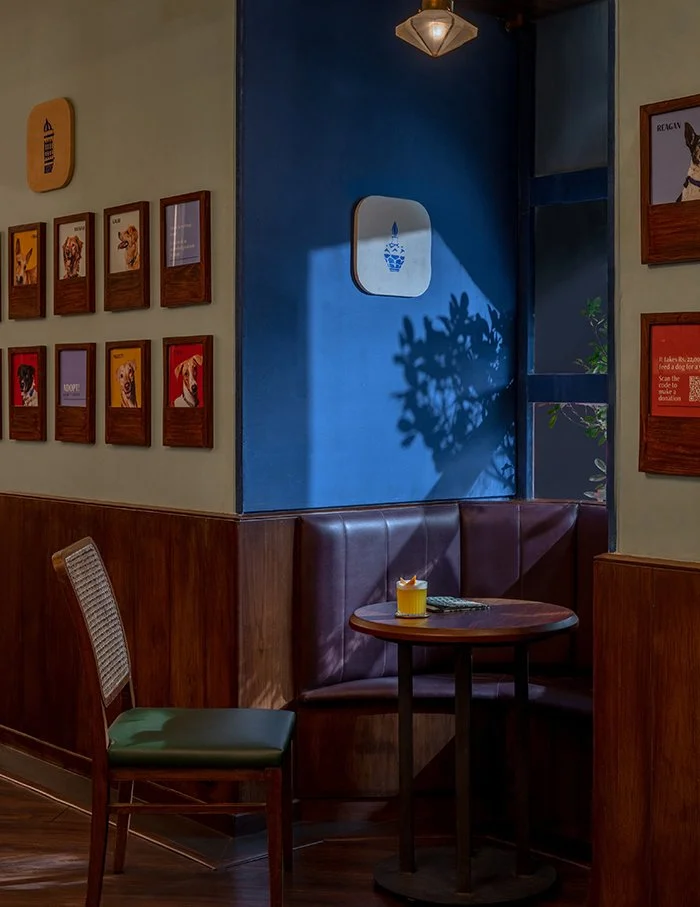
BOMBAY CANTEEN BY KUBAR SHAH FOR ELLE DECOR
The next morning we ventured into South Mumbai to explore some of the city’s historic landmarks. Our first stop was the grand Gateway of India, the monumental arch overlooking the Arabian Sea that once welcomed British royalty and now serves as one of the city’s most recognisable landmarks.
From there we walked through Horniman Circle before making our way to the bustling markets of Colaba Causeway — a legendary street for antiques, jewellery, textiles and endless bargaining opportunities.
Unfortunately a heatwave had settled over the city, and after a few hours navigating the humid streets we collectively decided to retreat to lunch at the famous seafood institution Trishna. Known for its legendary butter garlic crab and coastal Mangalorean dishes, Trishna has hosted countless visiting chefs, celebrities and food lovers over the years.
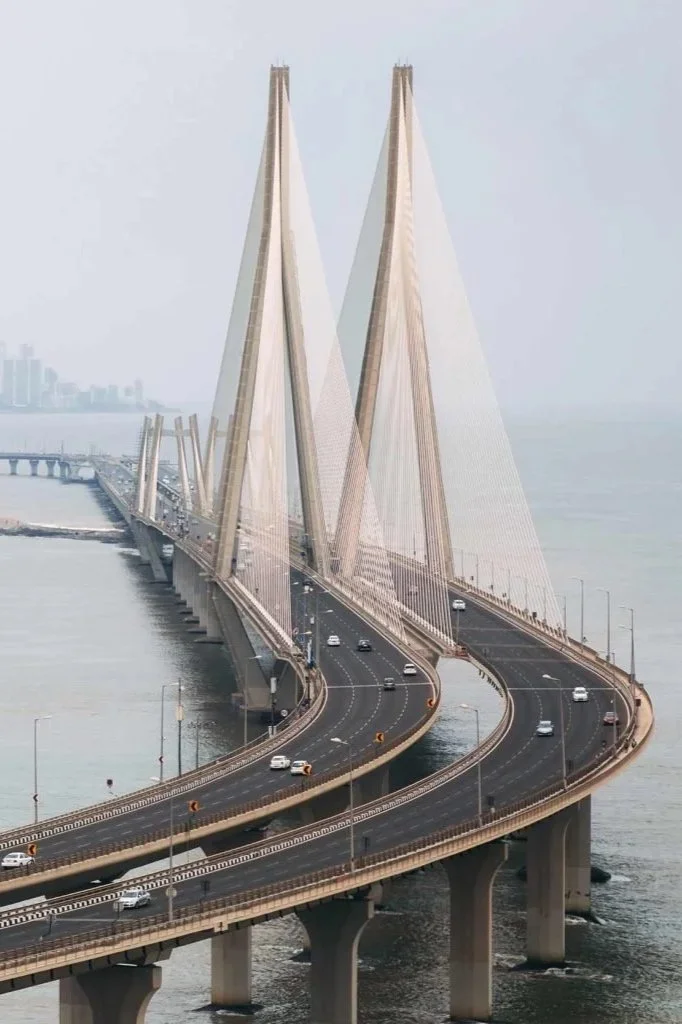
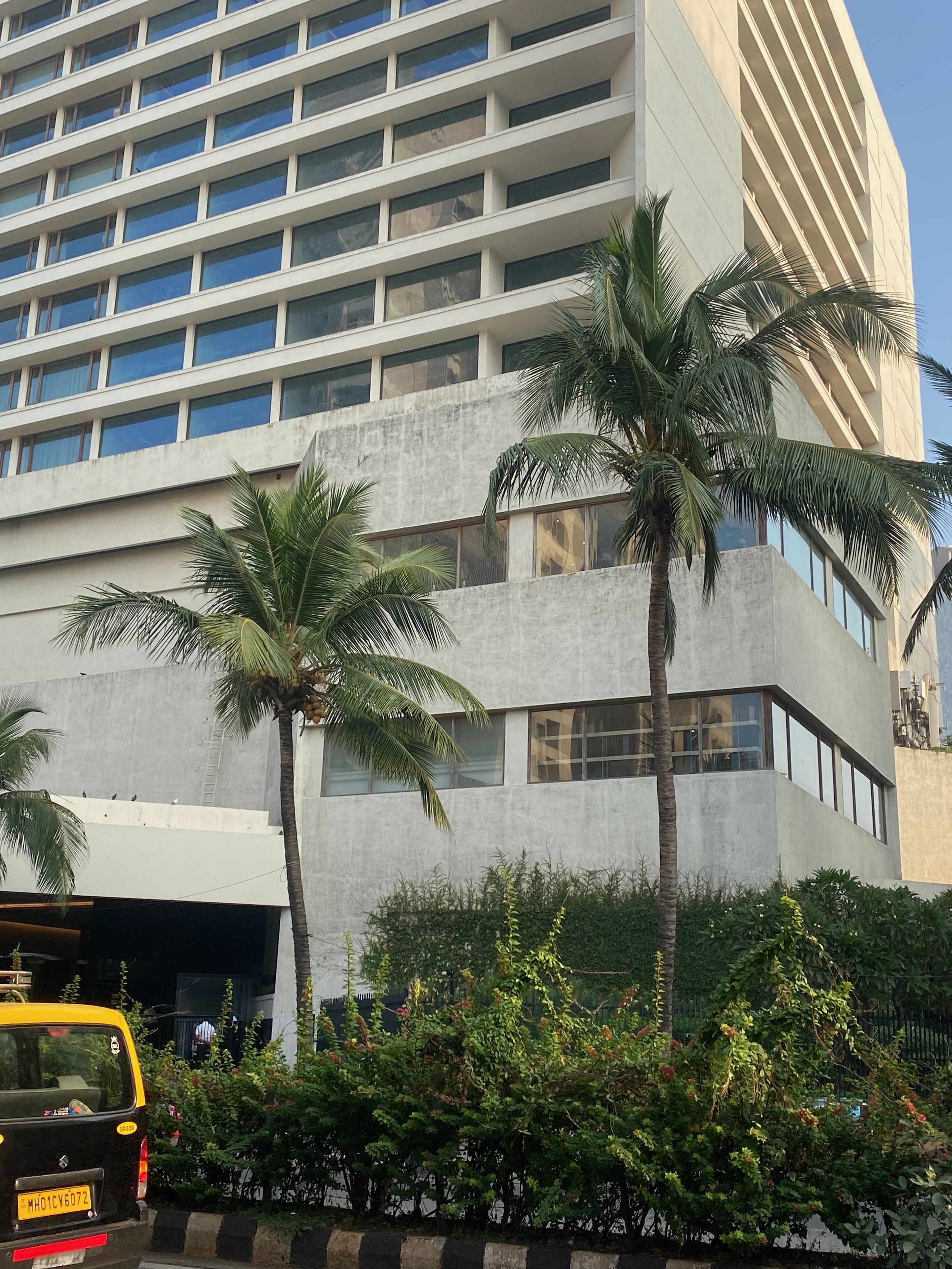
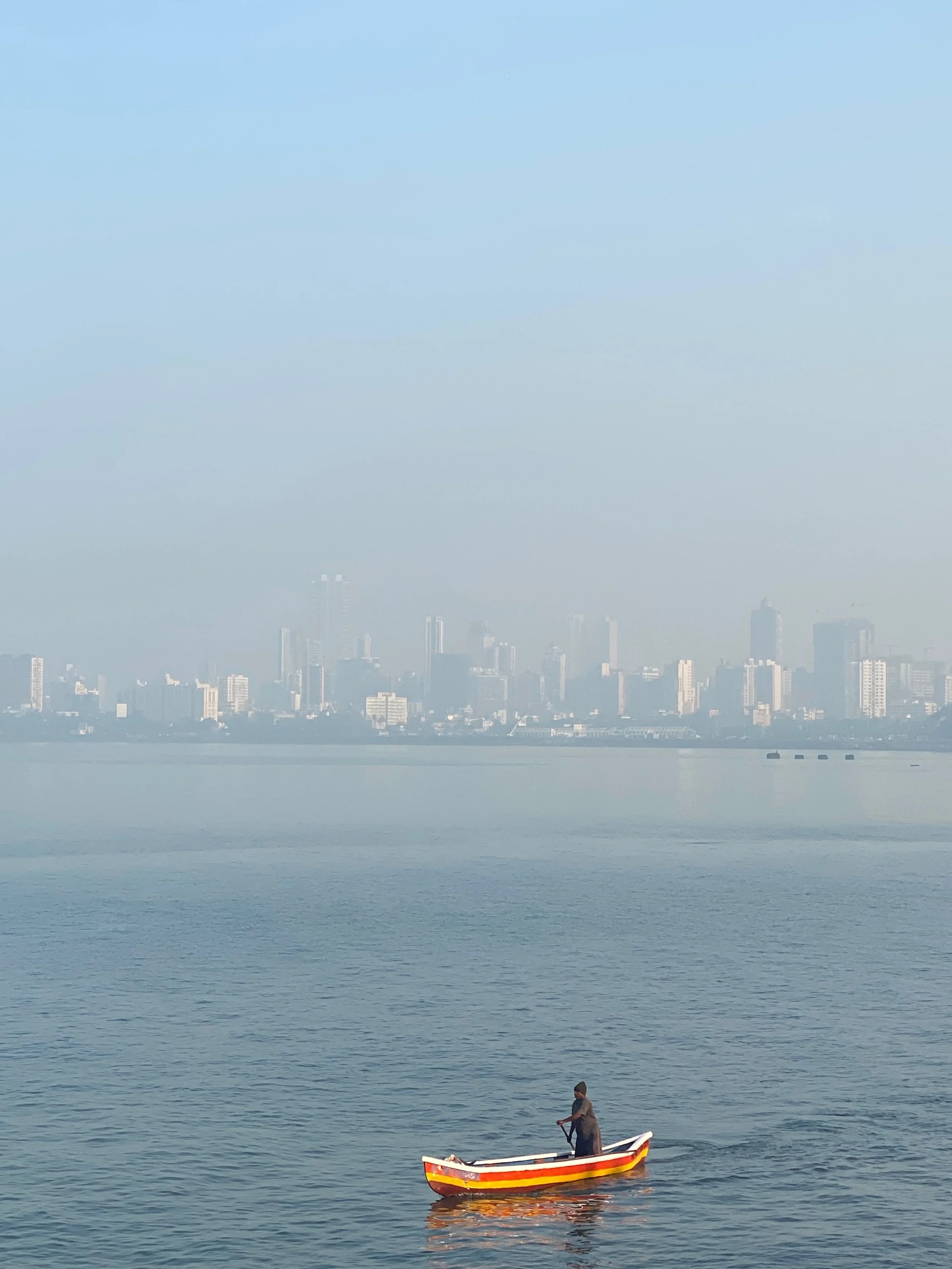
Later that evening we returned for dinner at Dakshin, a restaurant celebrated for its deeply authentic South Indian cuisine. The menu travels through the southern states of India, showcasing dishes from Kerala, Tamil Nadu, Karnataka and Andhra Pradesh — rich curries, fragrant rice dishes and perfectly crisp dosas.
By this stage of the trip, our group had happily surrendered to the rhythm of the tour: eat exceptionally well, walk a lot, and repeat.
The final day in Mumbai gave everyone the chance to explore the city at their own pace. Some caught up with friends while others ventured into the city’s shopping districts, where global luxury brands sit comfortably alongside emerging Indian designers.
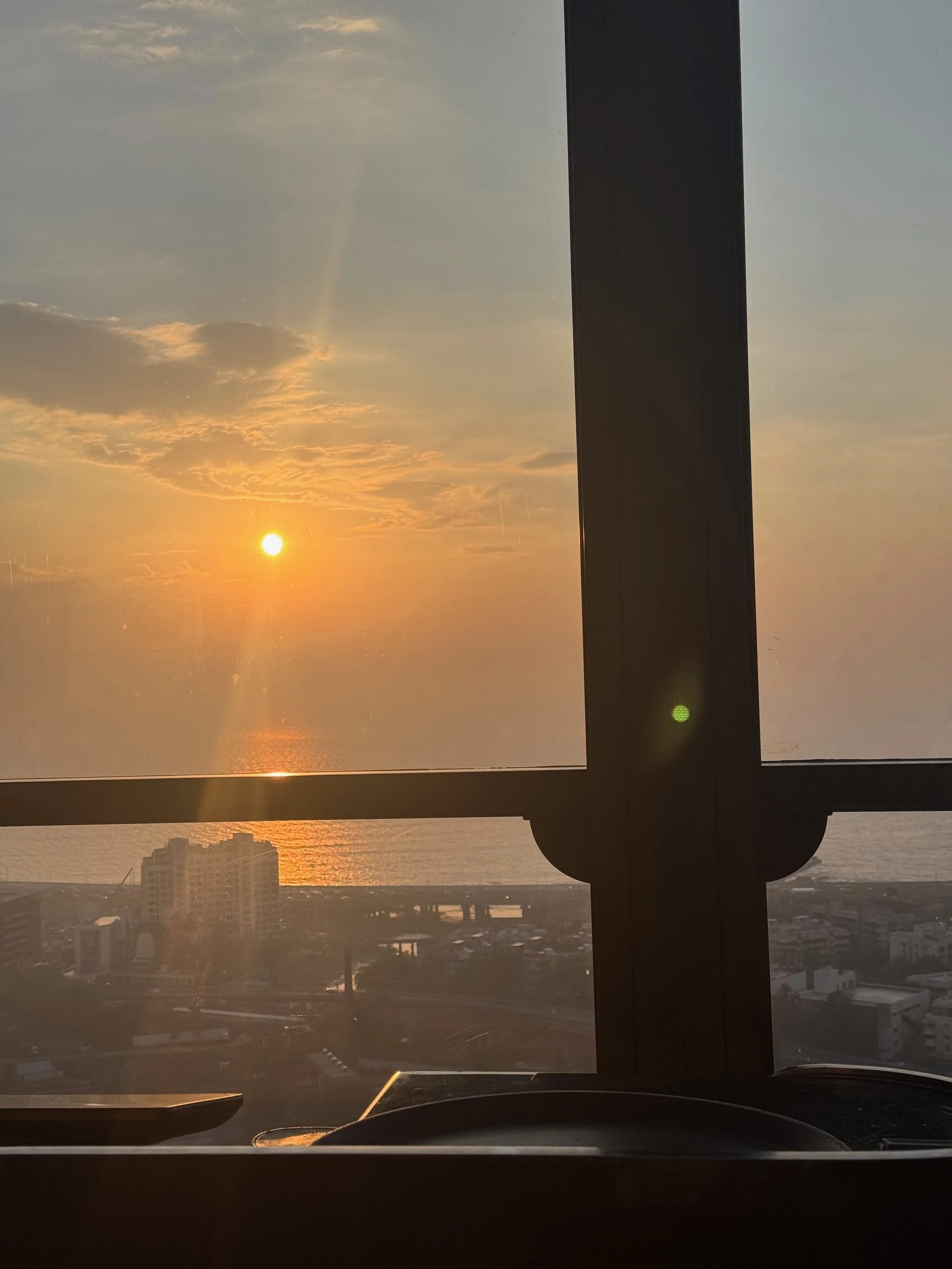
Later in the afternoon a few of us made our way to AER Lounge, the rooftop bar perched atop the Four Seasons Hotel Mumbai. From here the city stretches endlessly toward the Arabian Sea, and sunset turns the skyline into a wash of gold and pink.
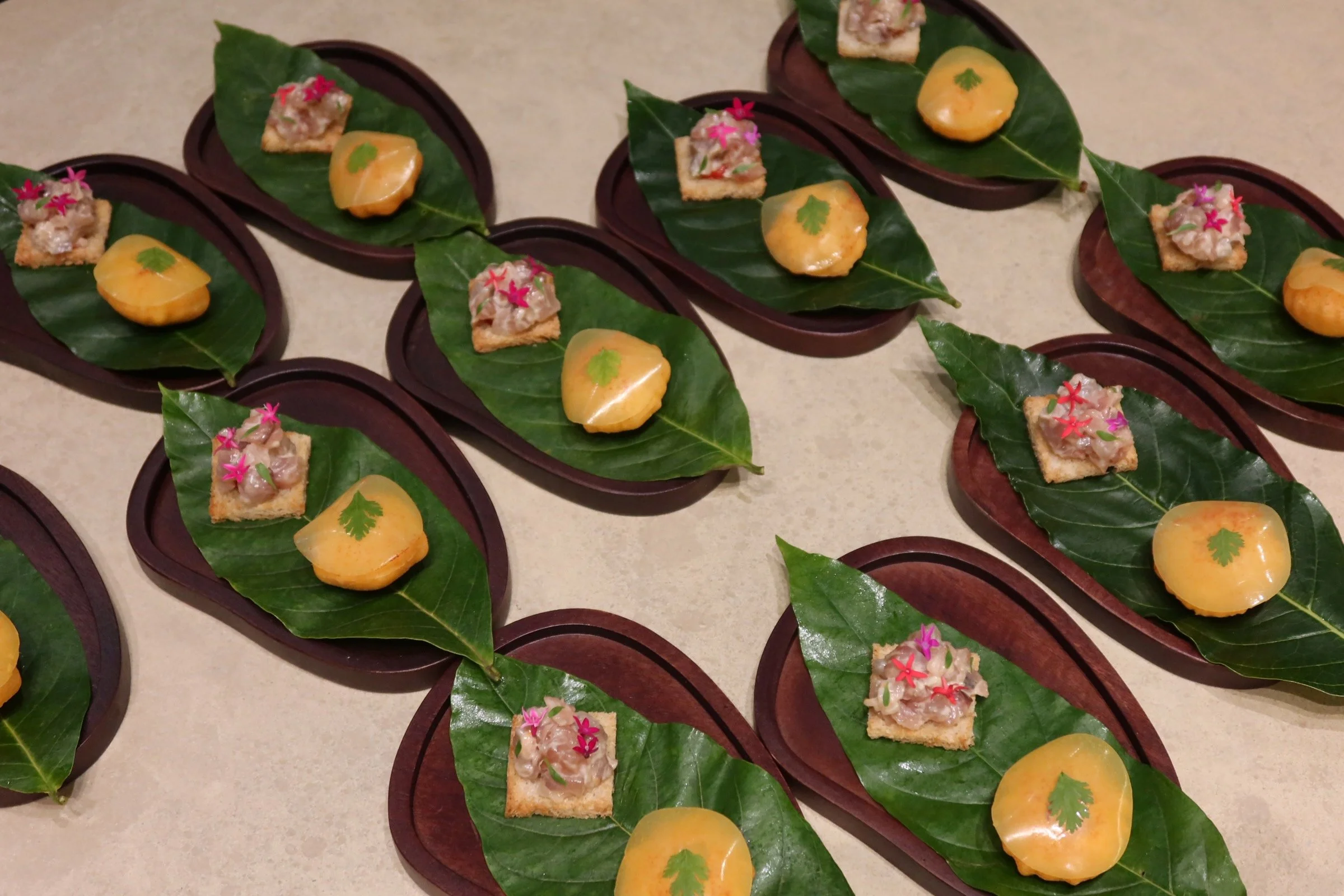
MASQUE, MUMBAI
It was the perfect setting for a final toast before the grand finale of the trip.
Dinner that evening was at the celebrated Masque — consistently ranked among the top restaurants in India and included on the World's 50 Best Restaurants list. Known for its ingredient-driven tasting menus and modern interpretation of Indian produce, Masque has become a defining force in the country’s fine dining scene. Expect to be wowed.
After days of palaces, lakes, markets and long road journeys, it felt like the perfect ending to a journey that revealed India in all its contrasts.
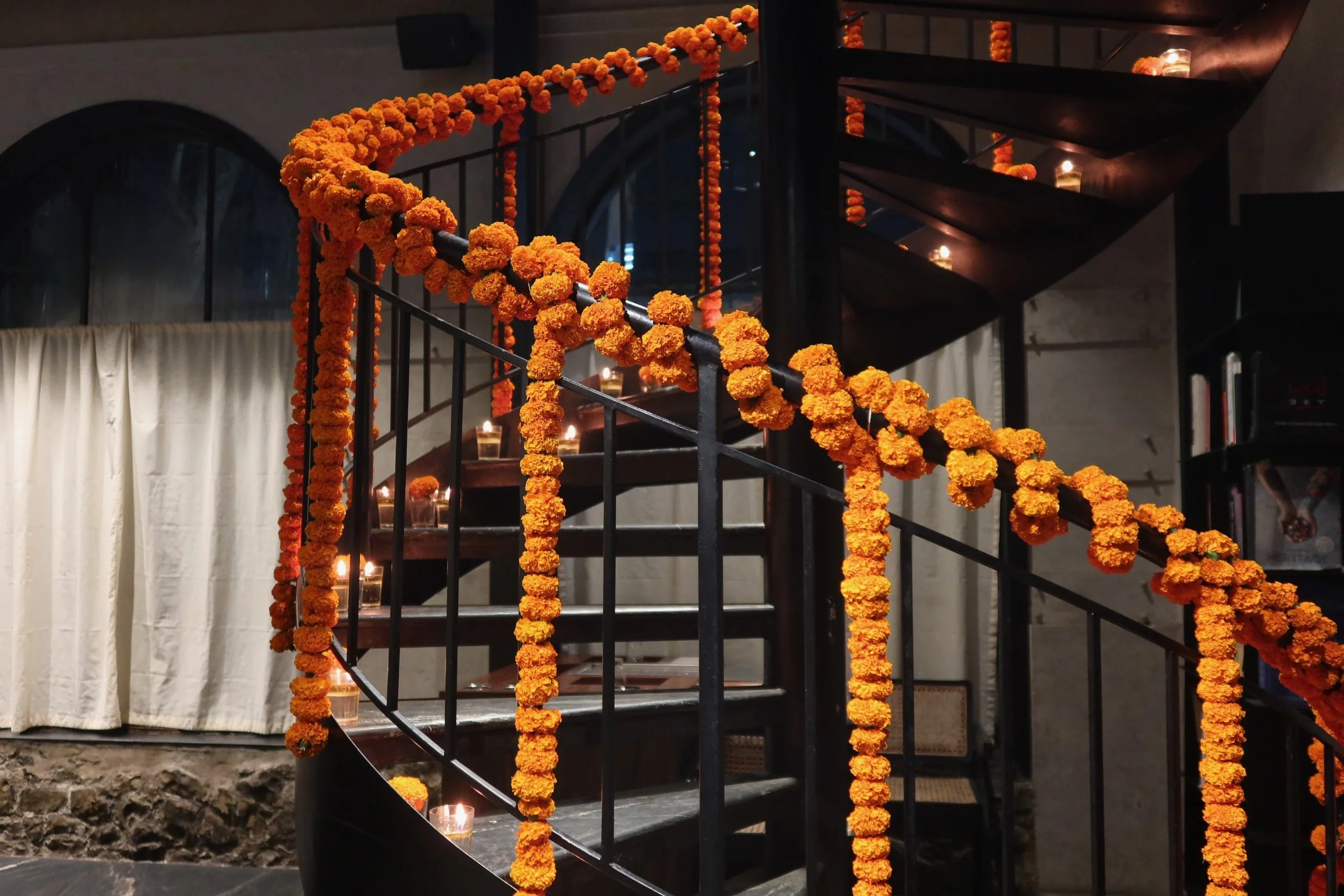
MASQUE, MUMBAI
One thing I would say if you’re considering a tour of India: it is not a country for the faint-hearted. If your idea of travel is quiet streets and perfect order, Europe might be the easier choice. India, on the other hand, asks you to embrace a certain chaos — and once you do, that is exactly where its beauty begins to reveal itself.
For those looking to explore India through its culinary traditions, I highly recommend travelling with Good Food Journey. Their thoughtfully curated tours open doors to experiences you simply wouldn’t discover on your own, from intimate home-cooked meals to some of the country’s most celebrated restaurants.