Meet Common Material
Macy Andres
A New Design Biennial Arrives in Te Whanganui-a-Tara Wellington
The past six years have seen critics keen to have their scalpel’s say in Aotearoa’s sartorial post-mortem. It’s not unforeseen—the rising cost of domestic production and waning artistic funding are asphyxiating local industry. To this I say: let Common Material serve as proof of life.
I went along last weekend to take note of what proved a celebration of the design prowess endemic to Te Whanganui-a-Tara Wellington. It was a three-day programme of shows, talks and panels delivered by collaborators JPalm, Yu Mei, twentyseven names, Kowtow and hosted by the City Gallery Wellington. More than just a creative display—it was a bridging of knowledge between established designers and young creatives. A forum (the first of a biennial series) for thoughtful engagement, championship and perhaps most of all: forecasting for the future.
It’s not that I approached the weekend pessimistically, but rather with an air of caution. It is simple to make promises and harder yet to realise them. I have a feeling that this won’t be the last we see of Common Material. In the words of gallery director, Charlotte Davy, “This will be the first of many biennials–you can hold me to it!”
Here are my observations on the shows I attended, and the lingering thoughts I have nursed since the event’s close.
“I have a feeling that this won’t be the last we see of Common Material. In the words of gallery director, Charlotte Davy, “This will be the first of many biennials–you can hold me to it!””
OPENING NIGHT x JPALM
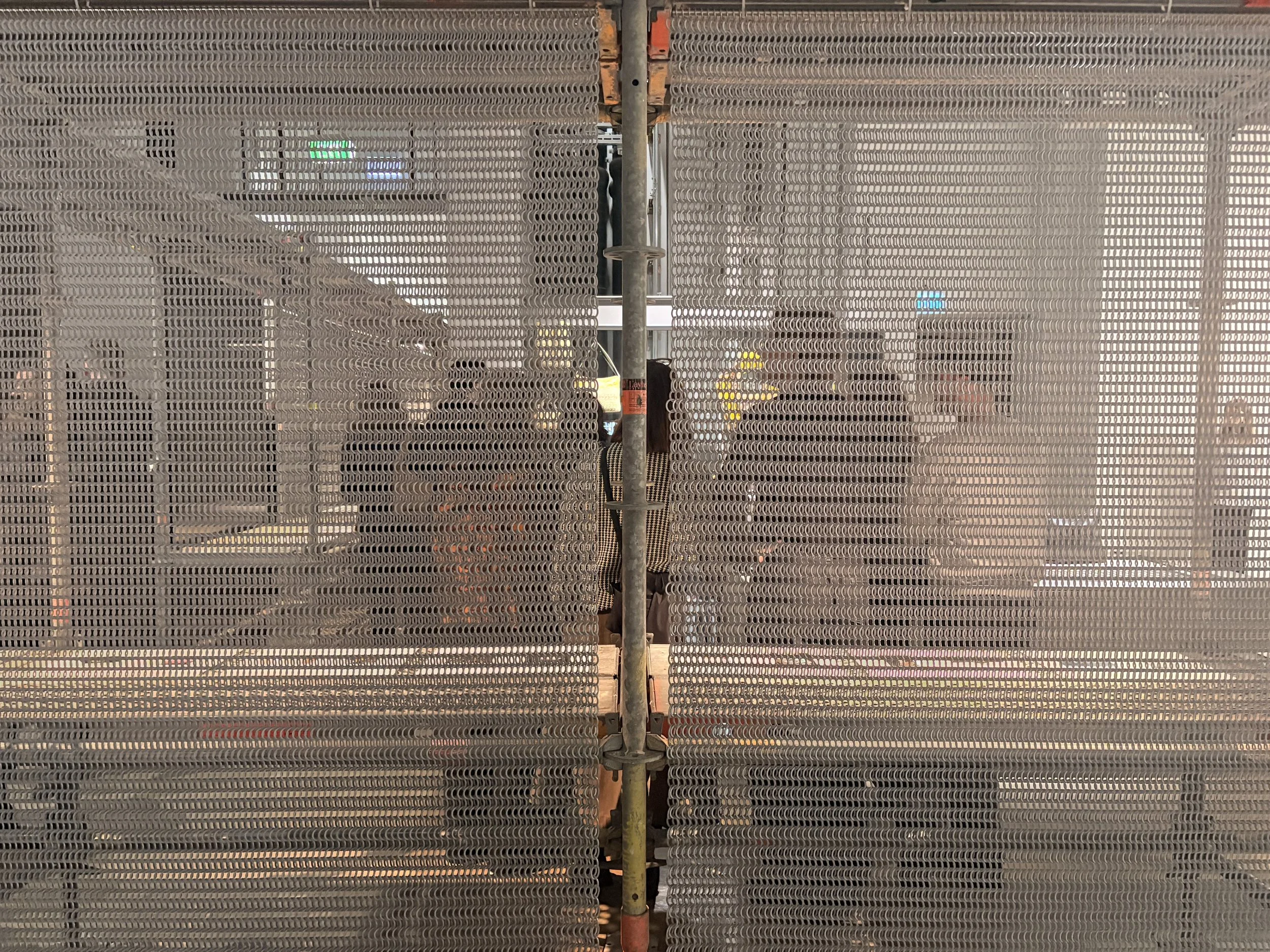
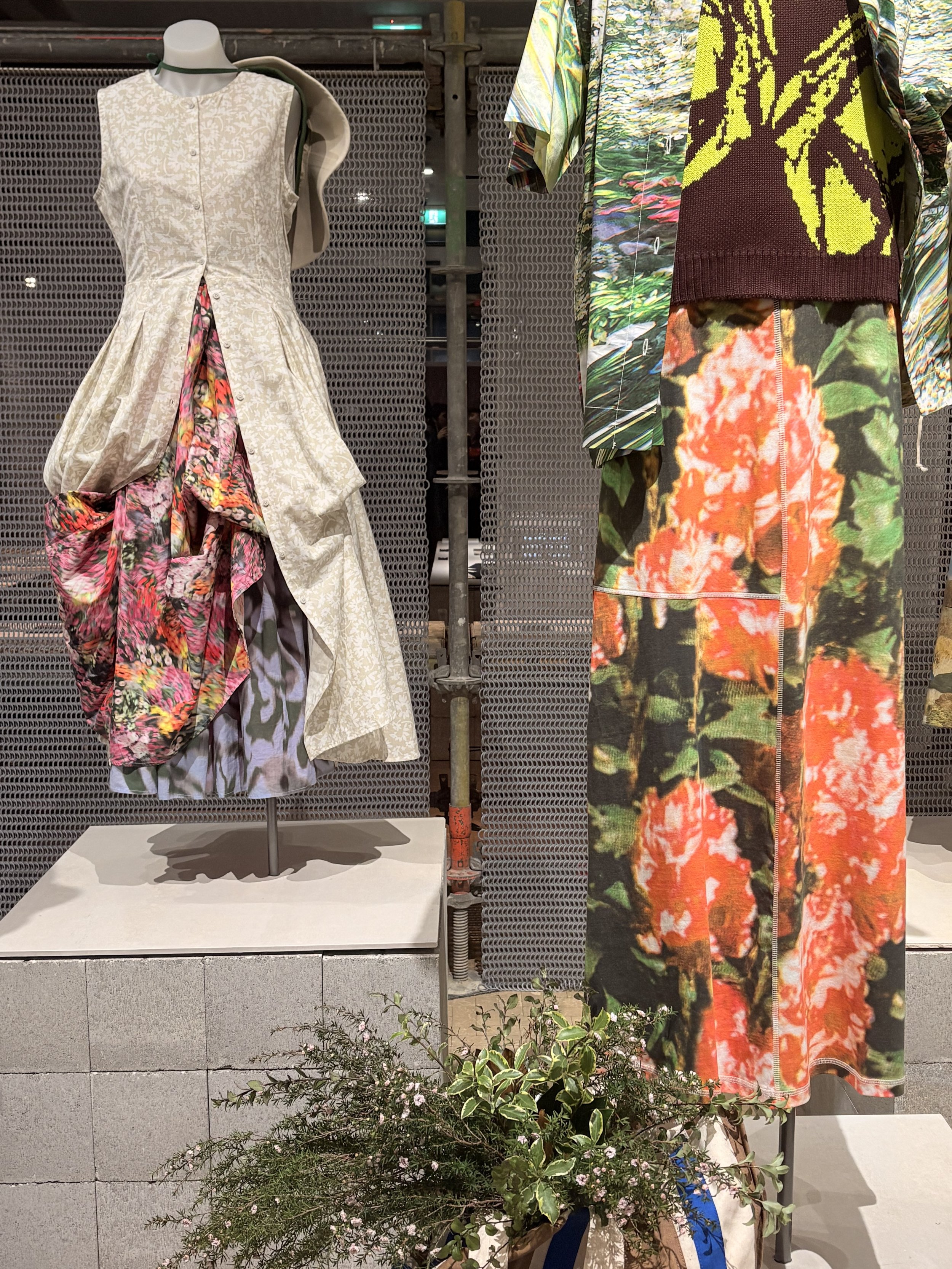
Unsheathed from its network of cordons and scaffolds, the City Gallery emerged much refreshed. A fitting venue for the ordeal; a long-trafficked site of contact for Pōneke creatives since its inception in the 1980s. Peeling through coat check, the atrium opened up to a maze-like exhibit of selected pieces from the design quartet. Clothed in the visual language of its city, partitions of chain and steel were reflective of a community where, from the nexus of industry, springs a verdant creativity.
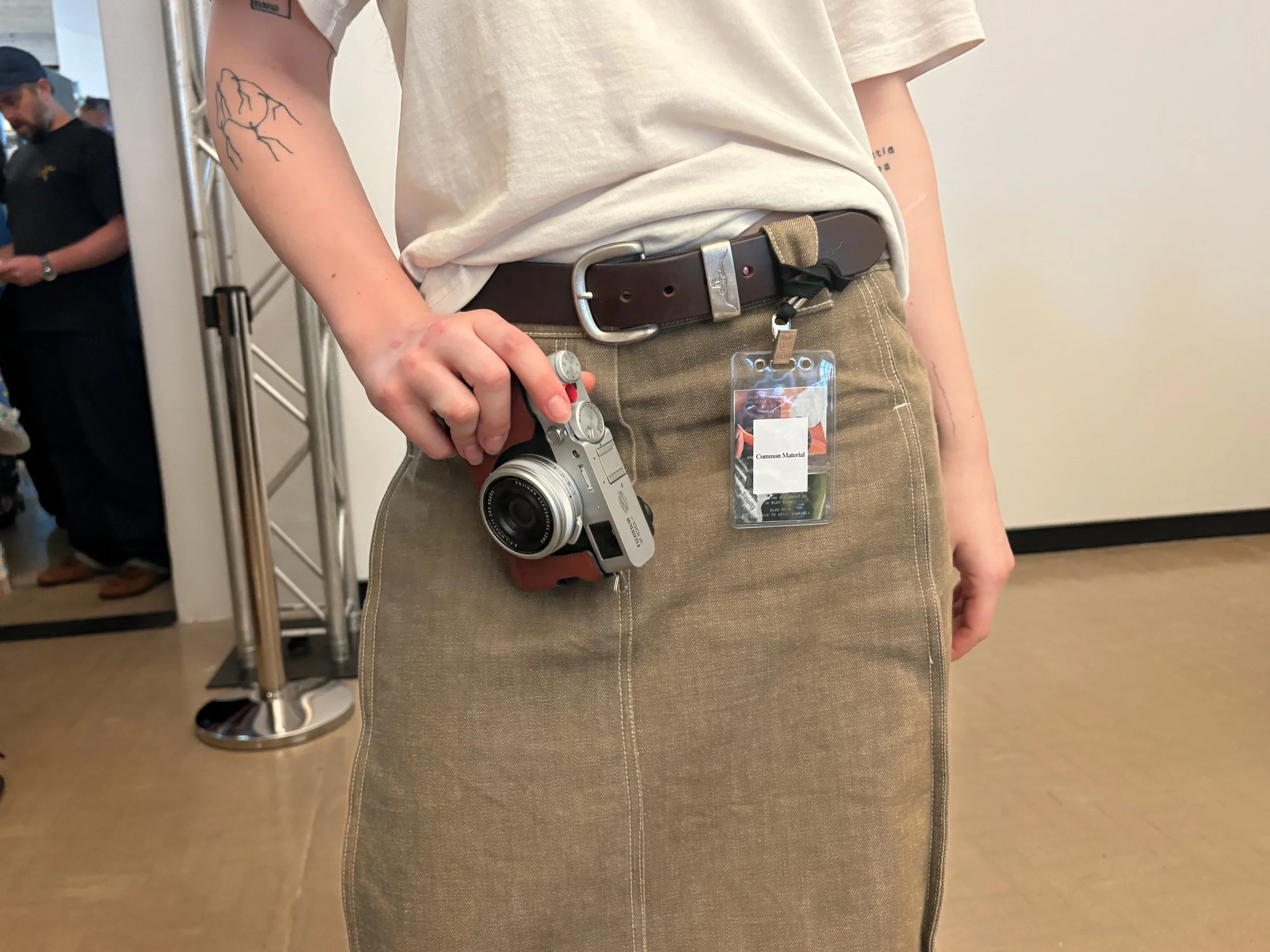
Volunteers were a corpus of the city’s young creatives and fashion enthusiasts. Many of my favoured outfits were those donned by event coordinators—it held true to the authentic, unfussed nature of the exhibit. If there was anything that was trying to be proven, it was the innovation intrinsic to freedom of expression.
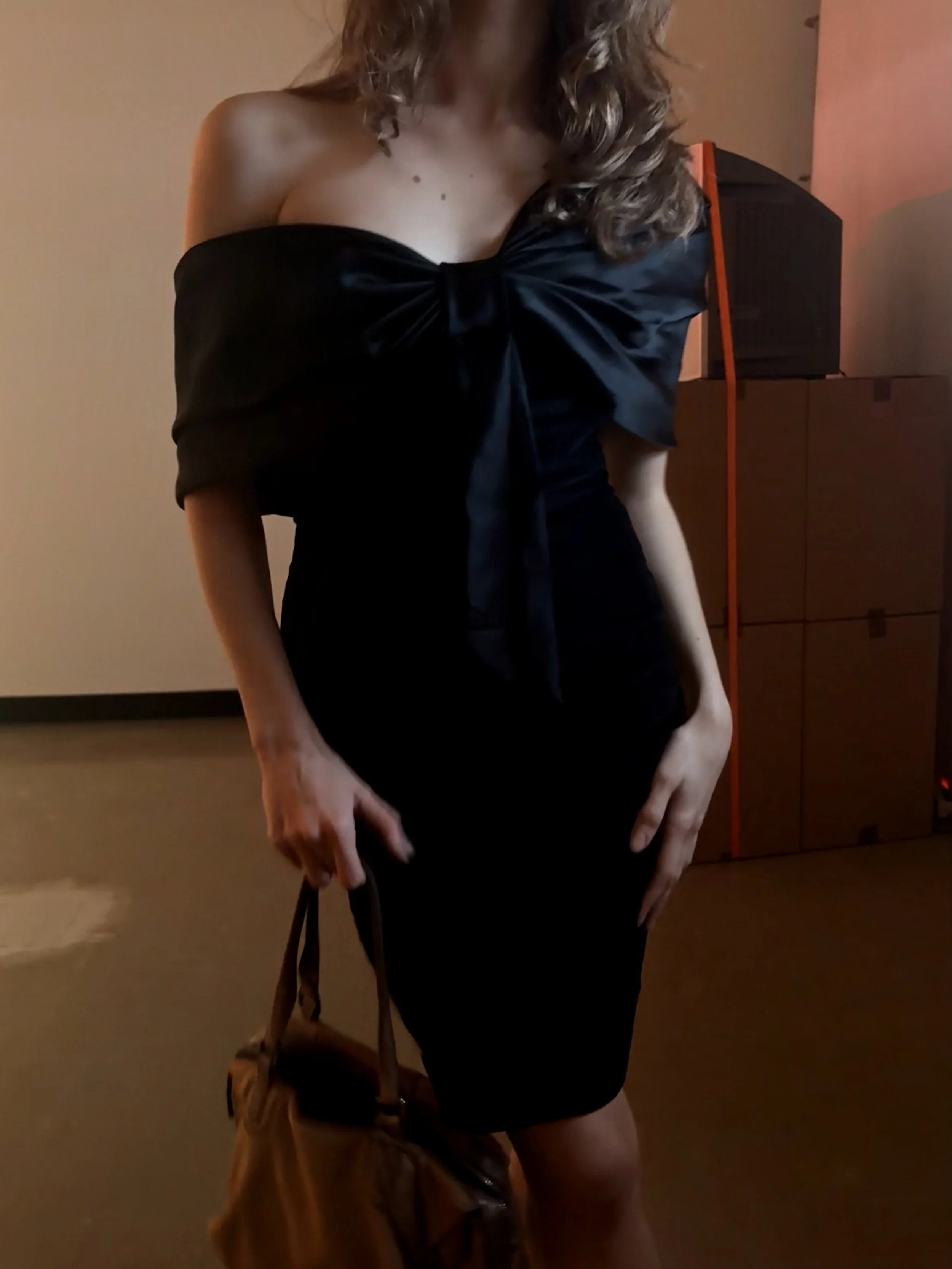
I wore a custom velvet and silk dress by Wellington/Tauranga designer, Blair Walker—a fitting costume, for attendees comprised a tight list of the industry’s most savvy players. Despite this, in true Wellington form, there hung no shroud of pretension. Conversation was expansive, generous; although, why wouldn’t it be, with champagne fountaining like the Trevi (in the name of propriety, I tried to hand my glass back and instead, it was promptly refilled).
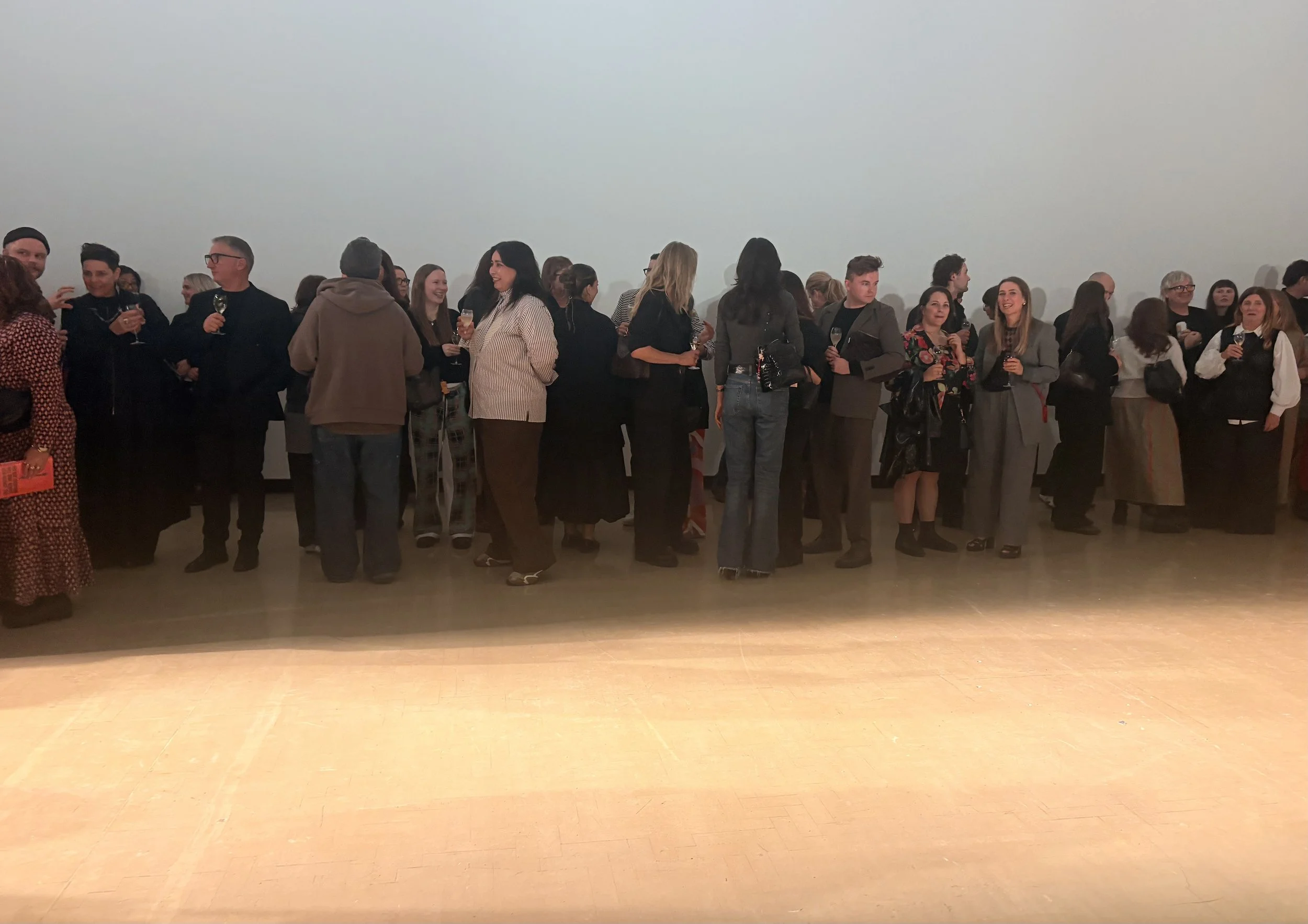
We gathered for this reason: JPalm’s inaugural show. And after a cortege of speeches, it began.
Photographs by Eliza Blamey
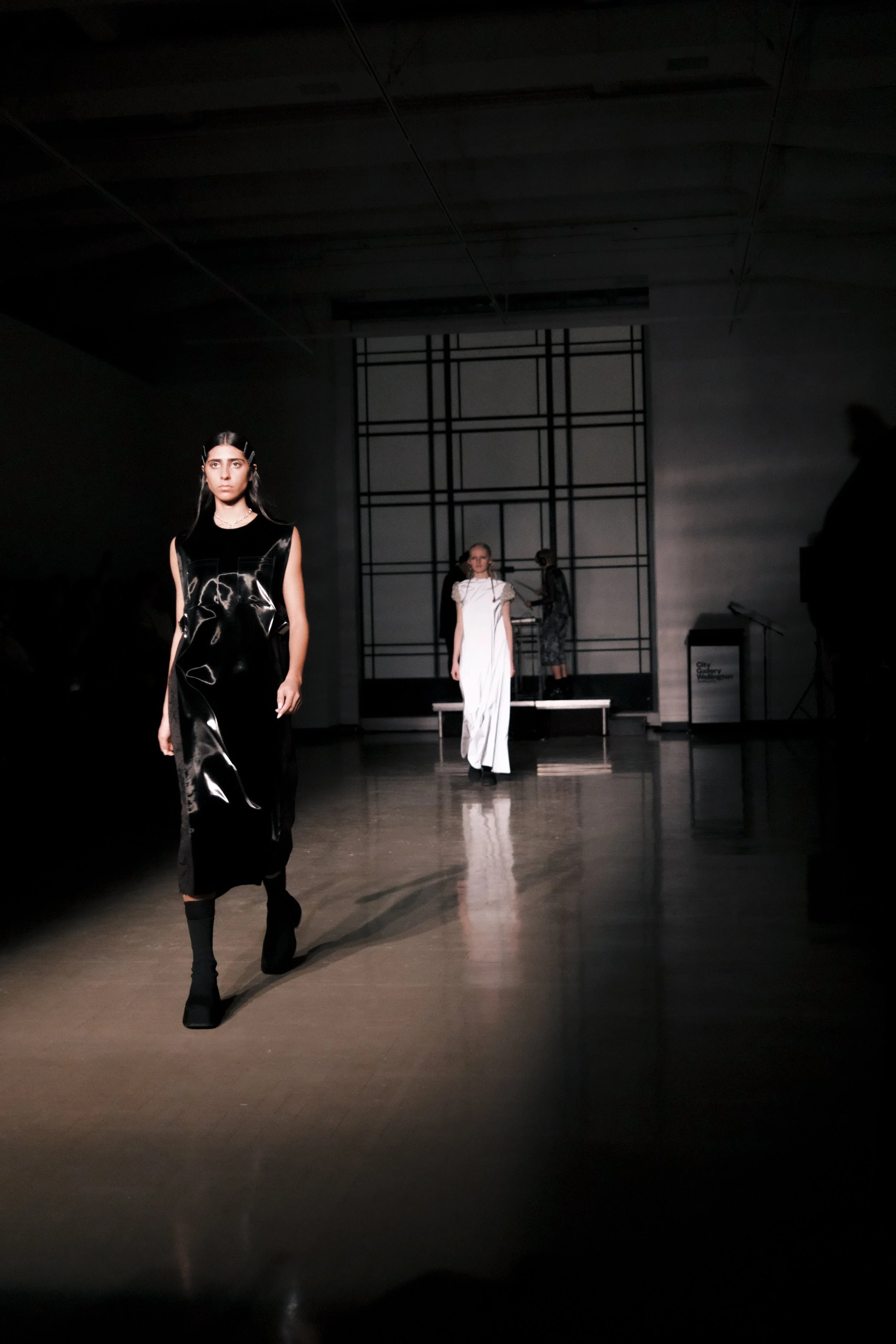
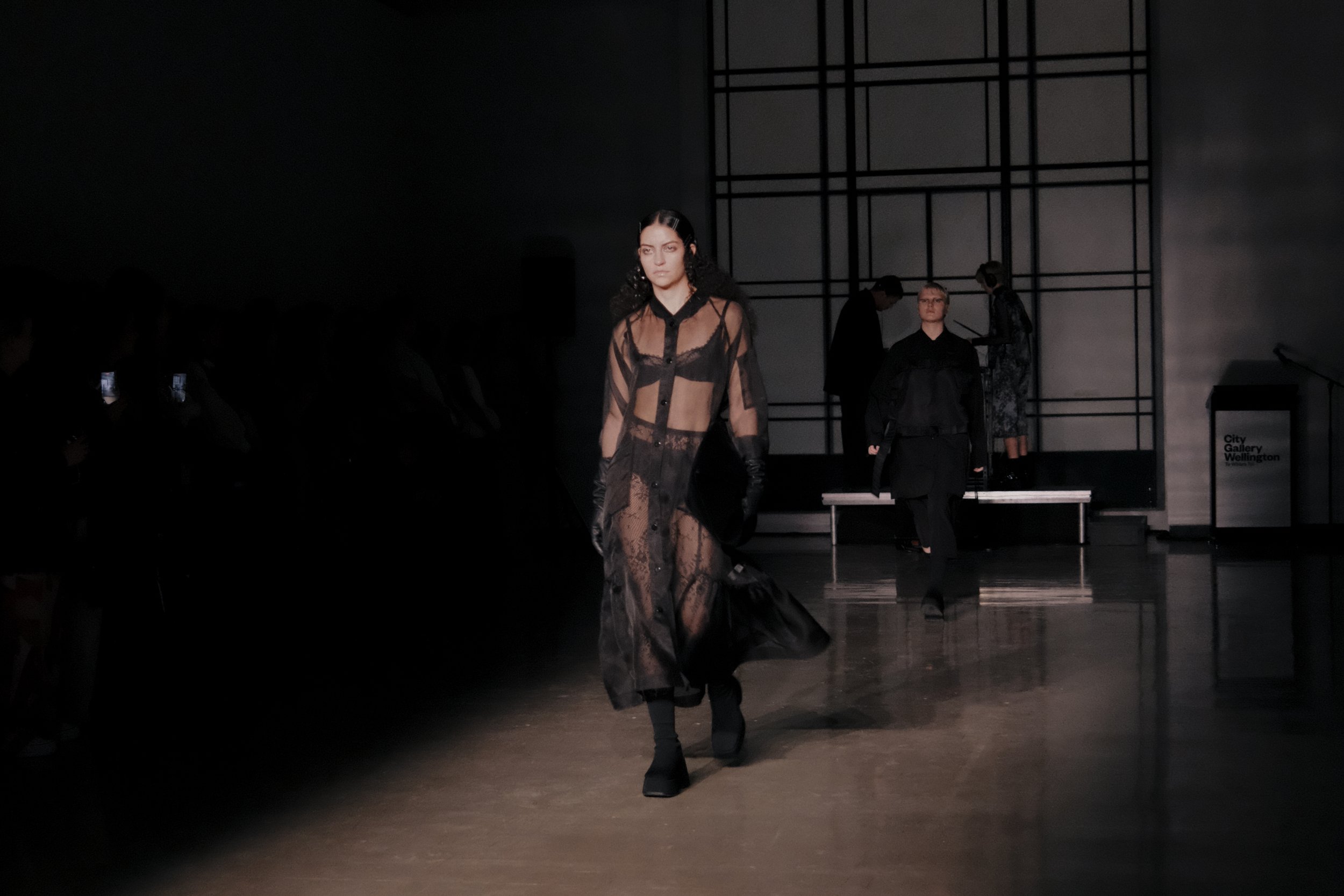
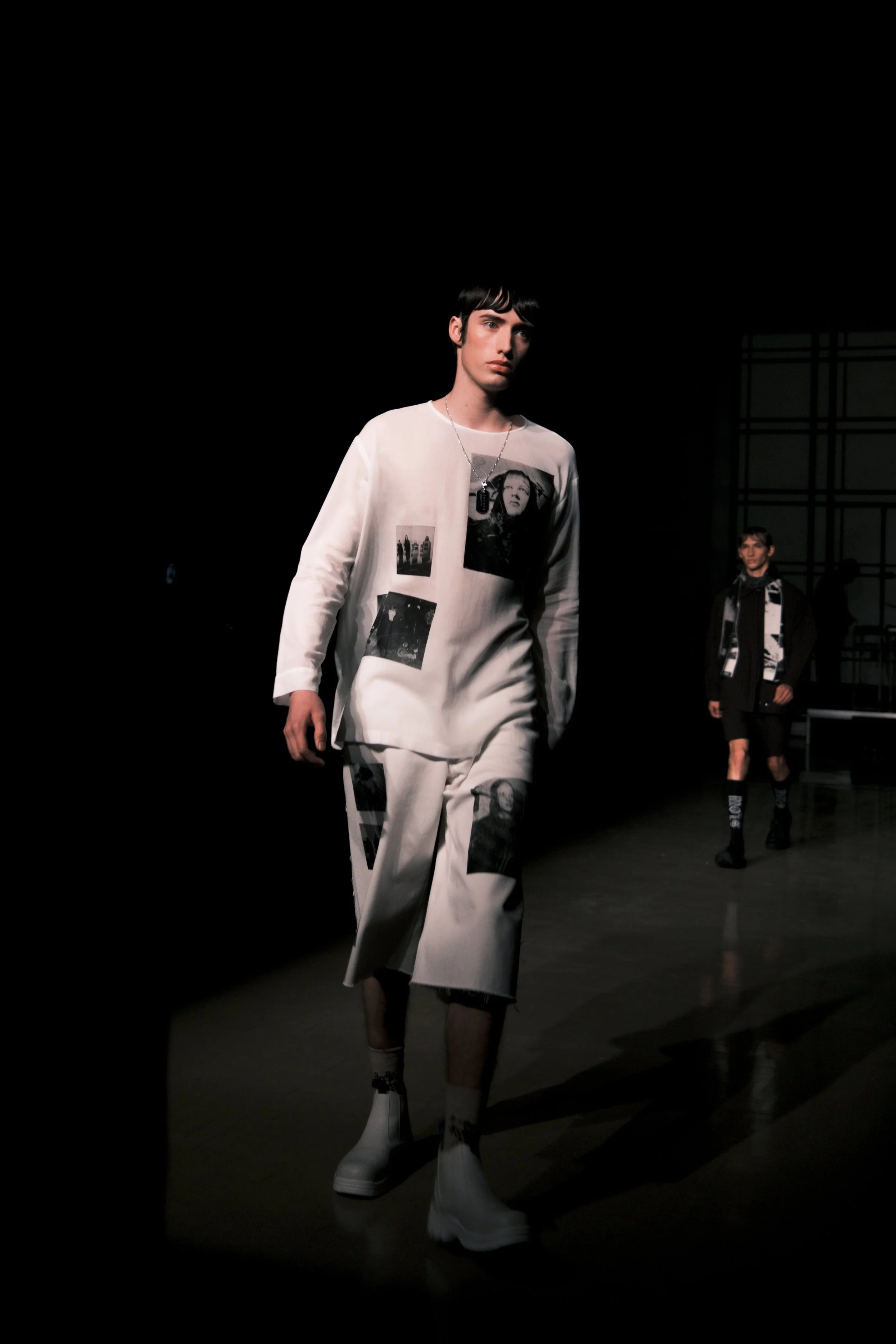
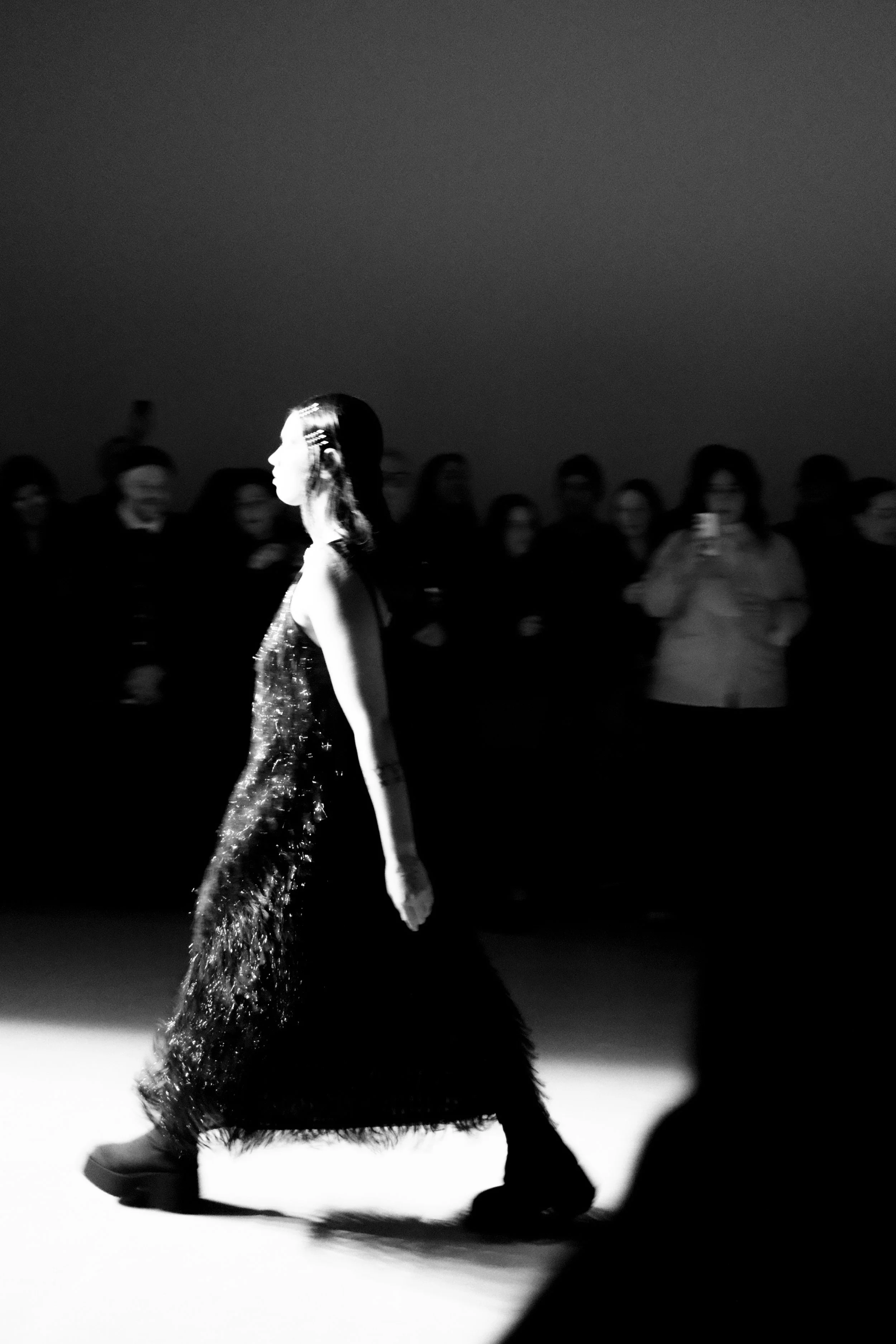
It was a cinematic offering from Julia Palm, whose collection was made specially for the biennial’s first iteration. The show unfolded in the passage of beckoning light—along it strode models pooled from Wellington’s Kirsty Bunny; bold-faced and slick-haired in keeping with mode d’JPalm. Deep, voidish blacks swallowed the light before beaded processions spat it back out. Graphics cut through crisp white cottons that hung subdued from the shoulders. Black, tulle skirts gently hung beneath dresses. There marched loose-bearing coats of quilt jacquard. Braids trailed along spines and shoulders.
It was bold—not assaultish, but an assuage. Thick-soled and blocked boots lent a turn of levity to what was a display of the city’s grunge-baroque; the dark and broodish belly of utility. The closing look, modelled by Aylish Inwood, was an A-line gown, blue-steel and reflective. Capped shoulders burst forth silver baubles—she, the herald industrial angel.
TWENTYSEVEN NAMES
The following morning was a perfect, halcyon parcel of Wellington in June; a bright revolt against the former night. What is done in love will last forever, a show by Twentyseven names, befitting the turn of day.
Flora Feltham, AJ Manaaki Hope, Erika Holm, Isabella Loudon
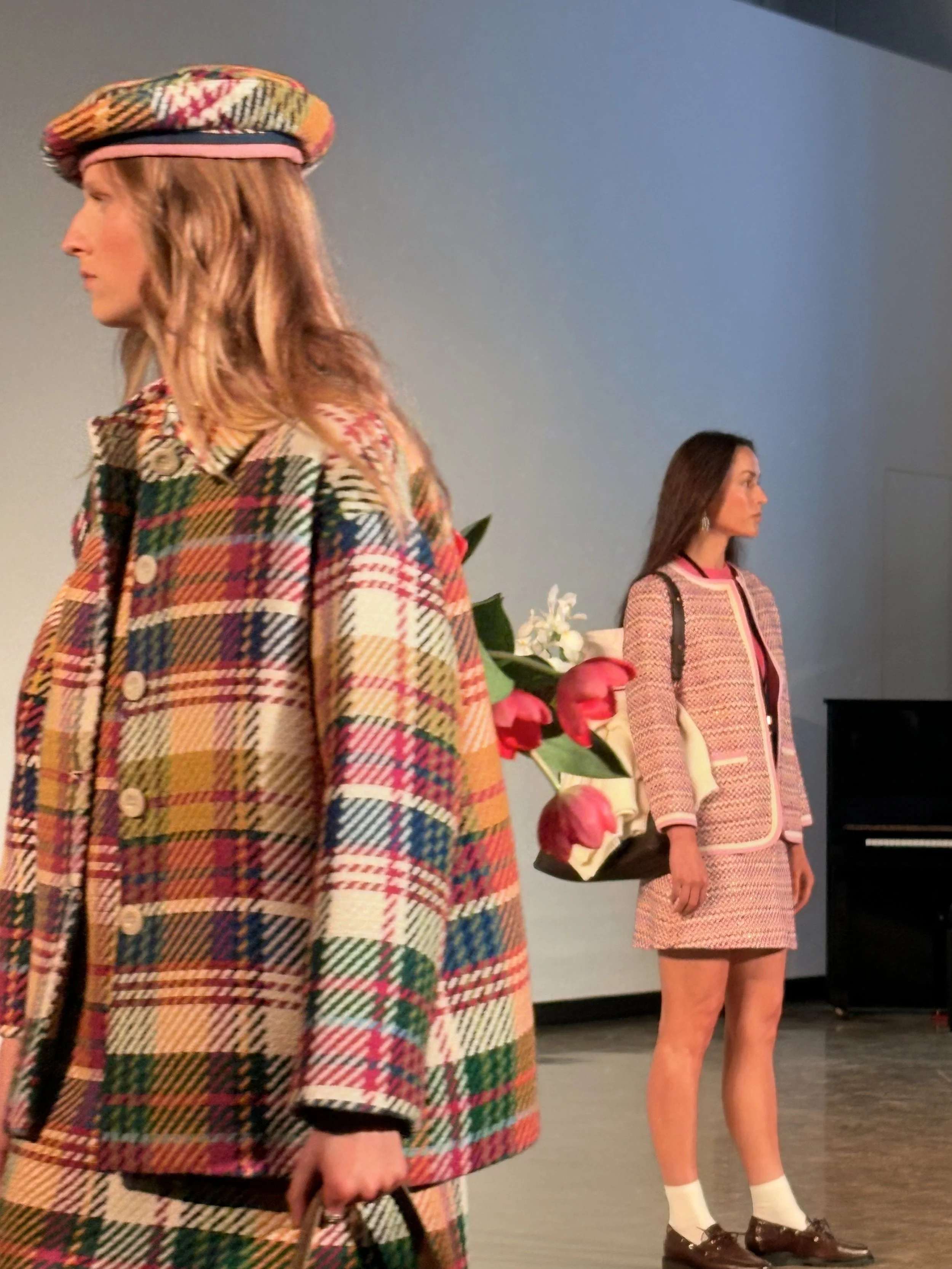
Three acts. 60 looks. A stage, not a runway. The guiding hand of Dan Ahwa. And the impression of a question: who could I be?
The jovial voices of Wellington Girls High Choir landed one back in the maelstrom of youth, where an outfit was not just that, but a declaration, and one that said loudly: this is who I am. It seems proximal to founders Anjali and Rachel, who met at Karori Primary School and have remained inseparable since.
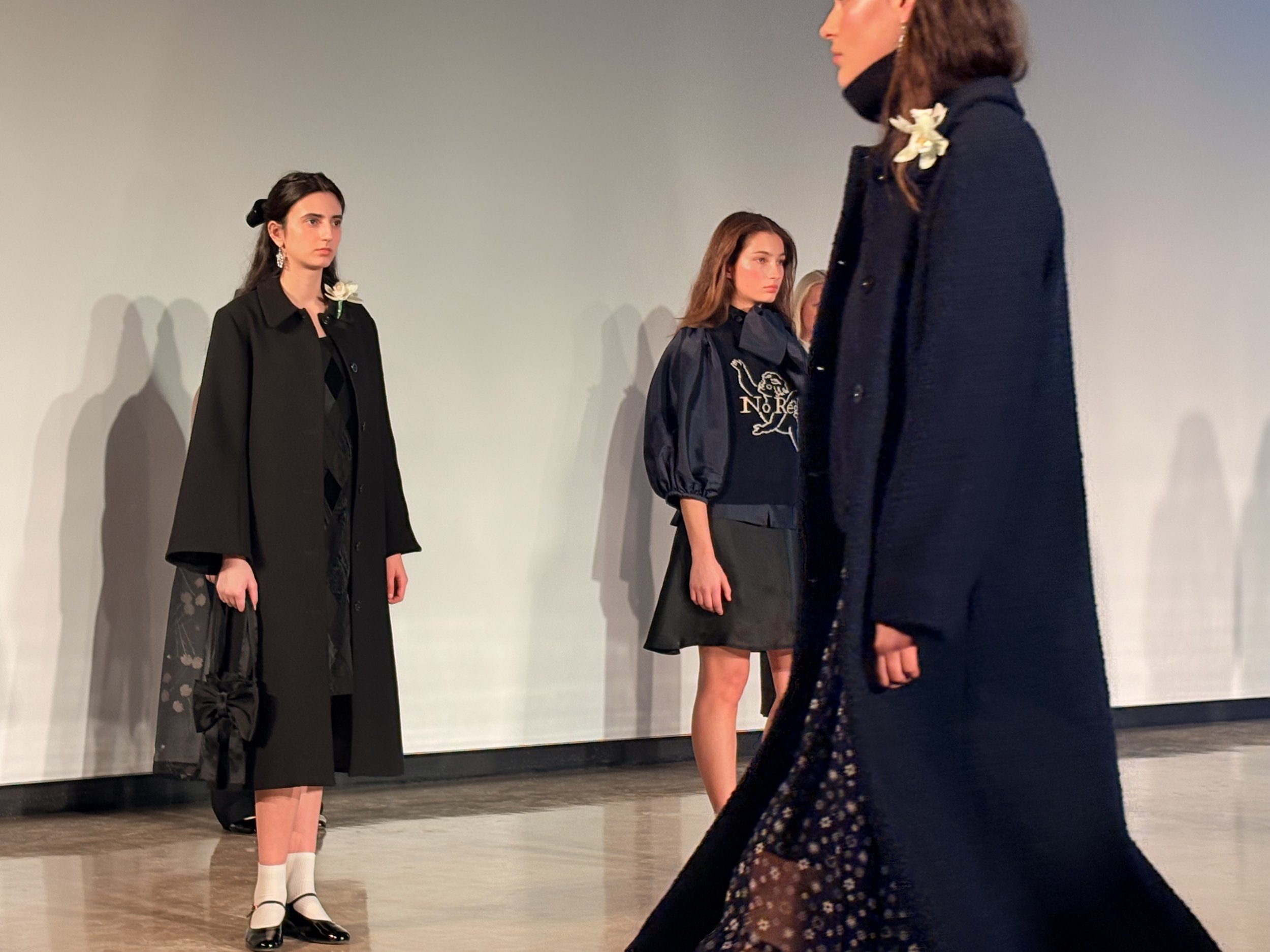
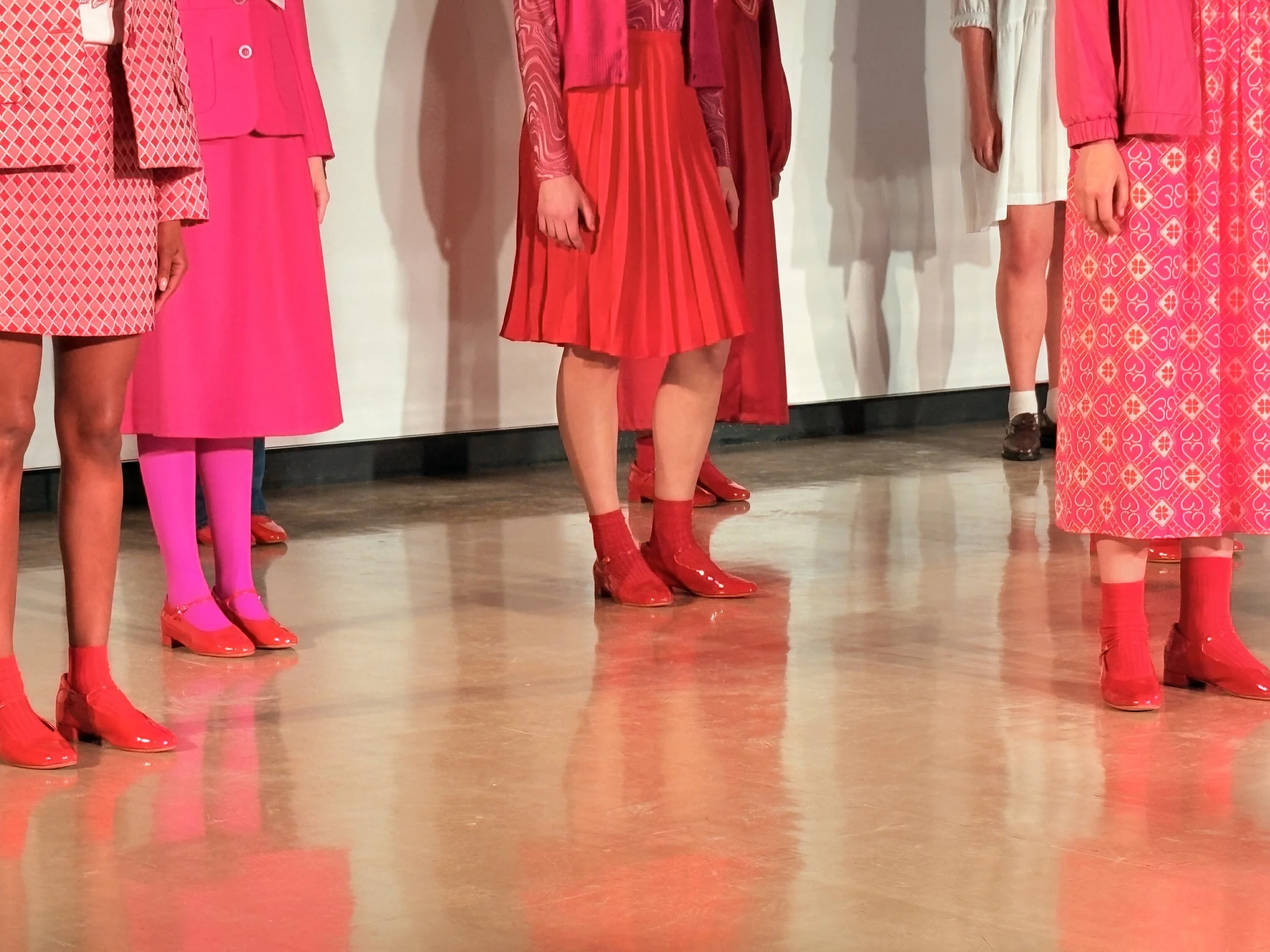
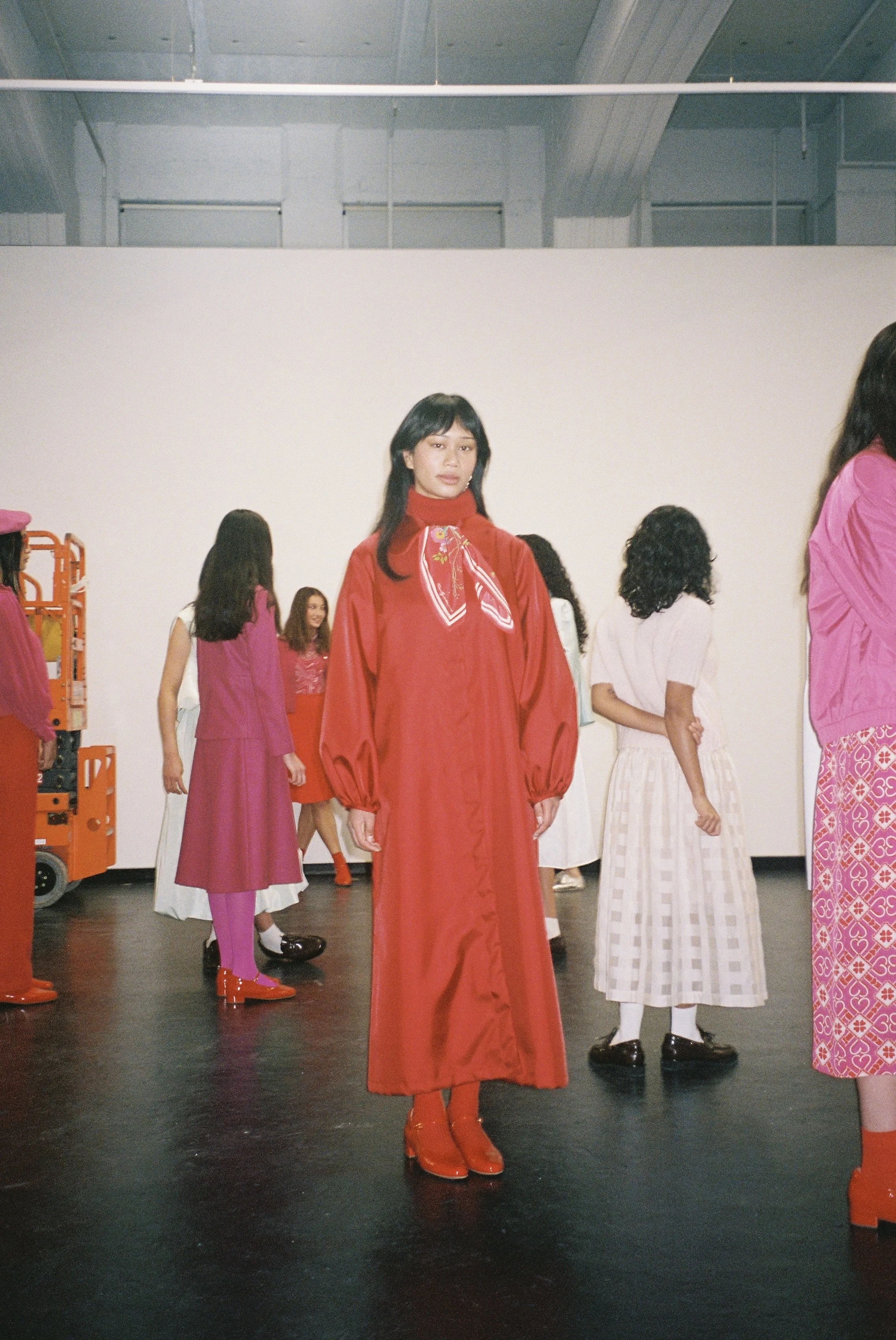
Act one, to the tune of Joni Mitchell’s Help Me, saw models drip quietly from the wings. Silhouettes were indelibly ‘70s-esque; a hard period to reinterpret without the impression of gimmick, and one they somehow mastered. I thought of Sonoma, the dry and lively climate of counterculture California, the soliloquies of Mitchell and Didion—the uniform of learned girls in search of poetry. Creams bled into pepto pinks and then punching reds; which, over the following two acts, spread to navies and deep monogrammed blacks. Sweaters, pleated skirts, printed frocks with sheer overlays. Collars and pussybows. Jewels from Camille Paloma Walton and Nat Peri added an air of maturity, transforming girlish visions into lived feminine forms.
The staging of looks in idle rows, like dolls, allowed the onlooker a full breadth of the label’s 20-year evolution. The threads that underpin their design lineage were at their most apparent. A pastiche of commitment and vision.
“The jovial voices of Wellington Girls High Choir landed one back in the maelstrom of youth, where an outfit was not just that, but a declaration, and one that said loudly: this is who I am. It seems proximal to founders Anjali and Rachel, who met at Karori Primary School and have remained inseparable since. ”
KOWTOW PANEL TALK
Sunday saw the gallery rosy with the weekend’s festive residue. In the grand hall, Gerard Dombroski’s silver stools (designed for the Yu Mei show) sat like idle chess pieces. I was here for the Kowtow panel talk, Regenerating Te Whanganui-a-Tara Wellington, taken by Emma Wallace (Kowtow), Dr. Danielle Shanahan (Zealandia), Tom Cappleman (Coffee Outdoors) and Dr. Huhana Smith (Te Whiri Whītau, Massey).
A kōrero between environmental experts and actors in eco-conscious fashion, the conversation was dominated by practical discussion—delineating the firmest barriers to creating a regenerative industry, and in their barricade, the defiant actions being taken.
I sat in that auditorium listening to Emma Wallace explain Kowtow’s biochar advances, Dr. Danielle Shanahan’s vision for an ecologically-restored Pōneke, and I was struck by the impression of invigoration.
Amidst the goings-on of the weekend; the immersive shows and tactile exhibits; there was something deeper afoot. This was not a hollow show of face from collaborators, but a commitment. A public-facing display, a collective vow to change the way we traverse the landscape of local fashion. Gains cannot be made by adhering to the dominant model—one where clothes are worn a handful of times and discarded thereafter.
If our regulatory institutions are unwilling to foster these changes from a legislative level, the responsibility becomes that of industry actors—the new harbingers. Common Material was the first cry in this battle. It was not a selling exhibition, but a contact bridge between financial key-keepers and emerging design talent.
Be excited… I am.
Photograph by Ava Richardson-Lane