The Fujifilm instax mini 13 and the return of offline memory-making
I recently sat down and went through my family photo archives, and it made me realise how much I truly miss the permanence of a physical photograph and the materiality of image-making. Most of our interaction with imagery today is mediated through social media, or it sits somewhere within the memory of our iPhone galleries, occasionally resurfacing as an “On This Day” notification. Much of our relationship with the image now hinges on its temporality. Taking a photo feels urgent, yet at the same time, forever erased.
Couple of weeks ago, I read Uncertain Histories: Accumulation, Inaccessibility, and Doubt in Contemporary Photography by Kate Palmer Albers. As Albers writes, photographs “function as objects always held in suspension” — a phrase that captures the book’s lingering, atmospheric quality. Kate explains images are never presented as fixed or fully resolved; instead, they hover in an uneasy space between evidence and fiction, memory and forgetting, intimacy and distance. Rather than offering certainty, photography becomes a medium defined by personal interpretation, where objects and moments remain perpetually in flux.
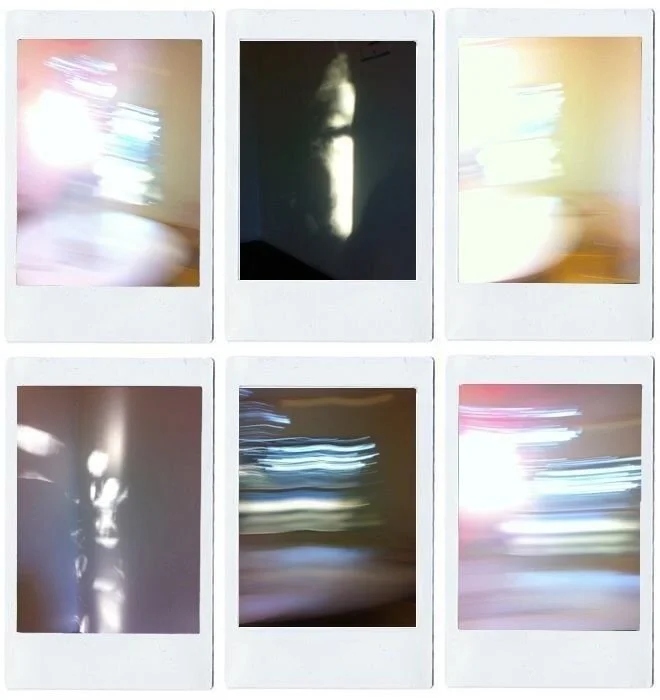
As someone who has spent years working within photography and visual storytelling, I’ve always been compelled by the simple yet complex process of watching an image come to life. I first purchased my instax camera in 2013 to document moments from our wedding day. During those early days, I remember feeling a real sense of wonder watching an instax image emerge through its slow chemical process. At first when you take a photo, the image is completely invisible and the paper entirely white (slightly odd at first). Slowly, the edges begin to fill with colour, usually the darker areas first, followed by silhouettes, dark clouds, maybe the outline of a tree branch and its leaves. Fragmented details slowly build pigment by pigment, almost like a painting coming together in real time. The image reveals itself gradually, and the process feels almost meditative to watch. Finally, the photograph solidifies.
Most days, I would place the image down in a dark corner or between the pages of a book and move on. Ten minutes later, I would revisit the photographs and be blown away by the depth of colour, texture, and expression that had emerged. The sky would become a vivid turquoise blue, the green tones painterly and soft. I found the anticipation itself allowed space for surprise and wonder. It became a ritual of taking a photograph and archiving it, allowing the image to slowly reveal itself over time.
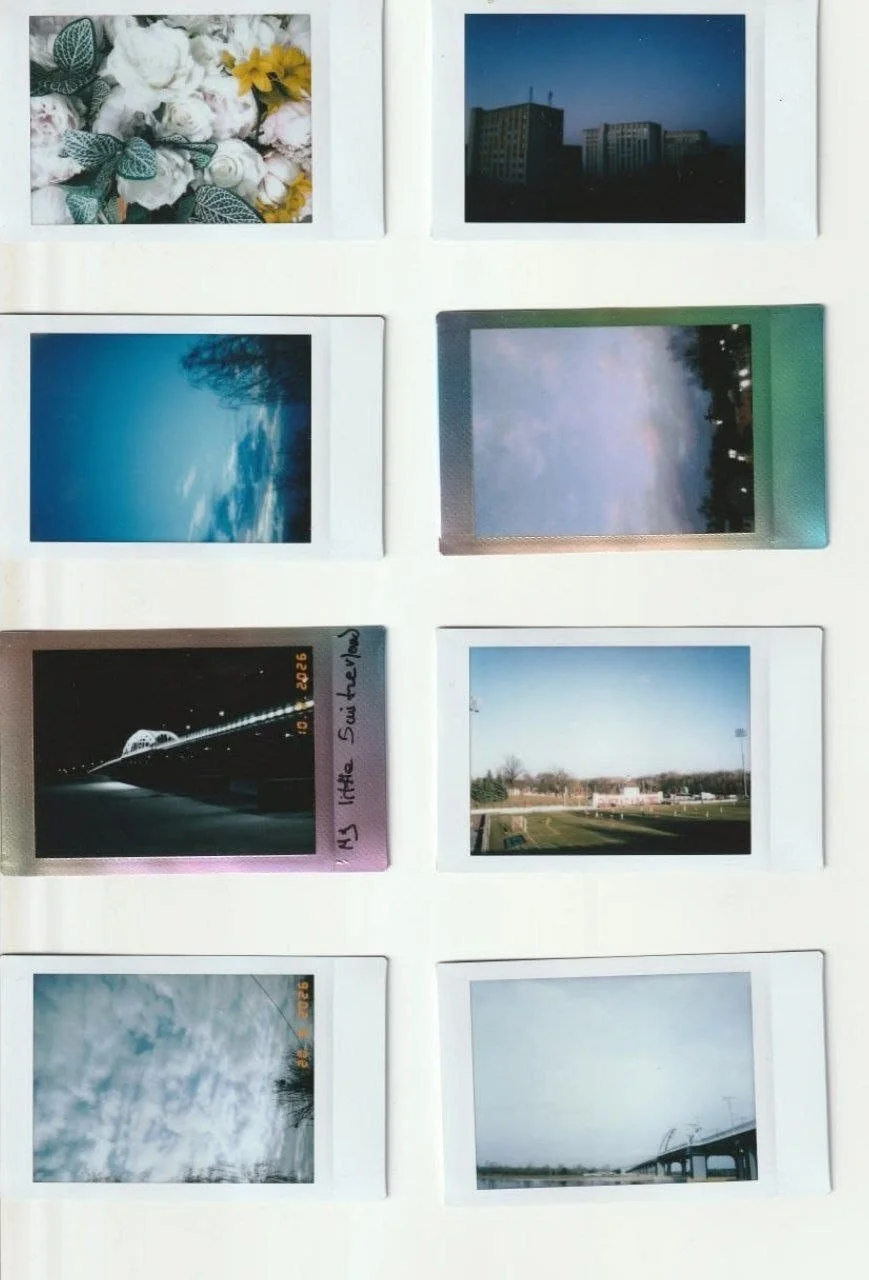
Over the years, it turned into a personal archive of small moments — autumn leaves scattered across the pavement, boat trips in the late afternoon light, blurry dinners with friends, messy selfies, flowers on kitchen benches, reflections in windows, children running half out of frame, quiet mornings at home. Looking back now, I realise the photographs I love the most are rarely the perfect ones. They are the images that hold atmosphere, texture, and memory.
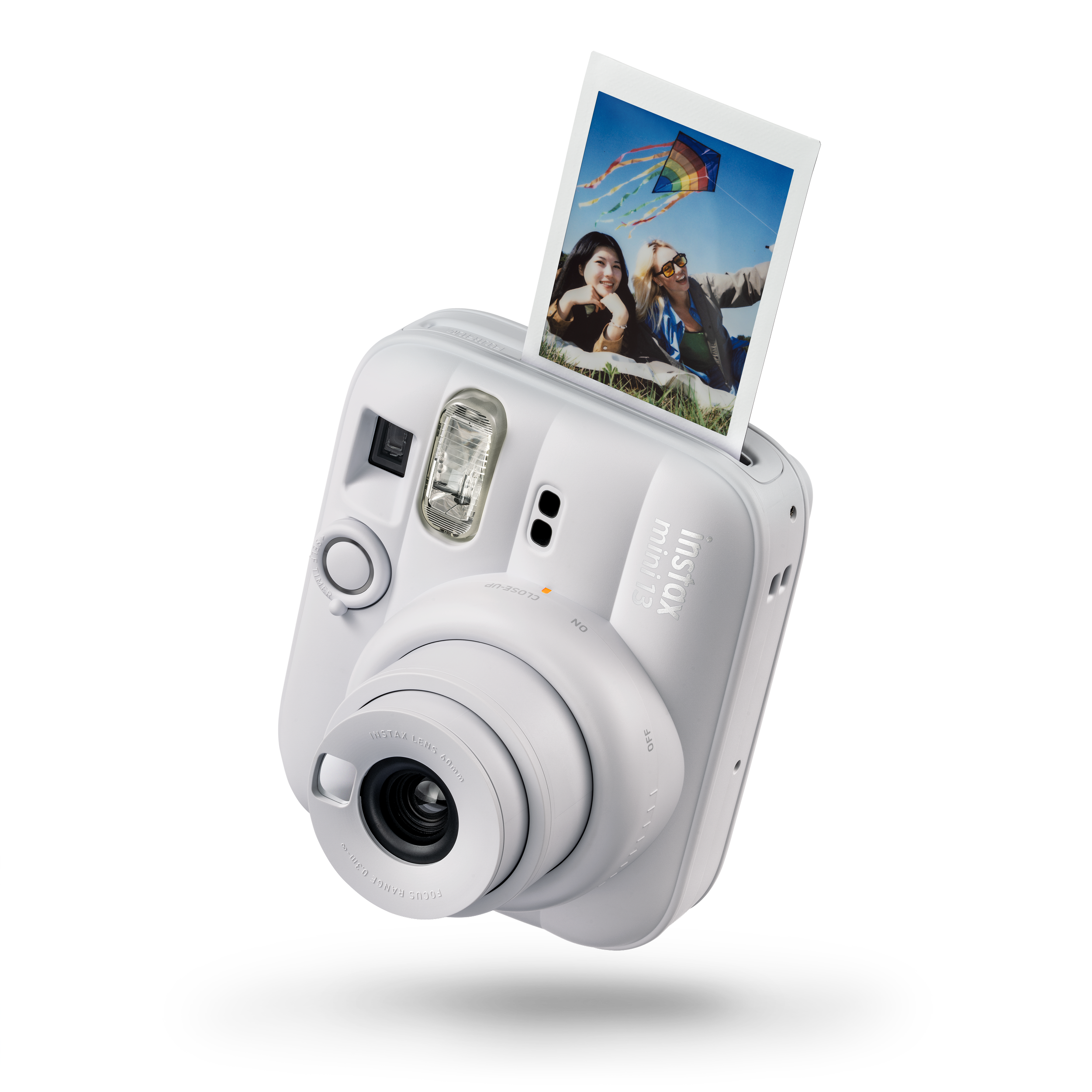
Hopefully, this essay inspires you to create your own photographic memories and journals with instax. Here is what I am using at the moment:
The Fujifilm instax mini 13 now includes two self-timer options — two seconds and ten seconds — allowing you to set up a shot, step into frame, and capture the image without holding the camera. To support this, the camera also includes a small camera angle adjustment accessory attached to the wrist strap, which gently tilts the camera upward when placed on a surface.
Lastly, here are a few simple ways I like to use my instax camera and make the most of the film:
I try not to shoot directly into harsh midday light, as instax film can lose detail quite quickly. Softer morning or late afternoon light usually gives the nicest tones.
I always step a little closer than I think I need to. Instax photos tend to feel more intimate when the subject fills the frame.
I like leaving space around a subject rather than centering everything perfectly. The slight imbalance makes the photograph feel more natural and less staged.
Flash indoors usually works better than trying to avoid it. Instax cameras love light, and the flash helps keep images sharp and clear.
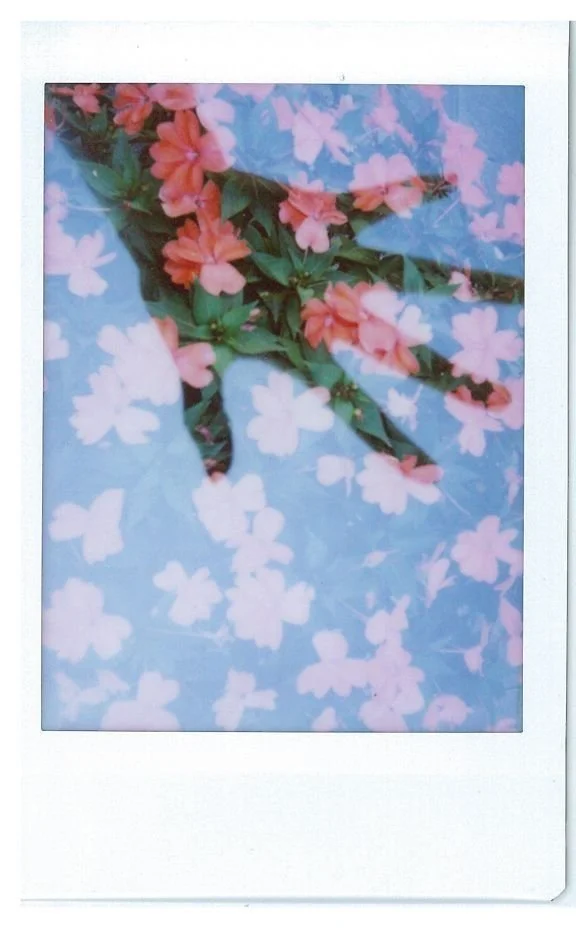
I’ve found instax film looks especially beautiful with texture — curtains, reflections, shadows, flowers, tiled walls, worn fabrics, condensation on windows.
If I’m photographing people, I usually ask them to stay still for an extra second after the shutter clicks. It helps avoid motion blur.
I think instax photographs work best when they feel observational rather than overly posed, more like a small memory than a perfect photograph.


This post was brought to you in partnership with Fujifilm.
Imagery sourced via Tumblr & Supplied.
Words : Zeenat Wilkinson