Amy Dickson on community, connection and building The Social Summit
Social has spent the better part of the last decade convincing us that everything should happen online. But lately, something interesting is happening: people are craving the opposite.
The return to in-person connection, smaller communities and experiences that exist beyond a screen is becoming increasingly important to the way we socialise, work and build brands. It’s a shift Amy Dickson knows well.
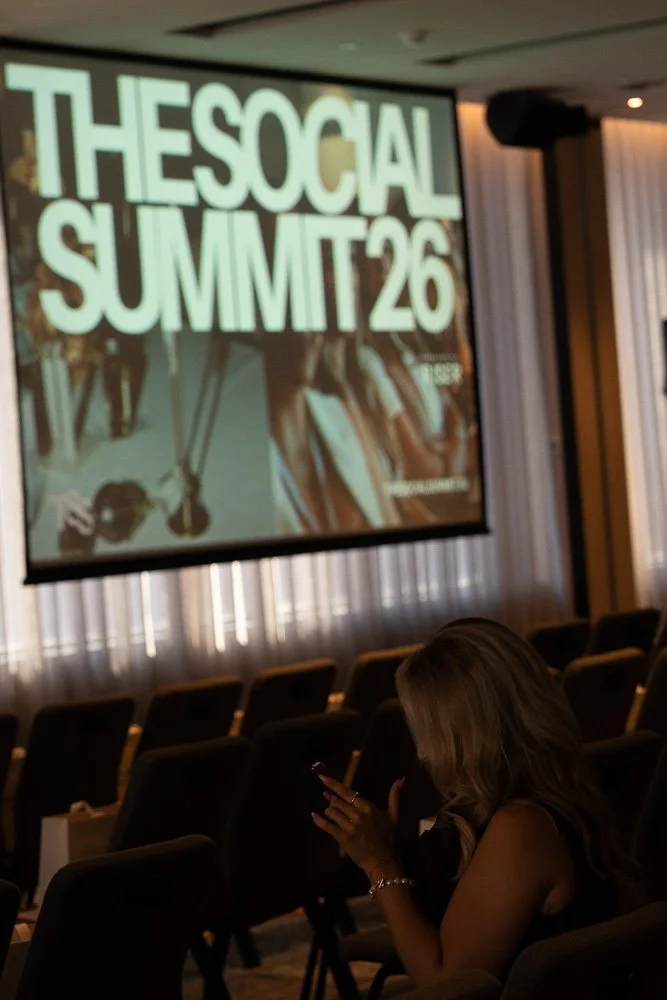
Dickson is the founder of The Social Summit, an Australian conference bringing creators, marketers and brands together under one roof. With a background in the conference industry and her own experience as a content creator, she launched The Social Summit in 2025 after recognising a gap in the market for practical, industry-specific education and connection.
Since its launch, the Summit has sold out three events, bringing together the people shaping Australia’s rapidly evolving social landscape. As the industry moves from TikTok to Instagram and into an increasingly AI-driven future, Dickson is less interested in predicting the next platform than in understanding what people will continue to want from each other.
Ahead of the next Social Summit in Sydney, we spoke to Dickson about the return of IRL, why followers don’t necessarily equal community, what brands are getting wrong, and where social goes from here.
What inspired you to create Social Summit?
Our family has been in the conference industry for more than 15 years. My dad runs an investment conference, and while my sister was on maternity leave, we started looking at the format and thinking about how we could apply it to an industry that felt much more relevant and exciting to us.
We looked at the Australian landscape and realised there wasn't really a conference specifically bringing together creators, marketers and brands in one room. As a content creator myself, I also felt there was a lack of targeted, practical learning for people working in this space.
And so, The Social Summit was born.
We held our first event in February 2025, and we've now sold out three events, including our launch. I'm currently working towards our next event in Sydney on Friday 18 September at Elysium Manly, which is incredibly exciting.
How has social changed since you started?
One of the biggest shifts I've noticed is the movement from TikTok being the undisputed growth platform back towards Instagram.
When I first started creating travel content in 2022, TikTok was the place to be if you wanted growth, exposure and the ability to reach people who didn't already follow you. It felt like the most powerful platform for discovery.
More recently, and particularly this year, I've noticed Instagram Reels significantly outperforming TikTok for my own content. It's been interesting to watch the cycle come back around.
I think it speaks to how quickly the social landscape changes. The platforms, algorithms and behaviours are constantly evolving, so what worked 12 months ago isn't necessarily what works today. You have to stay curious and be willing to adapt.
Why do you think people are craving more in-person connection right now?
I think there's been a real recalibration of how we value human connection.
After COVID, people were starved of in-person interaction for such a long time, and I think we're now seeing the lasting impact of that. People are much more intentional about getting together, meeting new people and creating experiences outside of their screens.
There's also something particularly powerful about being in a room with people who share your interests or ambitions. A digital community can give you connection at scale, but there's an energy that comes from meeting someone face-to-face that you simply can't replicate online.
For me, that's one of the most exciting things about The Social Summit. You can follow someone online for years, and then suddenly you're sitting next to them at a coffee break having a conversation. Those unexpected interactions are often where the real value lies.
What are you seeing around the relationship between online communities and real-life gatherings?
I think we're moving towards a much more interesting relationship between the two. It's no longer online versus offline. The strongest communities are increasingly moving fluidly between both.
An online community can create familiarity and belonging before people ever meet in person, while a real-life gathering can deepen those relationships in a way that digital interaction can't always achieve.
We're also seeing this from brands. Particularly for e-commerce and digitally native brands, the next step is often figuring out how to take an online relationship and make it tangible.
That's where events, experiences and activations become really powerful. They give people an opportunity to move from being a follower or customer to feeling like they're actually part of something.
What makes an in-person experience genuinely meaningful today?
I think the key word is experience. That's ultimately what we're trying to curate at The Social Summit.
When we started, conferences could sometimes feel like a tired format: monotone speakers, uninspiring slides and very little consideration given to what the audience actually experienced once they walked through the door.
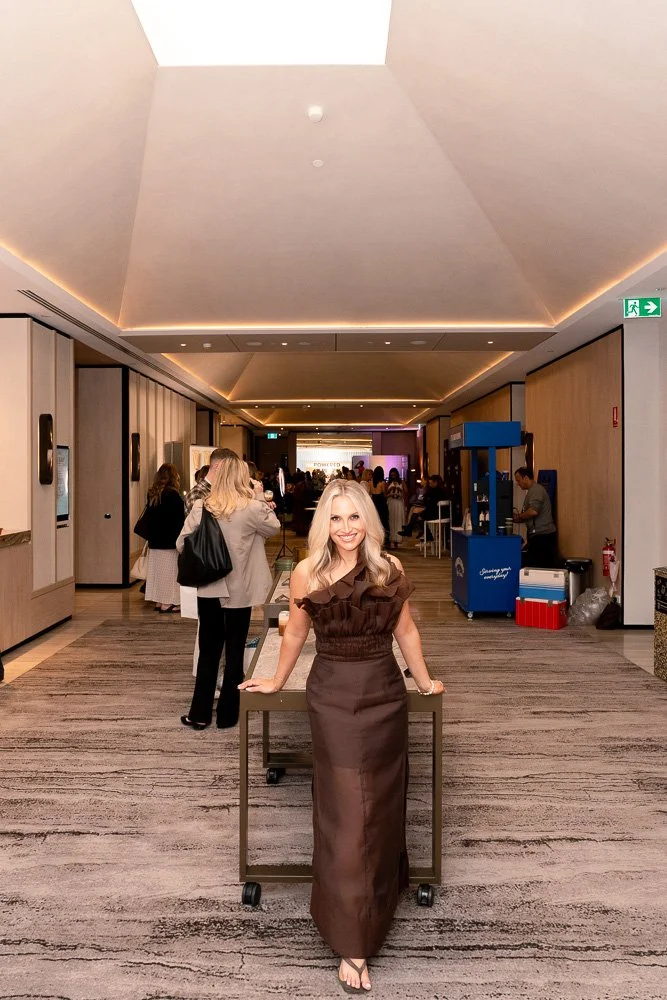
For me, creating a meaningful conference isn't just about having a great speaker lineup. It's about curating the entire experience - the space, the programming, the topics, the brands, the activations and, importantly, the people in the room.
You can have the best speakers in the world, but if you've brought together the wrong audience, you've missed a huge part of the opportunity. We want the room to be filled with people who genuinely want to learn, connect, collaborate and exchange ideas.
Are people becoming more selective about the communities they invest their time in?
Absolutely. I think we're all much more conscious of where we spend our time.
People have busier lives, attention is fragmented and the current economic climate means people are also thinking more carefully about where they spend their money. If someone is going to invest a day and several hundred dollars in attending an event, they want to feel that they got genuine value from it.
Nobody wants to leave an event thinking, “That was a waste of my time.” They want to leave thinking, “I'm so glad I went.”
That's a high bar, but I think it's the right one. Communities and experiences have to earn people's attention now.
What are brands getting wrong about building genuine community?
I think the biggest mistake is confusing an audience with a community.
Having followers doesn't necessarily mean you have a community. Community requires participation, trust and a sense that people are part of something rather than simply being marketed to.
I think brands can also be too focused on what they want their audience to see, rather than taking the time to understand what their audience actually wants to talk about, engage with or be part of.
The best communities feel two-way. Brands aren't just broadcasting; they're listening, responding and allowing the people around them to influence the direction of the brand.
Ultimately, people don't want to feel like a number in a marketing database. They want to feel seen.
What shifts are you seeing in how younger audiences connect and communicate?
I think younger audiences are incredibly fluent in digital communication, but that doesn't mean they're less interested in real connection. If anything, I think the opposite is true.
They're growing up in a world where content is constant, so they're becoming very good at recognising what feels manufactured. There's a real appetite for authenticity, personality and smaller, more intimate communities.
We're also seeing a shift away from the idea that everyone needs to be broadcasting publicly all the time. Private group chats, niche communities, close-friends content and smaller digital spaces can be just as culturally significant as the public-facing social platforms.
It's less about reaching the biggest possible audience and more about finding your people.
What conversations are you most excited about at this year’s Summit?
AI is obviously a huge focus for us this year, but what I'm most interested in is moving the conversation beyond “AI is coming” to “Okay, but how do we actually use it?”
We have an AI Masterclass, Become an AI Growth Strategist: The Systems That Save You Hours and Scale Your Business, led by Josh Henry-Hicks from Insightly Media. It will look at how people can actually implement AI systems into their businesses to save time and create efficiencies they can take away and use immediately.
We're also hosting a panel called The Customer Isn't Human Anymore: How AI Agents Are Reshaping Brand Discovery, Marketing & Commerce, featuring voices from AWS, Verity AI and OpenAI. I'm fascinated by the implications of AI agents potentially becoming the layer between brands and consumers - deciding what gets discovered, recommended and ultimately purchased.
I'm also really excited for The Shameless Media Approach to Building a Brand, where Rhiannon Joyce and Naima Fatima will sit down with Jordyn Christensen from Spotify to unpack how Shameless Media built one of Australia's biggest media empires.
And then, of course, there are the brand activations. We've put a lot of thought into making the room feel immersive and engaging, rather than simply putting people in seats for eight hours. I think that's a really important part of what we're trying to create.
Where do you think social and community are heading next?
I wish I had a crystal ball!
For me, it's less about predicting the next platform or trend and more about building on the community we've already created and continuing to enhance the experience.
We've sold out three events so far, and I'm hoping we'll be able to add another to that list with Sydney. But beyond simply growing the numbers, I want to keep raising the bar - bigger brands, the best speakers in the country and an audience that is genuinely engaged and ambitious.
Ultimately, I think the opportunity is to create a platform for education and connection that people can't find anywhere else. I'm really excited to see what the next chapter of The Social Summit looks like.